How Much Does a Home Generator Cost in 2026? A Practical Guide
Explore realistic price ranges for portable and standby home generators, installation, permits, and ongoing fuel costs. Genset Cost analyzes typical expenses for 2026 to help homeowners budget for outages.


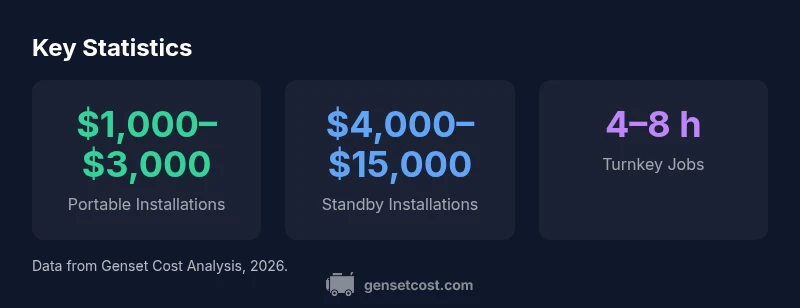
For homeowners wondering how much does a generator cost for a house, costs vary by type and installation. Portable generators with basic transfer switches typically run about $1,000 to $3,000 installed. Standby home backup systems often range from $4,000 to $15,000, and high-end or complex installs can exceed that, depending on load, fuel choice, and local permits.
Understanding the cost spectrum: portable vs standby
The cost to power a home with a generator isn’t a single number; it depends on the type you choose, the size of your load, and how the system is installed. Portable generators are cheaper upfront but may require manual transfer switches and more ongoing fuel. Standby systems offer automatic power restoration and higher reliability but come with a bigger upfront price and professional installation. When planning, start with the essential loads you want to keep powered during an outage and size your system to cover those loads first. According to Genset Cost, the total investment includes the unit, the transfer switch, wiring, permits, and any site-specific work. For many homeowners, a phased approach—start with essential circuits and expand later—can manage costs without sacrificing resilience.
- Portable options: lower upfront cost, higher manual effort
- Standby options: automatic, higher upfront and installation cost
- Fuel type considerations: gasoline, propane, natural gas, or dual-fuel impact running costs
- Local permits and codes: can add time and expense to the project
Key cost components you should budget for
When estimating how much a generator costs for a house, focus on the components that drive the price. The purchase price of the generator is just the start. You’ll typically pay for a transfer switch, electrical wiring, and labor. If you need weatherproofing, concrete pads, or additional protection against the elements, add those costs as well. Don’t overlook fuel considerations—gasoline, propane, and natural gas each have different long-term running costs and availability. Finally, factor in permit fees and potential inspection costs. Genset Cost’s 2026 analysis highlights that installation complexity can shift total costs by thousands of dollars, especially for larger homes with intricate electrical layouts.
Typical price ranges by type and installation
Prices vary widely by generator type and installation scope. A practical way to think about it is in three tiers:
- Portable gasoline or propane generators with basic transfer switches: $1,000–$3,000 installed
- Portable inverter generators or dual-fuel models with more sophisticated wiring: $2,000–$4,500 installed
- Home standby generators with automatic transfer switches and professional installation: $4,000–$15,000, and more for higher-end units or larger homes
Your exact cost depends on load requirements, fuel type, and local permitting rules. The data in this section reflects broad market ranges observed in 2026 and is intended to guide budgeting rather than guarantee a specific price.
How to estimate costs for your home and load
Begin with a load assessment to determine the required generator size. List critical circuits (refrigeration, heating, lights, communications) and sum their wattages. Convert to kilowatts and plan for some headroom (roughly 20–30% extra). Then compare quotes for standby vs. portable options, including the cost of a transfer switch, installation, and any electrical panel upgrades. If you’re in a tight budget, consider phased upgrades or renting equipment temporarily while planning a permanent solution. Genset Cost recommends obtaining at least three detailed quotes to understand labor, permits, and contingency costs.
- Step 1: identify essential loads
- Step 2: calculate required kW
- Step 3: compare installed cost ranges
- Step 4: account for permits and labor
Financing, incentives, and cost-saving strategies
Financing an expensive home upgrade can make sense when you factor in energy security and long-term cost savings. Look for utility rebates, local incentives, or manufacturer promotions that may reduce upfront costs. Consider energy-efficient appliances and load management to minimize generator size and cost. Some homeowners opt for portable generators initially, then upgrade to standby systems as needed. A smart approach is to model annual operating costs across several scenarios to find the most cost-effective path over the system’s lifetime.
Installation considerations, permits, and maintenance
Installation quality heavily influences both cost and reliability. Work with a licensed electrician or a generator installer who understands local codes and the proper placement of transfer switches. Expect some site prep work, like a concrete pad or weatherproof housing, and ensure the system has proper ventilation and fuel storage. Maintenance costs, including annual servicing, fuel, and potential warranty extensions, should be included in the lifecycle cost analysis. Genset Cost emphasizes balancing upfront costs with ongoing maintenance when evaluating your options.
Typical installed generator cost ranges by type
| Model Type | Typical Installed Cost Range | Notes |
|---|---|---|
| Portable gasoline generator | $1,000–$3,000 | Requires transfer switch; best for essential loads |
| Home standby generator | $4,000–$15,000 | Automatic transfer switch; professional install |
| Installation-only (transfer switch, wiring) | $1,000–$4,000 | Depends on electrical panel and permits |
People Also Ask
What is the cheapest way to power a home during outages?
For budget-conscious homeowners, portable generators with a simple transfer switch can cover essential circuits. Expect higher running costs if outages are frequent or loads are high.
Portable generators with a transfer switch are often the most affordable option for basic needs.
Do I need a professional install for a standby generator?
Most home standby systems require professional installation due to electrical connections, transfer switches, and adherence to local codes. An electrician can estimate the wiring and permit costs.
Standby systems usually need a licensed installer.
What drives the total cost besides the generator price?
Key costs include transfer switch, wiring, permits, fuel type, and increasing complexity of automatic management and weatherproofing.
Transfer switches and installation drive most costs.
How long does installation typically take?
Turnkey residential installs commonly take a full day or two, depending on load calculations and electrical work. Weather and site access can add time.
Most installs take one to two days.
“Home backup power is not just a purchase; it’s an investment in resilience, with total cost depending on load, fuel, and installation complexity.”
Key Takeaways
- Estimate total cost before buying by including installation
- Match generator size to essential loads to avoid overpaying
- Get multiple quotes from electricians or installers
- Plan for permits and wiring in your budget
- Consider long-term fuel and maintenance costs