How much for a generator: Costs, options, and budgeting in 2026
Learn the true cost of generators in 2026—from portable units to standby systems, installation, permits, and ongoing running costs for homeowners.


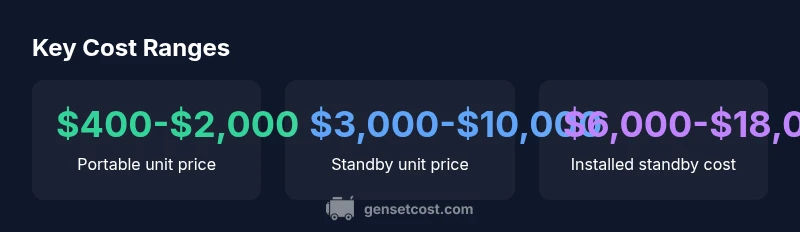
Prices for generators vary widely by type and installation needs. Portable generators unit costs typically range from $400 to $2,000 for the unit, while whole-home standby units often total $5,000 to $15,000, with installation and transfer switch costs adding to the total. The exact price depends on power output (kW), fuel type, inverter technology, warranty length, and local permitting or contractor fees.
What influences generator price in 2026?
The question how much for a generator is not answered by a single number. Price is driven by the choice between portable and standby, the unit’s power rating, fuel type, and the level of automatic integration you want. Portable generators are cheaper upfront and best for short outages or outdoor use, while standby systems are pricier but offer automatic operation and seamless power during longer outages. Beyond the hardware, installation complexity, transfer switches, fuel supply piping, permits, and contractor labor all contribute to the final bill. In our 2026 analysis, the distribution between hardware, installation, and interconnects often explains why two seemingly similar options have a wide price gap. Budget for permits and installation to avoid sticker shock and schedule delays.
Portable vs. standby: price and practicality
Pricing tells only part of the story. Portable generators cost less upfront and are flexible for camping trips or small loads, but they require manual setup and periodic refueling. Standby generators cost more but provide automatic transfer during outages, built-in safety features, and a longer service life. If you experience frequent outages or want a seamless home backup, standby is typically the better long-term value despite the higher initial price. When evaluating cost, consider not just the unit price but also the time value of electricity outages and the convenience of automatic operation.
How to estimate your needs: size, load, and budget
Start with a realistic load calculation. List essential circuits (refrigerator, furnace, lighting, water heater) and estimate their running watts. The sum gives your minimum kW target. For budgeting purposes, plan to oversize by 10–20% to handle surges and future devices. If you’re unsure, consult a load calculator or a pro to avoid overpaying for unnecessary capacity or under-kitting a critical system. Remember that a higher kW rating means higher unit cost and potentially larger installation requirements.
Fuel types, efficiency, and feature upgrades
Fuel choice matters for ongoing costs and availability. Gasoline units are common but require more frequent maintenance; propane and diesel options offer different efficiency profiles and storage considerations. Inverter generators often cost more upfront but deliver quieter operation and better fuel efficiency—an important factor for homes near neighbors or with noise restrictions. Additional features like remote monitoring, corrosion resistance, and electric start add to both the upfront price and long-term value, especially if outages are frequent or prolonged.
Hidden costs: installation, permits, and controls
Most standby installations involve more than just placing a generator. Expect costs for a new transfer switch, durable mounting, exhaust routing, gasoline supply lines or propane piping, and electrical work to tie into the panel. Permits vary by locality and can add weeks to a project timeline. Some homes require additional trenching, weatherproof enclosures, or siting adjustments to meet code. Budgeting for these items helps prevent surprises when the team drafts the final scope and quote.
Maintenance and operating costs over time
Running costs depend on fuel type and load. Regular maintenance—oil changes, filter replacements, and battery checks—adds to annual expenses. Fuel prices fluctuate, but the most predictable long-term cost is mechanical wear; investing in a quality standby system with a solid warranty reduces unexpected repair costs. A good maintenance schedule also extends life and keeps the system ready for the next outage, which lowers average annual cost per outage.
Financing, rebates, and cost-saving strategies
Consider financing options offered by manufacturers or contractors, which can spread the cost over time. Look for utility rebates or local incentives for standby systems, especially if the system is tied into a critical circuit or load management plan. Cost-saving tactics include selecting a slightly lower kW rating that still covers essential loads, choosing a proven brand with strong warranties, and negotiating installation packages that include transfer switches and a service plan. A careful, staged approach can dramatically reduce upfront pain while protecting future reliability.
Real-world scenarios: typical home sizes and price ranges
- Small home (1–2 bedrooms): Portable generator with automatic transfer switch may cost around the lower end of the portable range to mid-range standby if automatic transfer is added. Total could be in the $4,000–$8,000 range including basic installation.
- Medium home (3–4 bedrooms): A mid-range standby system with a transfer switch might run $7,000–$15,000 installed, depending on existing panel configuration and emission requirements.
- Large home (5+ bedrooms): Higher kW standby systems with premium enclosures and advanced monitoring can reach $12,000–$25,000 installed. These projects often involve site prep and specialized permits.
A simple budgeting method: a step-by-step calculator approach
- List essential circuits and their running watts. 2) Add a 10–20% cushion for surges. 3) Choose portable vs standby based on outage patterns, budget, and ease of use. 4) Add 15–25% for installation, permits, and transfer-switch costs. 5) Include maintenance and fuel costs for 5–10 years to obtain a total cost of ownership. 6) Compare quotes from multiple installers to capture real-world price ranges and warranty terms.
Generator cost ranges by type and installation
| Category | Typical unit price range | Typical installed cost range | Notes |
|---|---|---|---|
| Portable generator | $400-$2,000 | N/A | Best for short outages and outdoor use |
| Standby generator | $3,000-$10,000 | $6,000-$18,000 | Whole-home backup; automatic transfer switch often included |
| Inverter portable | $1,000-$2,500 | $3,500-$8,000 | Quieter, higher efficiency, lighter weight |
| Premium/alternate fuels | $4,000-$12,000 | $7,000-$15,000 | Diesel/propane options with longer runtimes |
People Also Ask
What affects generator price the most?
The biggest drivers are unit size (kW), type (portable vs standby), and installation complexity, including transfer switches and panel work. Fuel type and warranty length also influence long-term costs.
The main price drivers are size, type, and installation complexity; fuel and warranty matter for long-term costs.
Do I need permits for installation?
Yes, most jurisdictions require permits for standby systems and interconnection with the home panel. A licensed installer can help navigate codes and scheduling.
Yes, permits are usually required; your installer can handle the paperwork.
Is it cheaper to buy a generator with a warranty?
A warranty can save on future repairs and provide reliability during outages. Weigh the cost of an extended warranty against expected lifetime maintenance.
A warranty can pay off if you expect to rely on the unit regularly.
What is the difference between portable and standby costs?
Portables are cheaper upfront and portable for other uses; standbys are more expensive but offer automatic power and seamless backup during outages.
Portables are cheaper now; standbys pay off with automatic power during outages.
Should I install myself or hire a pro?
Professional installation is strongly recommended for safety, code compliance, and proper transfer-switch integration.
It's safer and wiser to hire a pro for installation.
What about running costs?
Fuel type, load, and usage patterns drive yearly fuel and maintenance costs; expect more fuel consumption with higher loads.
Running costs depend on how often you use it and what you load it with.
“Choosing the right generator is about balancing upfront cost with reliability and long-term savings; a thoughtful load calculation reduces overspending and ensures you’re prepared for outages.”
Key Takeaways
- Start with a load calculation to identify needed capacity
- Choose portable vs standby based on outage frequency and convenience
- Budget for installation, permits, and transfer switch early
- Plan for ongoing fuel and maintenance costs
- Get multiple quotes to lock in best value