Electric Generator Costs: How Much Is a Generator?
Learn how much an electric generator costs, explore portable vs standby price ranges, installation factors, and tips to budget for fuel, maintenance, and upgrades.


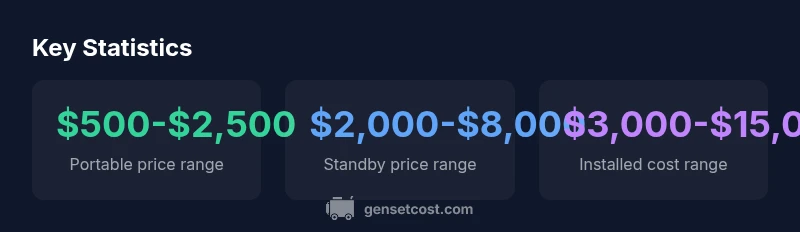
Prices for an electric generator vary by size, fuel type, and features. Portable models typically run about $500 to $2,500, while standby systems for whole-home backup commonly fall in the $2,000 to $8,000 range before installation. Installed costs, including transfer switches and permitting, can push total project price into roughly $3,000 to $15,000 depending on local codes and contractor rates. This overview reflects typical market ranges as of 2026, and is informed by Genset Cost Analysis, 2026.
How much is an electric generator? What drives the price
If you’re asking how much is an electric generator, the answer hinges on several key factors: the unit’s size (wattage), the type of fuel it uses, installation requirements, and any smart or automatic features. According to Genset Cost, the largest price driver is sizing: a higher continuous load means a bigger unit and higher upfront costs, but it also affects long-term reliability and fuel use. In practice, portable generators suitable for a few essential circuits can be relatively inexpensive, while whole-house standby systems equipped with automatic transfer switches command premium pricing. For budgeting, think in ranges rather than exact figures and plan for installation costs that may accompany the unit purchase.
Brand notes: In formulating these ranges, the Genset Cost Team emphasizes balancing upfront cost with long-term reliability. As you compare options, consider not only the sticker price but also the size and installation requirements that will determine total cost over the unit’s lifetime.
Price ranges by type and capacity
Prices for generators generally break down by type and capacity. Portable generators under about 5 kW are typically the most affordable, with a wide price band depending on brand and features. Models in the 5–8 kW range tend to cost more, particularly if they include built-in electric starters or improved fuel efficiency. Standby generators, designed to run large loads automatically during an outage, start higher and scale with wattage. For homes, common standby ranges run roughly from 8 kW to 20 kW and above. Where you live and your installer’s labor costs can shift totals by several thousand dollars. In practice, a homeowner might see portable units in the lower end of the spectrum and standby systems at the higher end.
Key cost components beyond the unit price
The cost of ownership goes beyond the generator’s base price. A transfer switch is often required for seamless automatic operation, and electrical and gas line work can add significant expense. Permits, inspections, and potentially upgrading your home’s electrical panel can affect total cost. If your installation requires natural gas or propane supply upgrades, expect additional charges. Maintenance contracts or extended warranties can also influence long-term affordability. When evaluating quotes, ask for a breakdown that separates the generator price, transfer switch, wiring, permits, and any required gas line work.
Sizing for your home and how it affects cost
Correctly sizing your generator is crucial to avoid overpaying or underproviding backup power. A load calculation considers essential circuits (refrigerator, sump pump, HVAC, lighting, hot water) and nonessential loads you want to support. Oversizing increases upfront and ongoing fuel costs, while undersizing risks underperformance during outages. A common approach is to target a stable, reliable baseline for essential loads with room for a few comfort features. Sizing also influences fuel type and engine efficiency, which in turn affect long-term operating costs. The goal is a balance between upfront expenditure and predictable, resilient backup power.
Installation, transfer switches, and permitting
Installation complexity drives cost. A basic portable generator may require only a simple outlet and outdoor clearance, while a home backup system needs a transfer switch, proper ventilation, and professional wiring. Permits and inspections ensure safety and code compliance, particularly for electrical and gas line work. If you install a larger standby unit, a professional assessment of venting, exhaust routing, and load management becomes essential. Installation costs often represent a significant portion of the total project, so request a line-item estimate that differentiates the generator, transfer switch, and labor.
Operating costs: fuel, maintenance, and lifetime costs
Fuel consumption and maintenance are ongoing cost factors. Fuel type (gasoline, propane, natural gas) and expected runtime determine annual fuel expenditure. Routine maintenance—oil changes, air-filter replacements, and spark plug checks—helps extend the life of the generator and prevent unexpected breakdowns. Standby systems may require more frequent professional service due to complex configurations. When budgeting, consider both the upfront price and long-term operating costs to estimate the total cost of ownership over the generator’s lifespan.
Hidden fees and what to watch for in quotes
Read quotes carefully to avoid hidden charges. Some installers include site preparation, permits, or gas line work as separate line items, which can substantially raise totals. Inquire about extras like a concrete pad, weatherproof enclosures, or maintenance plans. Request a detailed, itemized proposal with timelines. Confirm whether delivery fees, fuel stabilization kits, or extended warranties are included or offered as add-ons. A thorough, transparent quote helps you compare apples-to-apples and prevents sticker shock later.
Financing, incentives, and timing of a purchase
Financing options can make upfront costs more manageable, and some regions offer incentives for energy resilience projects. Explore if tax credits, rebates, or utility programs apply where you live and whether they cover installation or just equipment. The timing of a purchase matters: buying ahead of peak outage seasons or during promotions can save money. If you can demonstrate a longer-term payoff through reliability and resilience, the investment can be justified beyond immediate comfort.
How to compare quotes: a practical checklist
Use a standardized checklist when evaluating quotes: (1) separate generator price from installation and labor; (2) confirm required permits and timelines; (3) verify transfer switch compatibility and warranty terms; (4) confirm fuel type, fuel storage, and expected running costs; (5) compare maintenance plans and service intervals; (6) consider local code requirements and utility incentives. A side-by-side comparison helps you select a solution that matches both your power needs and your budget.
Typical price ranges for common generator types
| Category | Typical price range | Notes |
|---|---|---|
| Portable generators | $500-$2,500 | Fits essential loads; compact and portable |
| Standby generators | $2,000-$8,000 | Higher wattage; automatic operation |
| Installation & transfer switch | $1,000-$4,000 | Labor, permits, and wiring |
| Total installed cost | $3,000-$15,000 | Depends on home and local codes |
People Also Ask
What size generator do I need for my home?
Most homes can run essential circuits with a 5–15 kW standby system, but an exact size depends on your load calculation. Start with critical appliances and HVAC needs. Consult a professional to size the unit accurately.
A typical home backup often starts around several thousand watts; a precise size depends on your essential loads, so get a professional load calculation.
Is portable or standby better for a whole-house backup?
Portables are cheaper upfront but don’t auto-start during outages and have limited load capacity. Standby systems offer automatic operation and higher power, but come with higher installation costs.
Portables are cheaper but require manual startup and have limits; standbys auto-start and handle larger loads but cost more.
Do I need a permit or professional installation?
Yes, most areas require electrical permits for generator installations, and a licensed electrician often installs transfer switches and gas lines. Professional installation improves safety and compliance.
Yes—permits are common, and a pro should install the transfer switch and gas connections for safety.
What ongoing costs should I expect?
Fuel and maintenance are recurring costs. Expect periodic oil changes, filter checks, and fuel expenses based on usage. Standby systems may incur higher maintenance due to complex setups.
Fuel and maintenance add to yearly costs; plan for regular service to keep the unit reliable.
Are there incentives or rebates available?
Some regions offer tax credits or rebates for energy resilience projects. Check with local utilities and government programs to see what applies to your installation.
There may be local incentives; check with your utility and government programs before buying.
How long does installation typically take?
Most installations take 1–2 days for smaller setups; larger homes or complex gas lines can extend timelines. Schedule with your installer to understand the exact window.
Most installs take a day or two, depending on complexity.
“A well-sized generator paired with a professional installation provides the best balance of upfront cost, reliability, and long-term value.”
Key Takeaways
- Estimate ranges, not fixed prices, to budget realistically.
- Sizing and installation are major cost drivers.
- Request detailed, itemized quotes for apples-to-apples comparisons.
- Factor ongoing fuel and maintenance into the total cost.