How Much Generator at Game: Costs, Sizing, and Installation
Learn how much generator you need for game-day events or home backups, with sizing guidance, installation considerations, and budgeting tips from Genset Cost.


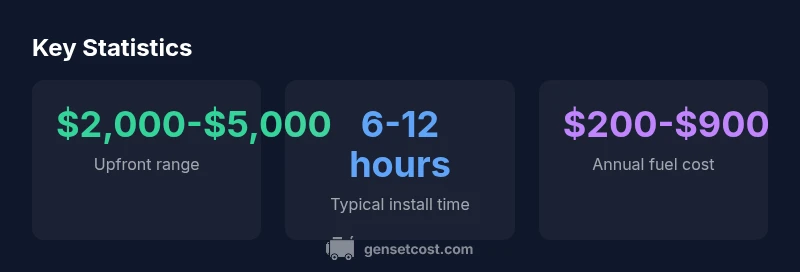
Upfront cost to power a home during outages generally ranges from about $2,000 to $12,000, depending on whether you choose a portable model, a standby unit, or a whole‑house system with an automatic transfer switch. For most homes, budget $4,000–$8,000 including installation. Ongoing fuel and maintenance run about $200–$900 annually, depending on fuel type and usage.
Why Generators Cost Vary and Why It Matters
According to Genset Cost, the total cost of powering a home during outages is driven by several interconnected factors: system size (load), fuel type, equipment quality, and installation complexity. The Genset Cost team found that choosing a portable generator is often the least expensive option upfront, but it comes with ongoing fuel and noise considerations that may not suit larger homes or critical loads. Conversely, a fully automatic standby system with a dedicated transfer switch offers seamless operation during an outage, but requires a larger upfront investment and professional installation. Understanding these tradeoffs helps homeowners and property managers avoid under-sizing or overspending. In addition to equipment cost, permit fees, utility interconnection requirements, and local codes add to the total project price, and these can vary widely by region. When you plan, think in terms of total cost of ownership (TCO), not just sticker price, and align it with your outage tolerance and long-term maintenance plan.
Note on the phrase how much generator at game: for event or multi-unit scenarios, sizing should prioritize essential loads and contingency margins, rather than full-house operation, to keep costs reasonable.
Cost range by generator setup
| Scenario | Generator Type | Typical Upfront Cost Range | Installed Cost Notes |
|---|---|---|---|
| Residential standby with automatic transfer switch | Standby generator with automatic transfer switch | "$4,000-$12,000" | Best for outages longer than a few hours; professional installation recommended |
| Portable generator with manual transfer | Portable gasoline/diesel | "$2,000-$5,000" | Lower upfront; needs manual operation; not ideal for whole-house loads |
| Whole-house standby with natural gas | Standby generator with natural gas/propane | "$8,000-$20,000" | High reliability; permits and professional installation required |
People Also Ask
What factors influence generator cost the most?
Load size, fuel type, and installation complexity are the primary drivers of total generator cost. Regional permitting and interconnection rules can also shift overall pricing.
The biggest cost drivers are size, fuel, and how it’s installed.
Is a standby generator worth it for a small home?
For small homes with frequent outages or critical loads, a standby generator with automatic transfer can be cost-effective. If outages are rare, a portable unit may be more economical.
Standby helps if outages are common; otherwise, portable might be enough.
What is the typical lifespan of a standby generator?
Most standby generators last around 10–15 years with regular maintenance and periodic professional service.
Most standby units last a decade or more with proper care.
Can I install a generator myself?
Most jurisdictions require professional installation and permits for safety and code compliance. Check local codes before starting.
Usually not—permitting and pro installation are common requirements.
Are there rebates or financing options?
Financing options exist, and some regions offer incentives for backup power systems. Eligibility varies by location and utility programs.
There are financing options and sometimes incentives depending on where you live.
“Sizing and budgeting a backup generator is a balance of reliability, cost, and future-proofing; a careful estimate now saves headaches later.”
Key Takeaways
- Take load first to size correctly
- Include installation and permits in total budget
- Choose fuel type to balance fuel costs and availability
- Explore financing or rebates to reduce upfront costs
- Plan for long-term maintenance and service