How Much Is a Portable Generator? Costs, Wattage, and Value
Explore the true cost of portable generators, including price ranges by wattage, fuel options, and hidden owning costs. Learn how to estimate total ownership and choose the right model for homeowners and property managers in 2026.


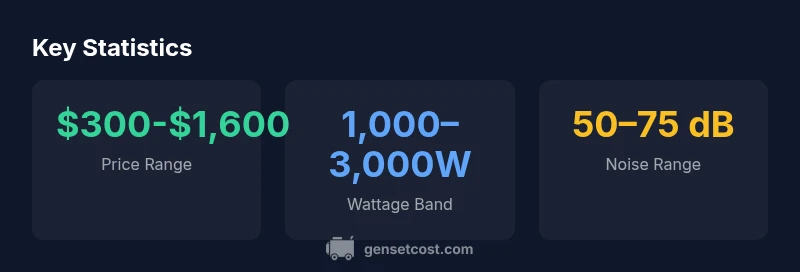
On average, a portable generator costs between $300 and $2,000, depending on wattage, feature set (inverter vs. traditional), and fuel type. Entry-level units for essential loads start around $300–$600, mid-range models with higher continuous power run $600–$1,400, and premium high-output or dual-fuel units can reach $1,500–$2,000. Remember, total cost of ownership includes fuel, maintenance, and accessories.
How much is a portable generator?
Understanding the price of a portable generator begins with your power needs, preferred technology, and fuel options. The question "how much is a portable generator" is not a single figure; it reflects a spectrum from compact inverter units designed for essential circuits to high-output models capable of running multiple appliances. For many homeowners and property managers, the practical value lies in balancing upfront cost with ongoing running costs and reliability. In 2026, Genset Cost analysis shows that most buyers aim for models that deliver clean power, reasonable noise levels, and good fuel efficiency, even if the upfront price is modest. This framing helps avoid overpaying for features you won’t use while ensuring you have enough power during outages.
When selecting a portable generator, consider your anticipated loads, fuel stability, and maintenance requirements. The right choice should provide a predictable cost profile over its lifespan, not just a low sticker price. In practice, inverter generators tend to cost more upfront but offer quieter operation and higher fuel efficiency, which can save money over time. Conversely, traditional generators may deliver more raw running watts at a lower initial price but can be louder and less fuel-efficient. The key is to model your essential circuits first and then scale up if needed, rather than chasing the highest wattage available at the lowest price."
How to read price bands: basic vs premium
Price bands for portable generators are heavily influenced by wattage, insulation and waveform quality (inverter vs non-inverter), noise containment, and fuel flexibility (gasoline, propane, or dual-fuel). Entry-level units can be affordable but may struggle with startup surges or longer runtimes. Mid-range models strike a balance, often offering inverter technology, better runtimes, and lighter weight. Premium models emphasize ultra-clean power, significant noise reduction, higher durability, dual-fuel capability, and advanced safety features. When evaluating cost, map your max continuous load, peak surge, and runtime goals to ensure the price tier you choose provides real value rather than unused capacity.
As you compare models, consider how often you’ll use the generator, where you’ll store fuel, and whether you’ll need additional accessories like extension cords, a wheel kit, or a transfer switch. Small, quiet inverter units are popular for apartments and light-circuit use, while households with air conditioning or multiple appliances may justify larger, more durable units. The cost justification increases when you factor in reliability, warranty terms, and the potential for fuel price fluctuations over time.
Portable generator price and performance by wattage/feature tier
| Portability Level | Price Range | Fuel Type | Noise Level (dB) | Run Time (50% Load) |
|---|---|---|---|---|
| Entry-level inverter | $300-$600 | Gasoline | 50-60 dB | 3-6 hours |
| Mid-range inverter | $600-$1,200 | Gasoline/Propane | 58-65 dB | 6-10 hours |
| High-output | $1,000-$2,000 | Gasoline/Propane | 65-75 dB | 8-12 hours |
People Also Ask
What factors determine portable generator price?
Price is driven by wattage, inverter technology, fuel options, brand, and included safety features. Accessories and warranties can also influence the total cost of ownership. In general, higher wattage and inverter models carry a premium, while more basic units offer lower upfront prices.
Price mainly depends on wattage and inverter tech, plus fuel options and safety features.
Is a portable generator worth buying for a small home during outages?
For essential circuits, a portable generator can be cost-effective, especially if you choose a model that covers your critical loads during outages. Assess your baseline power needs and compare the cost of portable units against whole-house backup solutions to determine overall value.
If you only need a few essentials, a portable generator is often worth it.
Do I need a transfer switch for a portable generator?
A transfer switch is recommended for safe, code-compliant connection to a home panel, but you can run a portable directly with extension cords for temporary setups. If you connect to a panel, a licensed electrician can install a manual or automatic transfer switch.
A transfer switch is advisable for safety and code compliance.
What maintenance is required for portable generators?
Routine maintenance includes oil changes, air filter cleaning/replacement, spark plug checks, and keeping the fuel fresh. Run generators periodically to prevent stale fuel and ensure readiness. Following the manufacturer’s service schedule helps maintain reliability.
Keep up with oil, filters, and periodic startup tests to stay ready.
How do I choose between gasoline and propane portable generators?
Gasoline models are typically cheaper upfront and widely available, but propane offers cleaner burns, longer shelf life, and easier storage. For frequent outages, a dual-fuel option can provide flexibility when fuel availability fluctuates.
Gas is cheaper upfront; propane is cleaner and easier to store.
“Portable generators provide essential backup power, but total value depends on matching your expected load to the model and planning for ongoing fuel and maintenance costs.”
Key Takeaways
- Define essential loads before shopping
- Prices span a wide range by wattage and features
- Budget for fuel and maintenance alongside upfront cost
- Compare inverter vs conventional models for reliability and noise