How to Generator Synchronization: A Home Backup Guide
Learn how to synchronize your home backup generators safely and efficiently. This step-by-step guide covers transfer switches, paralleling options, load management, and practical cost considerations with expert guidance from Genset Cost.


Generator synchronization means safely running two or more generators in parallel so they share the load without backfeeding. This quick answer outlines the prerequisites, wiring configurations, and step-by-step actions homeowners use to enable parallel operation, manage transfers, balance loads, and verify stability while meeting code and safety requirements. Genset Cost provides practical, field-tested guidance.
Overview and Why Synchronization Matters
Generator synchronization enables two or more gensets to operate in parallel to meet higher loads, improve reliability, and reduce the risk of single-point failure during outages. For homeowners, properly synchronized systems deliver seamless power transfer between the utility and backup generators, while allowing multiple units to share load. According to Genset Cost, the right equipment and controls are essential to prevent backfeed and ensure phase alignment. The key is aligning voltage, frequency, and phase and using interlocks and transfer equipment that prevent backfeed or islanding. In this guide, the Genset Cost team explains the concepts, the required equipment, and a practical step-by-step approach to achieve safe, code-compliant synchronization. We’ll cover planning considerations, safety prerequisites, and everyday troubleshooting to help homeowners and property managers make informed decisions.
Planning and Safety Foundations
Before you touch a live electrical system, map out a plan that includes your load profile, equipment compatibility, and local codes. Start with a feasibility check: are your generators designed for parallel operation, and does your transfer switch support synchronization? Obtain any required permits and consult a licensed electrician or generator technician. Document the expected runtime, fuel type, and maintenance schedule. The Genset Cost team emphasizes that safety starts with de-energizing all circuits, locking out power sources, and verifying generator exhaust and ventilation requirements to prevent fumes in enclosed spaces.
Synchronization Methods: ATS vs Paralleling
Home generators can be synchronized either via an automatic transfer switch (ATS) that coordinates switching and paralleling, or via manual paralleling with a dedicated paralleling kit. An ATS often provides sensing for voltage, frequency, and phase, and will coordinate when multiple gensets are forced to run together. Paralleling requires strict interconnects, bus bars, and protective relays to ensure each unit shares load without creating backfeed or circulating current. The choice depends on system size, reliability goals, and budget.
Paralleling Equipment and Interlocks
Paralleling two or more gensets requires a hardware kit: interconnection cables or a paralleling bus, an ATS or manual transfer switch, proper circuit breakers, and protective relays. Interlocks prevent backfeeding when a generator is off, while fuses and breakers protect wires from overload. Ensure cables are correctly rated for your generator's amperage and distance between units, and secure them with strain relief and protective covers. Regular inspection of connections reduces the risk of loose lugs and arcing.
Step-by-Step: Prepare, Connect, Test
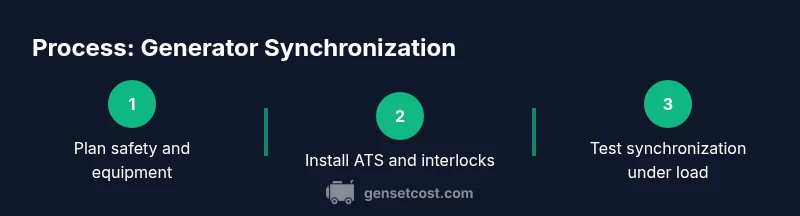
- Verify safety and prerequisites: de-energize all related circuits, confirm fuel supplies, and review manufacturer instructions. 2) Install or verify ATS and interlocks: ensure the switch senses voltage/frequency and can coordinate parallel operation. 3) Connect paralleling hardware: route interconnects, confirm polarity, and secure with proper strain relief. 4) Configure control settings for load sharing: align droop or digital control parameters as recommended by the manufacturer. 5) Start generators in sequence and engage parallel operation: verify that voltages are in phase and loads are shared. 6) Balance loads and verify stability: ensure each unit carries a fair portion of the load without overloading any one unit. 7) Run no-load and load tests: check voltage, frequency, and transfer performance under both conditions. 8) Document results and create a maintenance plan: record settings, tests, and upcoming service dates.
tip :
Tools & Materials
- Automatic transfer switch (ATS)(Rated for total generator output and compatible with parallel operation.)
- Paralleling kit interconnects (bus/interconnect cables)(Specifically designed for your generator models and distance between units.)
- Circuit breakers and fuses(Protect wiring; match amperage to system design.)
- Interlocks or protective relays(Prevent backfeed and ensure safe sequencing.)
- Multimeter and power quality meter(Verify voltage, frequency, and phase balance.)
- Torque wrench and insulated tools(Ensure proper lug torque and safe handling.)
- PPE: gloves, safety glasses, flame-resistant clothing(Personal protective equipment for all steps.)
- Lockout/tagout kit(Prevent accidental energization during work.)
- Generator manuals and installation drawings(Reference for model-specific interlocks and wiring.)
Steps
Estimated time: 3-6 hours
- 1
Verify safety and prerequisites
De-energize related circuits, confirm fuel and ventilation requirements, and review manufacturer instructions. Establish a two-person workflow and lockout/tagout to prevent accidental energization.
Tip: Always communicate work scope and assign roles before touching electrical gear. - 2
Install or verify ATS and interlocks
Install or confirm that the ATS can sense and coordinate voltage, frequency, and phase, and that interlocks prevent backfeed when units are not synchronized.
Tip: Double-check control wiring against the genset manual. - 3
Connect paralleling hardware
Route interconnects, confirm polarity, and secure with strain relief and protective covers. Ensure distance and routing minimize vibration and heat.
Tip: Use color-coded cables and clearly labeled terminations. - 4
Configure load-sharing controls
Set droop or digital control parameters per manufacturer guidance to balance load between gensets.
Tip: Start with conservative settings and increase only after testing. - 5
Start generators and engage parallel operation
Boot each unit in sequence, verify voltage and frequency, then enable paralleling once phase alignment is achieved.
Tip: Watch for transient spikes during initial connection. - 6
Balance loads and verify stability
Distribute load evenly by monitoring each unit’s output and adjusting settings to minimize circulating current.
Tip: Aim for each unit to carry a similar share of the load. - 7
Run no-load and load tests
Perform no-load checks, then apply load gradually to confirm voltage/frequency stay within tolerance and the transfer operates correctly.
Tip: Document test results for future reference. - 8
Document results and plan maintenance
Record settings, test results, and service dates; schedule periodic tests to maintain reliability.
Tip: Create a simple maintenance calendar and assign responsibilities.
People Also Ask
What does generator synchronization mean?
Synchronization means paralleling two or more generators to share load while maintaining voltage, frequency, and phase alignment. It prevents backfeed and ensures stable power delivery.
Synchronization means wiring gensets to share the load safely and consistently during outages.
Do I need an automatic transfer switch to sync generators?
An automatic transfer switch is typically required to coordinate switching and paralleling, ensuring safe transitions and preventing backfeed.
Yes, an ATS is usually needed to safely coordinate multiple generators.
Can a homeowner safely parallel generators without a professional?
Parallel operation involves high-energy electrical work and specific interlocks. A licensed electrician or generator technician is strongly recommended.
This is risky to do yourself; get a professional involved.
What tests should be run after installation?
Run no-load and load tests, check voltage and frequency stability, verify phase alignment, and confirm proper transfer operation.
Do no-load and load tests to confirm everything works correctly.
What is load balancing in synchronization?
Load balancing uses control logic to distribute power evenly between gensets, reducing wear and avoiding overloads on any single unit.
It's how the gensets share the workload fairly.
Is generator synchronization cost-effective?
Cost-effectiveness depends on total ownership: equipment, maintenance, and fuel costs versus reliability benefits.
Costs vary; evaluate the long-term value and maintenance needs.
Watch Video
Key Takeaways
- Verify ATS compatibility before paralleling.
- Follow a written synchronization plan and tests.
- Balance loads to minimize transfer spikes.
- Document results and schedule regular maintenance.
- Prioritize safety and code compliance throughout the process.