How to Use Gear Generator: A Practical Guide
Learn how to use a gear generator to size, compare costs, and plan installation for backup generator systems. This comprehensive guide covers inputs, workflow, interpretation of results, real-world scenarios, and best practices for homeowners and property managers.


This guide shows you how to use a gear generator to estimate sizing, cost, and installation needs for a backup power system. You’ll learn essential inputs, how to run the tool, how to interpret outputs, and how to compare options confidently. Follow the steps to assess trade-offs and make informed procurement decisions.
Overview of the Gear Generator
If you're evaluating backup-power options, the phrase how to use gear generator should be anchored in a practical workflow, not guesswork. A gear generator is a planning tool that translates mechanical inputs into feasible drive configurations for a generator system. When used correctly, it helps you compare gear ratios, torque requirements, speed ranges, and total project costs. The goal is to select a configuration that meets runtime, starting torque, and reliability while staying within budget. According to Genset Cost, using a gear generator early in the planning cycle reduces resizing errors and over-investment by aligning mechanical assumptions with electrical needs. The gear generator accepts inputs such as target output speed, generator horsepower, efficiency assumptions, and allowable gear ratios. It then outputs recommended gear sets, estimated drive torque, heat load, and installation considerations. Keep in mind that a generator gear train is only one part of the system; you also need to consider fuel type, electrical connections, transfer switches, and environmental constraints. In practice, use it alongside a sizing calculator and an installation checklist to capture all costs and constraints. The data helps you compare options across brands and installation scenarios, creating a defensible basis for procurement decisions. This approach supports homeowners and property managers in balancing upfront price, running costs, and long-term reliability. The result is a documented, auditable plan you can present to stakeholders.
Inputs that drive a gear generator
The accuracy of outputs begins with the inputs. A gear generator typically requires electrical and mechanical parameters, such as target output speed (rpm) for the generator, nominal generator horsepower, efficiency assumptions for the drive train, allowable gear ratios, and a torque envelope that accounts for worst-case startup loads. You may also be asked for duty cycle, ambient temperature, and space constraints. In addition, specify constraints on noise, vibration, and cooling capacity, since these influence gear selection and mount design. From a power planning perspective, define electrical load: continuous watts, peak watts, and critical vs noncritical circuits. Then translate these into mechanical requirements: the motor speed, drive ratio, and torque the gearbox must deliver. The gear generator uses these inputs to generate a small set of feasible gear configurations, each with a recommended gear set, an estimated drive torque, an estimated heat load, and an installation note. According to Genset Cost analysis, thoughtful input selection reduces back-and-forth revisions and speeds up procurement. Always document the sources of data used to populate inputs, such as equipment manuals or manufacturer data sheets, so your team can verify assumptions. Finally, set guardrails: minimum and maximum speed limits, safety margins on torque, and a range for costs. This helps the tool avoid suggesting impractical gear trains or oversized components. If you are uncertain about a parameter, default to conservative, safer values and adjust after you review outputs with a technician.
Step-by-step: how to use gear generator in practice
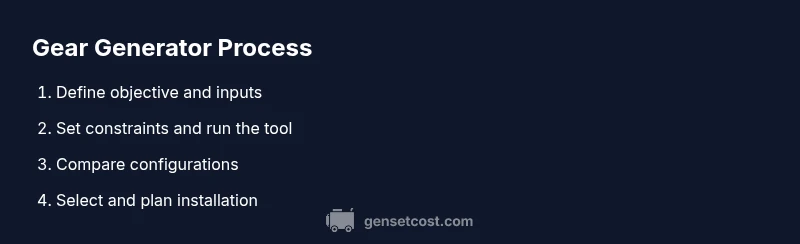
Before you start, define what you want the gear train to achieve (reliable runtime, compact size, or efficiency). The gear generator is most valuable when you compare multiple configurations under the same inputs, so consistency matters. The tool will typically request your target electrical load and translate it into a mechanical torque and speed envelope. If the tool supports it, you can constrain gear ratios to match existing hardware or space limits. As you refine inputs, monitor how small changes alter the recommended gear sets and associated costs. Remember, outputs are estimates; they help you make informed decisions, not certify a specific part number. Finally, save the session and export a summary to share with stakeholders. With careful inputs, you’ll have a defensible basis for selecting a gearbox, motor, and generator pairing that balances upfront cost with long-term running expenses. This approach aligns with best practices advocated by Genset Cost and other industry guides.
Running the gear generator: what to expect
When you access the gear generator dashboard, enter constraints such as target rpm, acceptable gear ratio range, and maximum torque. The interface will typically offer real-time validation—if you input unrealistic numbers, you’ll see warnings. Click Generate to produce a shortlist of gear configurations, each with a recommended gear set, predicted drive torque, and a note on installation complexity. Compare configurations side-by-side, focusing on total estimated cost, running efficiency, and space requirements. Use filters for radius of installation, compatibility with transfer switches, or preferred manufacturers. If your scenario involves future growth, run sensitivity analyses to see how scaling the load affects gear choices and costs. Save your top configurations and export a concise report that includes assumptions, outputs, and recommended next steps. The key takeaway is that the generator helps you explore trade-offs, not dictate a final hardware package. Always cross-check outputs with supplier catalogs to ensure the proposed gear sets exist and are within your procurement budget.
Interpreting outputs: costs, sizing, and decisions
Outputs typically include multiple feasible gear configurations, each with a gear ratio, estimated torque, predicted heat load, and a rough installation note. Use these fields to assess sizing accuracy and installation feasibility. Pay attention to whether a configuration meets both starting torque requirements and continuous running efficiency; a favorable gear ratio may still push cooling or mounting limits. Cost indicators often combine hardware prices and estimated labor; regional variations mean you should request formal quotes to validate these estimates. When reviewing results, map each configuration to your constraints: space, noise, vibration, and maintenance demands. If one option looks optimal on paper but requires exotic bearings, favor a more standard alternative with broader supplier support. Finally, document the rationale behind your choice and prepare a cross-functional review with facilities, electrical, and finance teams to ensure alignment across stakeholders.
Real-world scenarios and examples
Scenario A: A small home backup setup with essential circuits only. The gear generator suggests a compact gear train with a modest torque envelope and a short list of compatible motors. This keeps upfront costs low while preserving run-time reliability for critical loads. Scenario B: A multi-room commercial property with higher duty cycles. The tool highlights several configurations that balance startup torque, cooling needs, and space constraints. You’ll likely see a premium option that reduces long-term running costs and improves resilience against power surges. Scenario C: An off-grid cabin relying on a diesel engine. The gear generator helps identify a gear set that maximizes efficiency at partial-load operation, minimizing fuel use and wear over time. This choice often requires careful attention to heat management and vibration isolation. Scenario D: A mid-sized building with a diesel generator and a transfer switch. The outputs emphasize compatibility with existing electrical hardware and the practicality of installation, including mounting and cabling considerations. In all cases, use the tool to compare multiple configurations against the same load profile to reveal true trade-offs.
Maintenance, updates, and best practices
Keep your gear generator data current by refreshing efficiency numbers, gear material specs, and catalog updates from manufacturers. Periodically re-run scenarios if loads change due to tenant improvements, new equipment, or regulatory requirements. Maintain a living document that captures input assumptions, chosen configuration, and any quotes obtained from suppliers. Schedule quarterly reviews with facilities and finance teams to ensure the plan remains aligned with budget and compliance. Finally, pair the gear generator outputs with a separate reliability assessment that considers bearings, lubrication, and vibration monitoring to extend equipment life and reduce downtime. By treating the tool as a dynamic planning resource, you’ll stay prepared for changes in load, fuel prices, and technology advancements.
Tools & Materials
- Internet-connected computer or tablet(Used to access the gear generator tool and save sessions)
- Gear generator software or web tool(Licensed or open-source; ensure data is up to date)
- Current electrical load data(List continuous/critical/noncritical loads for sizing)
- Manufacturer data sheets(Optional for precise torque/efficiency inputs)
- Note-taking device(For recording outputs and recommendations)
Steps
Estimated time: 30-60 minutes
- 1
Define objectives and constraints
Clarify the primary goals (reliability, cost, space) and set non-negotiables such as minimum runtime and maximum gear ratio. Document any future load growth assumptions to guide input ranges.
Tip: Write down your top 3 performance priorities before you begin. - 2
Gather input data
Collect the electrical load profile, target rpm, and any mechanical constraints. Include startup torque requirements and environmental limits like space, noise, and cooling capacity.
Tip: Double-check units (rpm, kW, Nm) to avoid input mistakes. - 3
Set guardrails and constraints
Establish safe defaults for torque margins and gear ratios. Define a budget range and a preferred manufacturer or compatibility constraints to guide the tool’s filtering.
Tip: If uncertain, choose conservative values to avoid over-sizing. - 4
Input data into the gear generator
Enter the gathered data into the tool, apply constraints, and select any required compatibility filters. Save the session if the tool supports it.
Tip: Review inputs for any obvious mismatches before generating results. - 5
Generate options
Run the calculation to produce a shortlist of feasible gear configurations with torque, heat load, and installation notes.
Tip: Note your top 3 configurations for side-by-side comparison. - 6
Review outputs and verify feasibility
Cross-check results against manufacturer catalogs and installation constraints. Flag any out-of-range reads for re-evaluation.
Tip: If something seems off, adjust assumptions and re-run. - 7
Select configuration and plan installation
Choose the preferred gear set and plan the mechanical and electrical installation, including transfer switch and mounting.
Tip: Coordinate with a licensed installer and obtain formal quotes. - 8
Document results and next steps
Create a decision memo with inputs, outputs, and rationale; share with stakeholders for final approval.
Tip: Store a copy of the final configuration and any quotes.
People Also Ask
What is a gear generator and what does it do?
A gear generator is a planning tool that explores possible gear configurations for a generator system. It outputs candidate gear sets, required torque, heat load, and rough installation notes to help you compare sizing and costs.
A gear generator is a planning tool that explores gear configurations for a generator and helps you compare sizing and costs.
What inputs does a gear generator require?
Typical inputs include target output speed, generator horsepower, drive train efficiency, allowable gear ratios, and a torque envelope. You may also provide duty cycle, ambient temperature, and space constraints.
You need speed, horsepower, efficiency, gear ratios, and torque, plus any duty cycle and space constraints.
Can I rely on outputs for exact hardware specs?
Outputs are estimates meant for planning. Verify results with manufacturer data sheets and supplier catalogs before ordering parts.
The outputs are planning estimates, not exact hardware specs.
Is the gear generator applicable to all brands?
Most gear generators handle generic mechanical inputs and common gearbox concepts. Check compatibility with your preferred brands and obtain quotes to confirm availability.
The tool covers generic gear concepts; confirm brand compatibility with quotes.
How often should I update gear data in the tool?
Update data whenever manufacturers publish new specs or when your loads change. Regular refresh ensures the tool reflects current options.
Update data whenever specs or your loads change.
What if outputs seem unrealistic?
Re-check the inputs for unit errors, adjust conservative assumptions, and run a sensitivity analysis to understand the impact of each input parameter.
If outputs look off, verify inputs and re-run with conservative assumptions.
Watch Video
Key Takeaways
- Define objectives before using gear generator
- Input accurate, consistent data for reliable outputs
- Cross-check results with catalogs and engineers
- Document assumptions and rationale for stakeholders