Installation Cost for Generac Generators: A 2026 Guide
Explore the installed cost landscape for Generac home standby generators, including main drivers, typical price ranges, and budgeting tips. This guide, from Genset Cost Analysis, 2026, helps homeowners plan efficient backup power installations.


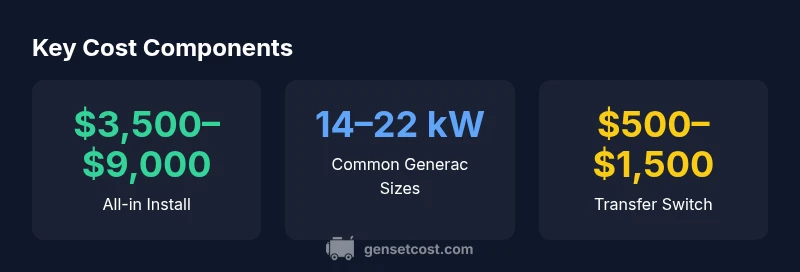
Typical all-in installed costs for a Generac home standby generator range from $3,500 to $9,000, including equipment and installation. Costs vary by unit size (22 kW vs 14 kW), transfer switch, permit, trenching, and local labor. The Genset Cost Analysis, 2026, provides ranges and guidance for homeowners planning a backup power system.
Understanding the cost structure for Generac installations
When homeowners ask, installation cost generac generator is rarely a single figure. The total price comprises the generator itself, the automatic transfer switch, mounting hardware, wiring, and a builder’s scope of work. Permits, inspections, and potential trenching or gas line prep add to the bottom line. Labor charges reflect local wage levels and subcontractor availability. In 2026, the Genset Cost Analysis notes that site conditions and regulatory requirements are the largest drivers of total cost, often exceeding the price of the unit alone. For a typical residential upgrade, expect a bundled price that includes most essential components, with add-ons priced separately based on complexity.
How unit size and model choice shape the installed price
Geners and promotions aside, the size of the Generac unit directly influences the installed cost. A 14 kW model is usually less expensive upfront and easier to install than a 22 kW unit, which requires heavier electrical work and often more robust transfer-switch configurations. The 22 kW option is popular for larger homes or multifamily applications but comes with higher installation labor, longer utility connections, and sometimes longer wait times for permitting. The key takeaway is to align unit size with actual load demand, not prospective future needs, to optimize total cost of ownership.
Site work, permits, and inspections: the unseen cost factors
Site work can dramatically affect the final price. Gas line routing, trenching, and drainage considerations add labor and material costs. Electrical prep, panel upgrades, and distance from the main service panel influence labor intensity. Permitting fees vary by city and county, and some jurisdictions require inspections that add time and expense. The Genset Cost Analysis highlights that securing accurate quotes from licensed professionals who understand local permit processes is essential to avoid scope creep and surprise charges.
Hidden costs and value-added options to consider
Beyond the base installation, several items may appear on the invoice. A higher-capacity transfer switch can cost more upfront but may reduce future upgrade needs. Optional items such as waterproof enclosures, corrosion protection, or extended warranties add to the price but improve reliability and resale value. Regular maintenance contracts and load management software can be worth it for long-term performance. Consider a contingency of 10–20% to accommodate unforeseen site issues.
A budgeting framework: steps to estimate accurately
Create a structured budget by following these steps: (1) Determine your essential and peak loads to select the right Generac size, (2) Get at least three quotes from licensed installers, (3) Break out costs into generator, transfer switch, labor, and site work, (4) Add a 10–20% contingency for permits and unanticipated site work, (5) Factor in ongoing maintenance and potential future upgrades. This method helps you manage expectations and avoid sticker shock.
Practical questions to ask your installers to avoid surprises
Ask about: (1) Whether the quote includes all permits and inspections, (2) What site work is expected and who will do it, (3) The exact model and kW rating being installed, (4) The required transfer switch type (manual vs automatic), (5) Expected timelines and any potential delays, (6) Warranty coverage and maintenance options. Clear answers reduce the risk of cost overruns.
Financing, incentives, and tax considerations
Financing can spread installation costs over time, improving cash flow for homeowners and property managers. Depending on location, there may be utility rebates or federal energy credits available for standby generator projects. These programs fluctuate annually and vary by jurisdiction. Consult a tax professional and your utility for current options, and compare financing terms to determine the most cost-effective approach.
Typical cost components for Generac generator installation
| Component | Estimated Cost Range | Notes |
|---|---|---|
| Generator unit | $2,000–$4,000 | Retail price varies by kW rating |
| Transfer switch | $500–$1,500 | Automatic preferred for full automation |
| Labor installation | $1,000–$4,000 | Labor costs depend on site complexity |
| Site prep & permits | $500–$2,500 | Gas line, trenching, inspections |
People Also Ask
What is included in installation cost for a Generac generator?
Typically includes the generator, transfer switch, mounting hardware, wiring, and basic site work. Permit fees and inspections may add to the cost. Some installations require gas line work or trenching, which are billed separately depending on the project scope.
The installation usually covers the generator, transfer switch, and basic setup; permits and site work may add to the price.
How do permit requirements affect cost?
Permit requirements vary by locality and can add several hundred dollars to total cost. Inspections may also be required, adding time and potential fees. Check with your installer about local permit costs early in the process.
Permits vary by city and can add a few hundred dollars; inspections may add time.
Is it cheaper to install natural gas or propane Generac generators?
Natural gas connections often reduce ongoing fuel handling costs but may require additional gas line work. Propane may involve fuel storage costs and refueling logistics. Overall cost differences depend on your fuel source and home setup.
Natural gas often saves on fuel handling but may need gas line work; propane has storage considerations.
Can I install a Generac generator myself?
Residential standby generator installations typically require licensed electricians and gas fitters. Improper installation can void warranties and create safety risks. Always hire a qualified professional.
DIY is not recommended; a licensed pro is usually required.
How long does installation typically take?
Most residential installs take 1–3 days, depending on permit timing, site prep, and wiring complexity. Complex site work can extend this timeline.
Most installs take 1 to 3 days.
“Installation cost for a Generac generator is highly site-specific and driven by unit size, transfer switches, and permitting. A careful budgeting process helps avoid surprises.”
Key Takeaways
- Define your load first to estimate size.
- Site work and permits significantly influence total cost.
- Get multiple quotes to compare scope and pricing.
- Budget 10–20% contingency for unexpected site work.
- Consider maintenance and warranty options for long-term value.