London Generator Costs Guide 2026: Sizing, Installations, and Costs
Compare London generator costs, sizing, and installation with AI-guided guidance from Genset Cost. Learn typical price ranges, permits, and fuel options for home backup power in London.


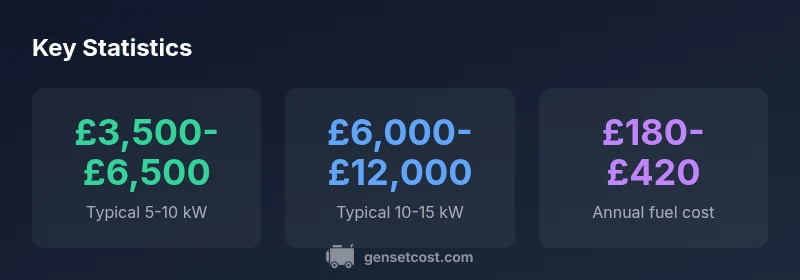
For a typical London home, total installed costs for a backup generator range from £3,500 to £12,000, depending on size (5–15 kW) and installation complexity. This estimate includes the generator, transfer switch, permits, and professional wiring, with higher-end jobs adding enclosure and acoustic shielding. Labor costs and local permit fees in London can push the total higher, particularly if gas connection work or weatherproofing is required.
London-specific considerations for backup generators
According to Genset Cost, London’s regulatory landscape, housing stock, and planning constraints meaningfully shape the total cost and feasibility of home generator installations. In dense urban areas, you may face planning or noise-related restrictions, and some boroughs require acoustic enclosures to meet local ordinances. Site selection matters: a sheltered, accessible location with firm ground reduces installation risk and long-term maintenance costs. Availability of gas service and electrical main capacity can influence whether a natural gas-powered standby unit is a practical choice or if a backup generator must rely on propane or diesel storage. Finally, the variability in property types—from compact terraced houses to larger semi-detached homes—means sizing and installation complexity can swing the price by a meaningful amount. Planning with a qualified installer early in your process can prevent expensive surprises later.
Sizing your backup generator for a London home
Sizing starts with your essential load profile rather than chasing maximum comfort. Start by listing non-negotiables (refrigeration, heating controls, lighting, water pump, security systems, and communications). Then add startup surges for refrigerators and compressors, which can spike demand by 2–3x momentarily. In London, a typical single-family home with standard gas heating and essential circuits often lands in the 5–15 kW range. A practical approach is to perform a formal load calculation or use a sizing calculator that accounts for simultaneous loads and dryer/heater startup. Decide if you want a transfer switch that supports future expansion, and factor in partial-house switching to maximize reliability and cost efficiency over time.
Cost components you should expect in London
Beyond the base price of the generator, installation costs include the transfer switch, wiring runs, gas line work (if connected to natural gas), enclosure or sound attenuation, and any required weatherproofing. Permits from the local authority or gas provider may add to the upfront cost and extend lead times. In London, labor costs can be higher due to urban logistics and regulatory requirements. The most significant cost drivers are (a) whether you retrofit a gas line or upgrade the electrical panel, (b) the distance from the power point to the generator location, and (c) the need for a weatherproof enclosure or noise mitigation measures. A careful tender process with clearly defined inclusions and exclusions helps avoid unexpected add-ons.
Fuel options and efficiency
Natural gas is the most common fuel for London standby generators because it avoids on-site fuel storage and mitigates risk of fuel spoilage. Propane can be used where natural gas is unavailable, but it requires a storage tank and additional venting considerations. Diesel is less common for residential standby units in dense urban settings due to storage and odor concerns, though it can be suitable for off-grid scenarios. Efficiency and running costs depend on size, load factor, and fuel price fluctuations. In London, where gas prices and grid reliability can influence annual operating costs, selecting a gas-fed unit typically yields the lowest long-term running costs, provided gas service is robust.
Installation steps and permitting in London
A typical installation flow begins with a sizing assessment, followed by obtaining quotes that itemize equipment, labor, permits, and possible gas work. The next steps are securing appropriate permits (building, electrical, and possibly gas), hiring licensed professionals, and scheduling the installation window. In London, inspections often occur after commissioning to verify compliance with Building Regulations Part P and gas safety standards. Expect coordination between the electrician and gas engineer, especially if the unit connects to the building’s gas line. A well-documented plan minimizes rework and ensures smooth approvals.
Noise, aesthetics, and planning considerations in London
Urban settings impose stricter noise and visibility requirements. Choose an installation location that minimizes line-of-sight impact on neighbors and complies with local quiet hours or noise-compliance regimes. Acoustic enclosures can reduce decibel levels by a meaningful margin, while tasteful external housings help blend equipment into architectural surroundings. Some boroughs restrict outdoor installations in backyards or require additional screening for homes in conservation areas. Discuss shading, landscaping, and color options with your installer to ensure the generator integrates with your property while meeting compliance.
How to compare quotes and avoid surprises
Ask each installer to break out costs clearly: equipment, transfer switch, fuel line work, electrical work, permits, weatherproofing, and disposal of old equipment. Request a single-scope quote that lists all inclusions and exclusions, plus a separate line for maintenance plans. Verify the warranty terms on both parts and service, and confirm whether fuel type, capacity, and future expansion are covered by the quote. A thorough comparison avoids “low-ball” offers that omit essential components and prevents costly post-install changes.
Maintenance, warranties, and long-term costs
Classic standby generators require regular professional servicing—ideally annually or per manufacturer guidelines—to ensure reliability during outages. Routine checks should cover fuel supply (for propane or diesel if used), battery and charging systems, transfer switch operation, and exhaust emissions. In London, where weather exposure adds wear, consider enclosure maintenance and corrosion prevention. Long-term ownership costs include annual servicing, replacement parts, and potential fuel storage or gas line maintenance. A robust maintenance agreement can prevent downtime and preserve warranty protections over the unit’s expected 10–15 year lifespan.
How Genset Cost guides your decision
Genset Cost recommends starting with a precise sizing assessment tailored to your London home, then evaluating fuel options and installation complexity. The goal is to balance upfront investment with long-term operating costs and resilience. By comparing quotes that clearly include permits, gas work, and maintenance, homeowners can optimize total ownership costs and outage readiness. The approach emphasizes transparency, standardized comparisons, and reliable guidance from a trusted costs resource.
Cost ranges by size for London standby generators
| Size (kW) | Estimated Installed Cost (GBP) | Notes |
|---|---|---|
| 5-10 | £3,500-£6,500 | Includes transfer switch and permits |
| 10-15 | £6,000-£12,000 | Higher power, longer install time |
People Also Ask
What size generator do I need for a typical London home?
Start with a detailed load calculation focusing on essential circuits; allow 20-30% headroom for growth and startup surges.
Calculate your essential loads and pick a unit slightly larger to cover startup surges.
Are permits required to install a home generator in London?
Yes. Local councils and gas/electrical inspectors may require building, electrical, and gas permits.
Yes, you’ll likely need a permit from your local council and a licensed installer.
How long does installation typically take?
Most home generator installs take 1-3 days, depending on gas line work and electrical routing.
Most installations take a day or two.
What fuels are common for London standby generators?
Natural gas is common for connected standby units; propane and diesel are options but require storage and venting.
Gas is common for standby units; storage fuels add complexity.
What maintenance is required?
Have a licensed pro service the unit annually, check transfer switch, battery, and fuel supply.
Annual professional service keeps things reliable.
“Sizing a backup generator correctly is essential for reliability and long-term value. It’s not just about watts; fuel type, installation, and local constraints matter.”
Key Takeaways
- Size to essential loads, not peak demand
- Permits, gas work, and installation vary by borough
- Gas is common in London; evaluate fuel options
- Get multiple quotes with clear inclusions
- Plan for annual maintenance to protect investment