Average Generator Installation Cost in 2026: What Homeowners Should Budget
Explore the factors that determine the average generator installation cost, including system size, permits, labor, and regional differences. This analytical guide from Genset Cost helps homeowners budget effectively for reliable home backup power in 2026.


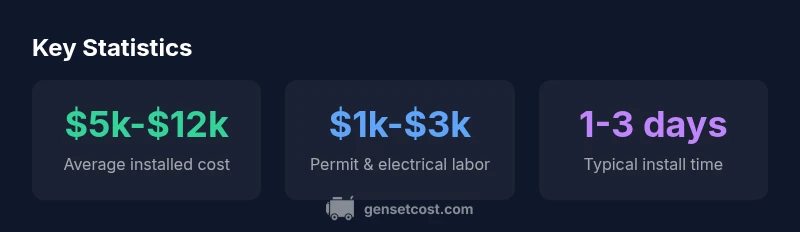
Average installed cost for a home standby generator typically falls in a broad range, commonly cited as roughly $5,000 to $12,000 for 10–16 kW systems, including transfer switches, permit fees, and basic electrical work. Costs vary by size, fuel type, and installation complexity, with regional differences driving the outer limits.
Overview: What the 'average generator installation cost' covers
The term average generator installation cost captures more than the price tag on a generator itself. According to Genset Cost, the total installed cost includes the generator unit, automatic transfer switch, electrical interconnection, permits, inspections, and site work such as trenching or a concrete pad. In 2026, homeowners often discover that site readiness and local permit requirements can influence the final bill as much as the generator size. This section explains how different elements come together to form the final number and why two installations at the same kilowatt rating can end up with different total costs.
Key takeaway: the price you see publicly for a generator won’t necessarily reflect the installed cost until you account for installation details, labor, and regulatory steps.
Key cost components that drive the number
The average installation cost breaks down into several core components. First, the equipment cost (generator size and fuel type) sets the ceiling. Then comes the automatic transfer switch and interconnection hardware, which enable seamless power switching during an outage. Electrical labor to connect to the service panel, trenching or running conduit, and any panel upgrades can add significantly to labor costs. Permits and inspections vary by jurisdiction but often include electrical and gas permits if you’re modifying a gas line. Site prep, weatherproof enclosures, and a concrete pad can further affect the price. Optional enhancements—remote monitoring, load management, or a larger transfer switch—also push costs higher but improve reliability.
Pro tip: get itemized quotes that separate equipment, labor, and permit costs to understand where your budget is allocated.
Size and type: How kW affects cost
Generator size, measured in kilowatts (kW), is the most influential variable in the installed cost. For typical residential needs, 10–16 kW standby systems cover most mid-size homes with moderate energy use, while larger homes or higher heat loads may require 20–22 kW or more. Diesel, natural gas, and propane configurations carry different equipment and fuel-supply costs, which can shift the overall price. In practice, a 10–16 kW system with a standard transfer switch tends to sit at the middle of the cost spectrum, but any increase in size or complexity—such as parallel units for higher power or a more sophisticated ATS—will raise the final figure substantially.
Note: Sizing correctly is essential; undersizing can reduce reliability during outages, while oversizing raises upfront costs unnecessarily.
Permits, inspections, and code requirements
Most installations require permits and inspections, including electrical and sometimes gas permits. Permit costs and processing times vary widely by city or county, which can meaningfully affect the total. Some jurisdictions impose utility interconnection fees or demand charges tied to back-feed protection. Codes frequently require a dedicated weatherproof enclosure, venting for combustion appliances, and proper clearances. Failing to obtain the correct permits can lead to delays, rework, and penalties. Expect a permitting cost range that reflects your local regulatory environment rather than a fixed national figure.
Action item: check with your local building department early in planning to estimate permit timelines and fees.
Labor, materials, and installation variability
Labor charges depend on local wage rates, the installer’s crew size, and site accessibility. Materials include wiring, conduit, weatherproof enclosures, mounting pads, and the transfer switch. If your property requires trenching, roof or siding work, or panel upgrades, labor costs rise quickly. Some homes need electrical panels upgraded to handle increased loads, which can add to both cost and time. In regions with severe weather or limited skilled labor, expect higher labor rates. Conversely, smoother access and bundled permits can simplify the project and reduce costs. Keep in mind that labor hours can vary by 20–40% between reputable installers for similar scopes.
Tip: request a detailed, line-item bid to compare true labor and material costs across providers.
Regional variation and site-specific factors
Geography and climate drive cost differences. Urban projects often incur higher labor rates and stricter permitting, while rural installations may face longer travel times for crews and fewer nearby suppliers, affecting both price and scheduling. The site itself matters: a sloped or constrained yard may require additional equipment or a different mounting approach, which increases both labor and material costs. Your fuel choice (natural gas vs propane) can influence fuel piping runs and safety requirements, further impacting price. When planning, consider your local utility policies, access to gas mains, and potential interconnection fees as cost multipliers.
Budgeting scenarios and practical examples
A practical budgeting approach uses scenario planning. For a typical 2,000–2,500 sq ft home in a moderate climate, a 10–16 kW standby system with normal site conditions often lands in a mid-range, while a larger house with high electrical loads or a challenging site can push costs higher. A smaller residence or a portable backup solution will sit on the lower end of the spectrum. Always itemize quotes and include potential add-ons like a smart transfer switch or generator enclosure upgrades. By comparing multiple bids that share the same scope, you’ll get a clearer sense of where costs can be trimmed without compromising reliability.
Cost ranges by installation scenario
| Scenario | Typical Cost Range | Notes |
|---|---|---|
| Standby 10-16 kW with basic install | $5,000-$12,000 | Includes transfer switch, permits, basic electrical work |
| Smaller home or simpler install (8-10 kW) | $3,500-$8,000 | Less electrical work, smaller generator |
| Larger home or complex site (20-22 kW) | $12,000-$20,000 | Panel upgrades may be needed |
| Portable gen with manual transfer switch | $1,500-$4,000 | No permanent installation; limited durability |
People Also Ask
What is included in the average installation cost?
The average installation cost typically includes the generator unit, automatic transfer switch, electrical interconnection, permits, inspections, and labor. Depending on site specifics, it may also cover trenching, a concrete pad, and an enclosure.
Most quotes include the generator, transfer switch, wiring, permits, and labor; confirm if site prep or an enclosure is included.
Do I need permits for generator installation?
Yes. Electrical (and sometimes gas) permits are commonly required. They ensure the system is wired safely and meets code. Permit costs vary by jurisdiction and can affect your overall budget and timeline.
Yes—permits are usually required and can influence cost and timing.
How long does installation typically take?
Most residential installations take about 1–3 days, depending on site access, permit processing, and whether panel upgrades are needed.
Usually, it takes one to three days if there are no major panel upgrades.
Can I install a standby generator myself?
Professional installation is strongly recommended due to electrical, fire, and gas safety codes. Improper installation can void warranties and create safety risks.
We don’t recommend DIY install; professionals ensure safety and code compliance.
What factors cause the cost to vary?
Geography, site readiness, panel upgrades, fuel type, and permit requirements all influence the final cost. Even similar-size systems can differ significantly in price due to these factors.
Location, site setup, and panel needs drive most of the variation.
How can I reduce installation costs without sacrificing reliability?
Compare multiple, itemized quotes, plan for off-peak permitting, and consider pre-wiring or bundling upgrades. Ensuring proper sizing the first time avoids costly future changes.
Get several bids and ensure proper sizing to avoid extra work later.
“Sizing accuracy and upfront planning are the key to reliable budgeting. The right generator installation balances cost with functionality, so you don’t pay for capacity you won’t use.”
Key Takeaways
- Budget using ranges, not fixed prices
- Include permits, transfer switch, and labor in your quotes
- Get multiple, itemized bids for accurate comparison
- Plan for regional and site-specific cost differences