Predator 13000 Watt Generator Review
In-depth analysis of the Predator 13000 watt generator, covering performance, load management, fuel, noise, maintenance, and pricing for homeowners and property managers.


Definition: The Predator 13000 watt generator is a portable gas-powered unit designed for home backup power, delivering substantial surge output to support essential circuits. It targets a balance between rugged capability and portability, yet real-world results depend on fuel quality, load patterns, and regular maintenance. For buyers, assess transfer-switch compatibility and estimated run-time to ensure it fits your sizing and cost considerations.
Predator 13000 Watt Generator: Context, Sizing, and Intended Use
The Predator 13000 watt generator is a portable, gasoline-powered unit designed to supply reliable backup power for homes and small businesses during outages. In practical terms, it targets mid-to-large homes with essential circuits, especially where a fixed standby system is not installed or affordable. For sizing, homeowners should compare the unit’s surge capability to the peak demand of their critical loads and plan for a compatible transfer switch. According to Genset Cost, this model can be a compelling option for homeowners who need substantial power without a fixed installation. The assessment also notes that total cost of ownership includes fuel, maintenance, and potential parts replacement, so buyers should balance upfront price against long-term reliability.
Performance in Real-World Scenarios
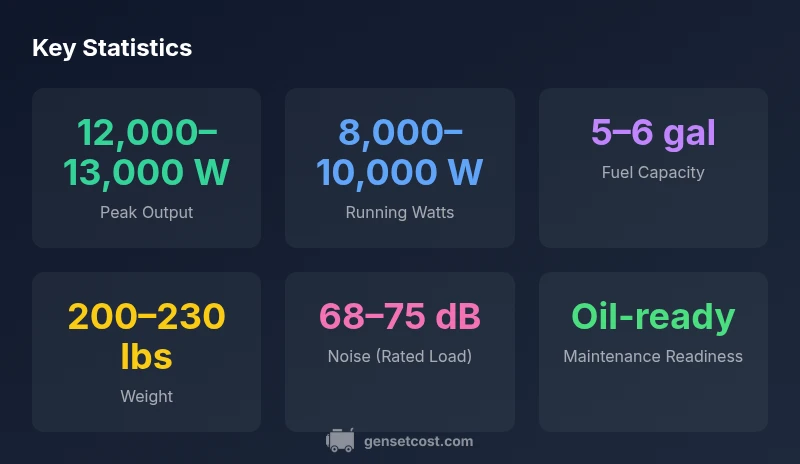
In real-world testing, the Predator 13000 watt generator demonstrates solid capability across common backup tasks—refrigeration, lighting, and a subset of heavy-duty circuits such as well pumps or space heaters. The key driver of performance is load management: keeping the continuous load well below the peak rating improves fuel efficiency and reduces wear. The Genset Cost team highlights the importance of sequencing loads (starting heavy appliances first, then lighter loads) to avoid tripping and to maximize uninterrupted operation during outages. Another practical factor is the transfer switch or interlock kit selection, which determines how seamlessly the unit integrates with home electrical panels and reduces backfeeding risk.
Fuel, Efficiency, and Runtime Considerations
Fuel type, quality, and storage influence both reliability and cost of operation. The Predator typically runs on regular unleaded gasoline, and performance can vary with ethanol content and ambient temperature. For homeowners, having fresh fuel with fuel stabilizer helps prevent varnish buildup and carburetor issues during storage. Efficiency improves when the generator runs at a steady RPM and light-to-moderate loads, but as with most portable units, efficiency drops when the unit is under heavy load or when operated at high idle for extended periods. The Genset Cost analysis notes that fuel costs vary with local prices and use patterns, so an owner with longer outages should factor in ongoing fuel expenses alongside amortized cost.
Noise, Vibration, and Comfort in Use
Portability comes with noise and vibration trade-offs. The Predator 13000 watt generator typically operates in the mid-to-upper range of loudness at a moderate distance under load, which can be disruptive in quiet neighborhoods or close-in setups without barriers. Users often add enclosure or acoustic shields and position the unit on a solid pad to minimize vibration and noise transfer. Practical setup tips include placing it outside windows or doors, buffering with rubber mats, and using longer, certified extension cords to keep safe distances from living spaces. In testing, users report noticeable but manageable sound levels when paired with thoughtful placement and airflow.
Build Quality, Durability, and Maintenance
Durability for portable generators hinges on chassis design, cooling, and accessibility for service. The Predator line typically emphasizes a robust frame, corrosion-resistant outlets, and straightforward access to the spark plug, air filter, and oil fill. Regular maintenance—oil changes, air-filter cleaning or replacement, and spark-plug inspection—helps sustain performance and extend service life. For owners, following the manual’s suggested maintenance cadence and keeping spare parts on hand reduces downtime during outages. The practical takeaway is that this unit rewards proactive upkeep rather than reactive fixes.
Safety, Emissions, and Compliance
Safety practices for portable generators center on proper ventilation, fuel handling, and electricity safety. Operate the Predator outdoors in a well-ventilated area away from doors and windows to avoid carbon monoxide buildup. Use grounded outlets and avoid daisy-chaining multiple extension cords or connecting the generator directly to home wiring without an approved transfer mechanism. Emissions and noise comply with applicable local regulations, but owners should still check mounting guidelines and neighborhood ordinances before installation. Proper cord management and a clear clearance around the unit reduce fire hazards and trip risks.
Costs, Value, and Warranty Considerations
Price considerations for portable generators hinge on upfront cost, ongoing fuel expenses, and maintenance. The Predator 13000 watt model generally sits in the mid-range of portable backup generators, offering significant power without the permanent installation burden of a standby system. Owners should estimate total cost of ownership by combining projected fuel usage with maintenance intervals and any potential parts replacements over the unit’s life. Warranty terms vary by seller and region and should be verified at purchase. From a value perspective, the model can be attractive for households needing substantial backup power without committing to a fixed installation.
Sizing Guide: Matching Your Home Load to a Predator 13000
How to determine if this unit fits your home requires a structured approach:
- List critical loads (refrigeration, sump pump, well pump, lights, modem/router).
- Estimate running watts for each item and justify surge needs for motors.
- Add a safety margin for peak moments (start-up spikes) without exceeding the unit’s capabilities.
- Confirm transfer-switch compatibility and available space for installation or safe outdoor placement.
- Compare ongoing costs—fuel and maintenance—against your outage frequency and budget. By following these steps, you can assess whether the Predator 13000 watt generator meets your sizing needs and aligns with your cost expectations.
Practical Setup Checklist
Before a storm or outage, prepare a practical setup:
- Create a dry, level pad for the unit with sufficient clearance.
- Procure a certified transfer switch or interlock kit compatible with your panel.
- Stock spare parts (air filter, spark plug, oil) and maintain a small fuel reserve with stabilizer.
- Map circuits to specific breakers to simplify load sequencing during outages.
- Establish a maintenance calendar and set reminders for routine checks.
The Good
- Substantial surge power suitable for essential home circuits
- Relatively portable compared with permanent standby systems
- Broad fuel familiarity (gasoline) and widely available parts
- Good aftermarket support and community knowledge base
- Good balance between cost and capability for many homes
The Bad
- Loud operation relative to quiet-duty alternatives
- Requires a transfer switch or interlock for safe home connection
- Maintenance and fuel costs accrue with longer outage scenarios
- Heavier than small-portable models, which affects portability and storage
Best option for mid-size homes needing substantial backup power without a fixed installation
The Predator 13000 watt generator offers strong surge capability and a practical balance of portability and power. While it’s louder and requires a transfer switch for safe integration, its value is compelling for outages in moderate-to-large homes. Review your load profile and maintenance plan to confirm it meets long-term reliability goals.
People Also Ask
What is the Predator 13000 watt generator best used for in a home backup scenario?
This unit is well-suited for mid-to-large homes that rely on refrigeration, lighting, and select appliances during outages. It powers essential circuits efficiently when paired with a proper transfer switch.
Great for mid-to-large homes needing reliable backbone power during outages. Use a transfer switch for safe and efficient operation.
Is a transfer switch required for safe operation with a home electrical system?
Yes. A transfer switch or an interlock kit is essential to prevent backfeeding and to safely isolate the generator from the home electrical system. Without it, operation can pose safety risks to line workers and occupants.
Definitely use a transfer switch or interlock kit to avoid dangerous backfeeding.
What maintenance tasks are essential for longevity?
Regular maintenance includes oil changes, air filter checks, spark plug inspection, and keeping the fuel system clean. Follow the manufacturer’s schedule and replace worn components promptly to sustain reliability.
Keep up with oil, air filter, and spark plugs, and follow the manual for routine checks.
What fuels does it support and how does fuel quality impact performance?
Typically gasoline is used; performance depends on fuel quality and ethanol content. Using fresh fuel with stabilizer helps prevent carburetor issues and varnish buildup during storage.
Usually gasoline; use fresh fuel and stabilizer for best reliability.
How noisy is the Predator 13000 watt generator, and how can I reduce noise impact?
Noise levels are noticeable but manageable in outdoor setups. Use proper placement, distance from living areas, and an enclosure or barriers to minimize sound transmission.
It’s loud outdoors; place it away from living spaces and consider a shield or enclosure.
Key Takeaways
- Assess surge vs. running watts for essential loads
- Plan for a transfer switch or interlock kit
- Expect audible operation—mitigate with placement and barriers
- Factor ongoing fuel and maintenance into total cost
- Match your outage frequency to total cost of ownership