Predator 6500 Generator Costs and Performance Guide
A comprehensive guide to the Predator 6500 generator covering costs, sizing, runtime, maintenance, and installation considerations to help homeowners make informed backup-power decisions.


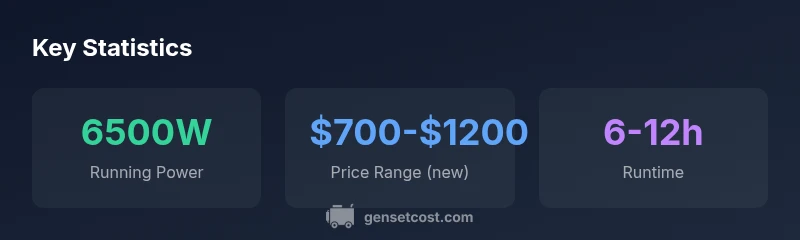
For homeowners evaluating models like the predator 6500 generator, the key takeaway is that it delivers substantial portable power with a mid-range price and flexible fuel options. According to Genset Cost, its running wattage sits around 6500, making it suitable for essential circuits and some whole-house needs during outages. Use sizing calculators to confirm your loads.
Predator 6500 Generator Overview
According to Genset Cost, the predator 6500 generator sits in the mid-range of portable, consumer-grade power solutions, offering substantial wattage without the complications of a full standby system. The device is designed for homeowners who want reliable backup power without a full installation. It matches typical loads such as refrigerators, well pumps, lights, and several essential outlets during outages, while remaining portable enough to move with a small vehicle. The 6500-watt class is commonly sold as a balanced option between higher-output models and lighter, more portable units. This section covers the essential features: power delivery, portability, and typical use cases. The technology emphasizes durable components and user-friendly controls, with a focus on safety and straightforward operation. For context, the Predator line is commonly contrasted with other portable generators in the same class, especially for those evaluating total cost of ownership, fuel consumption, and ease of maintenance. In short: a strong choice for temporary power without a permanent installation.
Sizing and Real-World Power Needs
Selecting the right generator depends on your actual loads. List every device you intend to run simultaneously during an outage: refrigerators, freezers, sump pumps, well pumps, lights, electronics, and critical outlets. Then estimate each load's starting watt versus running watt; motors have higher starting surges. A simple rule of thumb is to sum running watts for continuous loads and add a safety margin to cover surge. The predator 6500 generator provides ample running power for most essential circuits, but it may not run large air conditioning systems at once. For homeowners, a typical approach is to prioritize critical circuits first and stage-in additional loads as needed. Consider a sizing calculator offered by Genset Cost to validate numbers against your home's needs. The bottom line: precise load assessment reduces fuel use, noise, and wear by avoiding unnecessary surges, and it helps you select the best power setup for outages.
Fuel, Runtime, and Efficiency Considerations
The predator 6500 generator runs on gasoline and is designed to balance power with portability. Fuel strategy matters: keep a spare tank and avoid running dry, which can shorten engine life and increase maintenance needs. Runtime varies with load and tank size, but a typical 50% load range yields several hours of operation, helping to bridge outages without frequent refueling. Engine efficiency improves when loads are steady, so avoid excessive surges by staging high-draw appliances (like air conditioners) with other loads. Ethanol content in fuel can affect performance over time, so consider stabilized fuel if you store gasoline. Real-world performance depends on climate, maintenance, and load patterns; use a sizing calculator to tailor expectations to your home.
Noise, Emissions, and Compliance
Noise is a practical concern for residential use. The predator 6500 generator typically operates in the mid-range for portable units, with a 65-70 dB rating at a few meters under normal use. Position the unit on a flat, non-flammable pad with adequate clearance and away from occupied living spaces to minimize disruption. Local regulations may govern exhaust placement, noise limits, and outdoor-use guidelines, so check municipal codes before installation. Emissions rules vary by region, but routine maintenance and proper fueling can help ensure compliance and safer operation during outages.
Costs, Value, and Installation Considerations
Cost considerations for the predator 6500 generator balance initial purchase price, fuel costs, and potential installation expenses. Typical ranges for new units reflect a broad market: lower-cost models may lack certain features or warranty terms, while higher-end variants offer longer runtimes and quieter operation. For homeowners, installation considerations include the need for a transfer switch, proper outdoor wiring, and potential permitting. Transfer switches add a one-time cost but can greatly simplify safe, code-compliant connection to a home’s electrical system. If you rent portable units seasonally, compare rental costs against purchase price over your expected usage period to determine the most economical path. Overall, a thoughtful buying decision accounts for power needs, fuel strategy, and long-term maintenance.
Maintenance and Longevity
Maintenance is key to longevity for any portable generator, including the predator 6500. Establish a regular service routine: change oil and filter at manufacturer-recommended intervals, inspect spark plugs, clean air filters, and check fuel lines for cracks. Keep the unit clean and dry, and store fuel in approved containers away from heat sources. Periodic tests under load help identify weak circuits and prolong reliability. Consider keeping a simple maintenance log to track oil changes, filter replacements, and battery checks. Small, proactive maintenance tends to extend life and reduce the likelihood of breakdowns during emergencies.
How to Compare and Buy
When evaluating the predator 6500 generator against other models, focus on five core criteria: running watts versus surge capability, fuel type and efficiency, noise level, runtime, and total cost of ownership (purchase plus maintenance). Compare warranty terms and customer support history from credible sources. Use online calculators to estimate your loads accurately and factor in climate considerations, household size, and common outage patterns. For many homeowners, a pragmatic approach combines a realistic load assessment, a conservative safety margin, and a clear understanding of installation requirements. Always verify compatibility with any planned transfer switch and consult a licensed electrician for final hookup decisions.
Comparison of Predator 6500 and typical portable generators in the same class
| Attribute | Predator 6500 (running watts) | Typical alternatives | Fuel Type |
|---|---|---|---|
| Rated power (running watts) | 6500 | 4500-8000 | Gasoline |
| Run time at 50% load | 6-12 hours | 5-9 hours | Gasoline |
| Fuel tank capacity | 3-6 gallons | 3-5 gallons | Gasoline |
People Also Ask
What can a Predator 6500 generator realistically power during an outage?
The Predator 6500 can support essential household loads like refrigeration, lighting, and some pumps. It’s designed for portability with enough running watts to sustain critical circuits, though you should prioritize loads and avoid overloading the unit. For exact configurations, consult the user manual and use load calculators.
It can run essential appliances like a fridge and lights, but plan your loads to avoid overloading.
How long can it run on a full tank under typical conditions?
Runtime depends on load and fuel tank size, but you can expect roughly 6 to 12 hours at moderate loads. Running at higher loads reduces runtime, while lighter loads extend it. Always operate within manufacturer guidelines to protect longevity.
Expect about half a day or more on a full tank if loads are moderate.
Does it require a transfer switch for home backup?
For safe, code-compliant connection to a home, a transfer switch or interlock kit is recommended. This protects your utility crew and prevents backfeeding. A licensed electrician can assess your setup and install the appropriate transfer option.
Yes. Use a transfer switch or interlock kit with professional installation.
What maintenance tasks are most important for longevity?
Priorities include regular oil changes, air-filter cleaning or replacement, spark plug inspection, and fuel system checks. Run the unit periodically to prevent stale fuel and to verify performance under load. Keep a simple maintenance log.
Change oil, clean filters, and run it regularly to stay reliable.
Can I use this generator indoors?
No. Portable generators should never be run indoors or in enclosed spaces due to carbon monoxide risk. Use outdoors in a well-ventilated area with proper exhaust clearance and weather protection.
Never operate indoors; keep it outside and away from windows or vents.
“"The Predator 6500 offers strong power delivery in a portable package, making it a solid option for homeowners who need reliable temporary power without a full standby installation."”
Key Takeaways
- Assess loads before buying
- Expect mid-range price with strong value
- Plan for a transfer switch if wiring to a home
- Expect 6-12 hours runtime at 50% load
- Use Genset Cost tools for sizing and comparison