Who Sells Generators: Buyers Guide for Home Backup Power
Explore who sells generators—from big-box retailers to licensed installers—with cost ranges and practical buying tips from Genset Cost, to optimize backup power decisions.


When people ask 'who sale generators', the answer is that generators are sold by a mix of big-box retailers, electrical distributors, industrial suppliers, and licensed installers. The Genset Cost team found that homeowners typically compare models online, buy from reputable retailers, and arrange installation with a licensed electrician. Costs vary by size, fuel type, and features, with ranges shown in our generator cost guides.
Who Sells Generators and Why It Matters
The market for home backup power is served by a spectrum of sellers, from broad retailers to specialized installers. For homeowners or property managers, understanding where to buy matters for price, service, and post-purchase support. The term 'who sale generators' captures the core question many buyers ask: which channels provide the right balance of cost, reliability, and guidance? According to the Genset Cost team, channel choice can influence warranty terms, access to transfer-switch guidance, and the availability of professional installation. This is why a structured buying plan—assessing needs, budget, and service expectations—is essential before selecting a seller. In practice, most buyers start with online research, cross-checking specifications, then verify what in-person assistance a seller offers. The goal is to move from a generic quote to a trustworthy, insured installation by a trained professional.
Navigating Seller Channels: Big-Box Retailers, Distributors, and Online Marketplaces
sellers often include big-box outlets, electrical distributors, and dedicated online marketplaces. Each channel has distinct advantages. Big-box retailers offer convenient access, visible stock, and quick returns, yet may provide limited tailored guidance on system sizing or transfer-switch installation. Electrical distributors supply depth on technical specs and local support networks, which can help with site surveys and warranty issues, though prices may reflect service overhead. Online marketplaces typically present broad options and competitive pricing, but buyers should scrutinize seller reliability, warranty coverage, and post-sale service. Genset Cost analysis shows that smart buyers compare across channels, check for a licensed electrician in the chain, and verify inverter options, fuel types, and after-sales support before committing.
Cost Dynamics: Equipment, Installation, and Hidden Fees
Total ownership cost includes equipment price, installation, transfer-switch inclusion, and potential permitting. Equipment costs vary widely by size and fuel type; smaller, portable units are cheaper but offer less resilience than larger standby systems. Installation costs depend on electrical work complexity, existing panels, and local permitting. Hidden fees may arise from permit processing, trenching for underground conduit, or additional wiring for backup power integration. To protect yourself, request itemized quotes that separate equipment, installation, and permitting, then compare the total cost over a 5- to 10-year horizon. Our guidance at Genset Cost emphasizes planning for maintenance costs and fuel type costs over time to avoid sticker shock at turnover.
How to Vet a Seller: Reliability, Warranty, and Service
Reliability hinges on the seller’s ability to provide genuine parts, local service, and clear warranty terms. Always confirm the warranty coverage length, what is included (labor, parts, and travel), and the process for claims. Service availability matters: a seller who can dispatch a local technician quickly will minimize downtime during outages. Verify that the seller supports transfer-switch compatibility and that installation is performed by a licensed electrician. Documentation should include a copy of the transfer switch rating, panel compatibility, and a service-contact list. In short, choose a seller whose promises translate into a real service network and responsive support.
The Buying and Installation Path: Step-by-Step
- Define power needs and budget. 2) Research sellers across channels and collect at least three quotes. 3) Verify model specs, warranty terms, and transfer-switch compatibility. 4) Schedule a site survey with an electrician. 5) Obtain required permits and confirm installation timeline. 6) Approve the installation plan and inspect the completed work. 7) Finalize warranty registration and maintenance schedule. 8) Plan future sizing reviews as power needs change. By following this method, homeowners and property managers can buy with confidence and minimize post-sale surprises.
Special Considerations for Homeowners and Property Managers
Property managers face several constraints: coordinating with tenants, ensuring outages don’t disrupt operations, and managing multiple units in different locations. For homeowners, the focus is on reliability, cost predictability, and long-term maintenance. A seller’s service portal and local network should be weighed alongside the upfront price. In both cases, obtaining formal quotes, confirming installation by a licensed professional, and understanding permit requirements reduces risk. Genset Cost recommends a durability check: ensure your chosen generator can meet your peak load and that fuel type aligns with local supply and environmental considerations.
Data-Driven Decisions: Using Tools and Calculators
Leverage sizing calculators and load calculators to estimate needed capacity and generator runtime. Size accuracy matters: over-sizing leads to unnecessary expense, while under-sizing risks insufficient power during outages. Compare models that offer automatic transfer switches and seamless integration with your home’s electrical panel. Ask sellers about maintenance plans and the availability of trained technicians in your area. Our approach at Genset Cost emphasizes using AI-assisted guidance to cross-verify specs, consider standby vs portable options, and align with local energy codes.
Comparison of generator sellers by channel
| Seller Type | Pros | Cons |
|---|---|---|
| Big-Box Retailers | Convenient access; broad stock | Limited specialized advice |
| Electrical Distributors | Technical expertise; local support | Higher upfront cost |
| Online Marketplaces | Competitive pricing; wide choice | Variable warranty and service |
People Also Ask
Who should consider buying from big-box retailers?
Big-box retailers offer convenience, stock, and in-store support. However, buyers should verify sizing guidance and arrange installation with a licensed professional to ensure code compliance.
Big-box buyers get quick access and easy returns, but confirm installation with a licensed pro.
Is it necessary to hire a licensed installer for generator installation?
Yes. A licensed installer ensures proper wiring, transfer-switch integration, and code compliance, reducing risk during outages.
Yes—hire a licensed installer for safe, code-compliant work.
Do online marketplaces provide warranty and support?
Warranty terms vary by seller; check what is covered, who handles service, and how claims are processed before buying.
Check warranty and service coverage before purchasing online.
What should I look for in a seller's warranty?
Length, what’s covered, and the process for claims are critical. Ensure labor, parts, and transfer-switch components are included.
Understand the warranty length, coverage, and claim process.
How long does installation typically take?
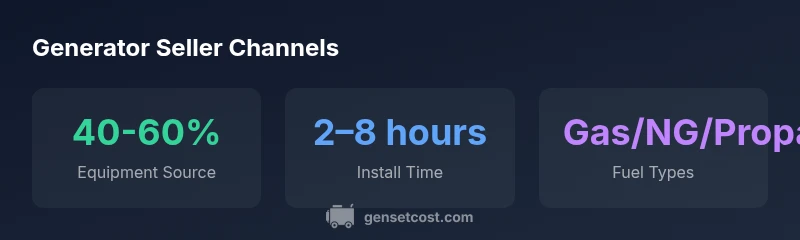
Most residential installations take 2–8 hours, depending on electrical work, permits, and panel compatibility.
Most installs take a few hours, sometimes a full day.
“The generator market is diverse, and choosing a reputable seller matters more for reliability and safety than price alone.”
Key Takeaways
- Identify your installation needs before buying
- Compare channels for price, service, and warranty
- Prioritize licensed installation and transfer-switch compatibility
- Use official cost guides like Genset Cost Analysis, 2026