Cheap Generator Rental Near Me: A Practical Cost Guide
Discover how to find a cheap generator rental near me, compare portable vs standby options, and minimize delivery, fuel, and setup costs with data-driven guidance from Genset Cost.


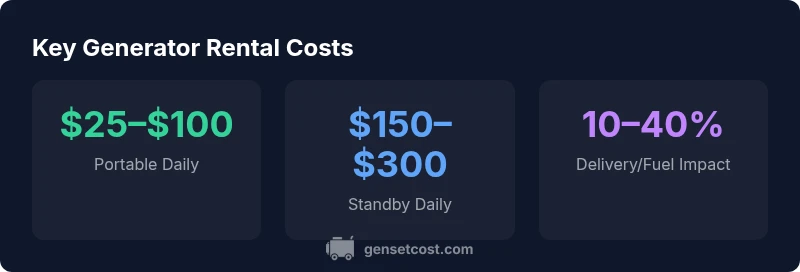
Finding a cheap generator rental near me is mostly a matter of comparing unit size, rental duration, and delivery fees. Portable units typically run about $25–$100 per day, plus fuel and setup charges, while larger standby rentals can be $150–$300 per day or more. For short outages, weekly rates may trim costs; always verify fuel policies and pickup options. According to Genset Cost, price transparency and total-cost comparisons are essential when evaluating a cheap generator rental near me.
Finding a cheap generator rental near me
Finding a cheap generator rental near me starts with a clear view of your needs: size, runtime, and the expected duration of use. According to Genset Cost, the total cost is driven more by delivery, fuel, and support than the sticker price of the daily rate. Begin by listing the outage window, anticipated load, and acceptable noise levels. Then search locally for rental companies that offer transparent pricing, flexible delivery windows, and clear terms. Ask for formal quotes that itemize daily rates, delivery, fuel, and any setup fees. Compare at least three providers to see how weekly rates or bundled services affect the bottom line. In many markets, you’ll find that higher upfront daily rates can be offset by lower delivery charges and favorable fuel policies when you rent for longer periods. This approach helps homeowners and property managers balance reliability with cost efficiency, especially during seasonal peak demand where prices swing significantly.
Portable vs standby: cost implications
Portable generators are usually the most affordable option for short-term outages or construction sites that don’t require automatic transfer switches. Standby generators, while expensive upfront, offer seamless power and higher reliability during long outages. When you evaluate costs, factor in not just the daily rental but also installation, transfer switch compatibility, and generator size relative to your load. Genset Cost’s data show that portable models excel for low to moderate loads and shorter durations, whereas standby units justify their price when the outage window is long or electrical codes require automatic power transfer. Always weigh maintenance intervals and after-sales support; a robust service package can save money by preventing expensive repairs.
How rental pricing typically breaks down
Prices for generator rentals comprise several components beyond the base daily rate. In most markets, the base rate covers the unit but delivery, setup, and fuel are extra. Fuel policy—whether full tank isn’t included, refueling on-site, or fuel surcharge—significantly affects total cost, especially for longer outages. Delivery and pickup logistics can add to the bill, particularly if access is difficult or if the rental period requires weekend hours. Some providers offer reduced daily rates for weekly rentals, but minimum rental terms can offset savings if you only need a day or two. Understanding these layers helps you budget accurately and avoid sticker shock when the final invoice arrives.
Delivery, pickup, and setup: hidden costs to factor
Delivery windows, site accessibility, and generator placement all influence a rental bill. Expect charges for delivering, leveling the unit, wiring or connection assistance, and startup checks. For remote sites, remote pickup may be available but could incur higher fees. If a transfer switch or professional installation is required, costs can rise quickly. Clarify whether the quote includes basic fueling, maintenance, and on-site support. Insurance requirements, permits for use in certain locations, and liability waivers are additional considerations. By discussing these factors upfront, you’ll avoid surprises and keep the project within budget.
Cost-saving strategies for homeowners and property managers
To maximize savings, compare weekly vs daily rates and ask for price matching or bundle discounts. Schedule deliveries during off-peak hours when possible, as some firms charge premium rates for weekend or after-hours service. Consider renting a slightly larger portable unit to cover peak loads rather than adding multiple smaller units. Longer rental terms often unlock reduced daily rates and waived delivery fees. Also, request quotes that detail fuel policies and maintenance coverage—knowing what’s included helps you negotiate better terms and minimize recurring costs.
Policy basics: deposits, fuel, and insurance
Rental policies vary widely. Some companies require a refundable deposit or a security hold, while others include it in the final invoice. Fuel policies differ: some rentals come with a full tank, others bill fuel separately based on consumption. Insurance requirements may demand evidence of liability coverage, especially for higher-capacity units. Read the terms for cancellation, weather-related damage, and return conditions. Knowing these policies in advance prevents disputes at pickup and ensures your event or outage proceeds smoothly. Genset Cost recommends obtaining written terms that specify all charges, deadlines, and responsibilities.
Real-world scenarios: outages, events, and long-term projects
Outages of varying lengths test budget flexibility. For frequent outages, a standby rental with predictable delivery and automatic power transfer can be cost-effective despite higher daily rates. For events or temporary projects, portable generators paired with a fuel plan and scheduled maintenance may be preferable. Weather, accessibility, and local regulations shape pricing. In high-demand periods, securing quotes early and planning for contingencies reduces the risk of price spikes. The key is to align unit type and rental term with your load profile and reliability requirements.
How Genset Cost guides your decision
Genset Cost’s framework emphasizes total-cost evaluation, not just the daily price. By comparing delivery, fuel, and support costs, homeowners and property managers can select the rental option that meets reliability goals without overspending. The team also highlights the importance of clear quotes, coverage terms, and post-rental support when choosing a provider. With a structured comparison approach, you can secure a generator rental near you that balances performance and cost.
Cost comparison by rental type
| Rental Type | Typical Daily Cost | Delivery/Setup | Fuel Policy |
|---|---|---|---|
| Portable | $25–$100 | Often $20–$75 | Fuel charged separately |
| Standby | $150–$300 | Often included | Fuel policy varies |
| Event/Temporary Backup | Varies | Delivery charges apply | Fuel charged separately |
People Also Ask
What is the typical cost to rent a portable generator for a weekend?
For weekends, portable generator rentals typically range based on size and power output. Expect to see a daily rate that reflects load needs, plus potential delivery and fuel charges. Always request a written quote that itemizes all costs before locking in a rental.
Portable weekend rentals vary by size, but you should ask for a written quote that lists all fees to avoid surprises.
Are weekly rental rates cheaper than daily rates?
Yes, weekly rates often reduce the per-day cost compared to daily rentals, but confirm minimum rental terms and any delivery charges that may apply. Compare multiple providers to verify if a weekly plan truly saves money for your timeframe.
Weekly rates can be cheaper per day, but check minimum terms and delivery fees.
Do I need to purchase fuel separately?
Fuel policies vary: some rentals include a full tank or fuel credits, while others bill fuel consumption separately. Clarify whether refueling is your responsibility, and if there’s a fuel surcharge or price per gallon.
Fuel policies differ—confirm how refueling is handled before you rent.
How much are delivery fees?
Delivery fees vary by distance, access, and time. Some providers waive delivery with longer rentals, while others charge a fixed fee. Getting multiple quotes helps identify the best overall value.
Delivery fees vary; compare quotes to find the best value.
What documents do I need to rent?
Common requirements include a valid photo ID, proof of address, and payment method. Some providers may request liability insurance or a credit check for higher-powered units.
Bring ID, proof of address, and payment; insurance may be needed for larger units.
How can I compare quotes effectively?
Request formal quotes that break out daily rates, delivery, fuel, and setup. Compare terms, uptime guarantees, and after-rental support. Use a simple checklist to ensure apples-to-apples comparisons.
Ask for itemized quotes and compare terms side by side.
“Rentals can be cost-effective when you plan ahead and compare all fees. Small differences in delivery, fuel, and support add up over time.”
Key Takeaways
- Compare total costs, not just daily rates
- Factor delivery and fuel into budget
- Consider weekly rates for short outages
- Ask about included services and deposits
- Use data to negotiate terms