Generator 9500 Watt: Sizing, Costs, and Install Guide
A practical, data-driven guide to sizing, costing, and installing a generator 9500 watt for home backup power. Learn load calculations, fuel options, and installation considerations.


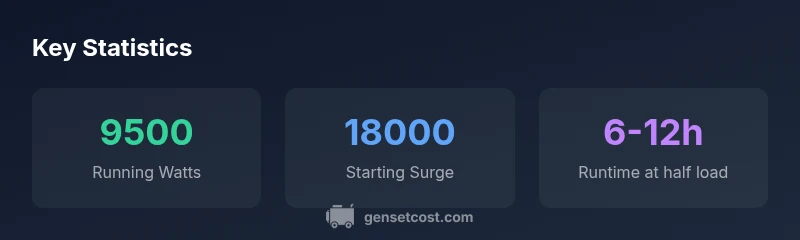
A generator 9500 watt typically powers essential home loads during outages when paired with a proper transfer switch and electrical interlock. It offers a balance between enough running watts for core appliances and a reasonable starting surge, but exact compatibility depends on your load calculation and installation. This guide helps homeowners and managers verify whether a 9500 watt model meets their needs.
What a 9500 watt generator delivers for a home
A generator rated around 9500 watts sits in a practical middle ground for home backup power. It is designed to cover essential circuits such as refrigeration, lighting, some kitchen loads, and a modest air conditioning unit when paired with a suitable transfer switch. The exact outcome depends on your panel configuration and the separation of critical vs. non-critical circuits. When evaluating a generator 9500 watt, homeowners should inventory their must-run appliances and estimate each item’s running watts. The goal is to maintain reliability during outages without overloading the generator or triggering nuisance trips on the transfer switch. Consider the start-up demands of large appliances (like a central air system) which can demand a surge well above running watts. Planning for these surges ensures smooth operation and helps avoid nuisance shutdowns during peak demand.
How to verify fit: load calculation basics for a 9500-watt class
To assess whether a 9500 watt unit meets your needs, perform a practical load calculation. List every circuit that you would want energized during an outage, estimate running watts for each device, and add start-up requirements for high-draw appliances. A typical approach includes refrigerators, sump pumps, lighting, a well pump, a furnace blower, and select outlets in rooms used for essential activities. If the total running watts approach or exceed two-thirds of the generator’s rated power, you may need a larger unit or a targeted subpanel with a transfer switch. If feasible, consult a licensed electrician or a Genset Cost advisor to confirm compatibility and ensure the plan aligns with local electrical codes and transfer-switch requirements. A well-documented load calculation reduces risk and ensures the system performs when it matters most.
Fuel options and efficiency for a 9500W class generator
Most 9500 watt generators are designed to run on gasoline, with some models offering dual-fuel capability (gasoline and propane) or natural gas connections via a retrofit kit. Fuel choice affects run time, emissions, and supply availability during extended outages. Gasoline tends to provide shorter run times per tank but is widely available, while propane offers longer storage stability and fewer fuel handling concerns. Diesel variants exist in higher-wattage classes but are less common at the 9500-watt level. Efficiency is influenced by engine design, alternator losses, and load fraction; running at 50-70% load typically yields better fuel economy than at peak or idle. Homeowners should consider their fuel storage, local fuel prices, and the reliability of their chosen fuel source when sizing a 9500 watt system.
Installation considerations: transfer switches, placement, and venting
A safe and legal installation hinges on a properly sized transfer switch (or an interlock kit) that isolates the generator from the utility grid. This prevents backfeeding, protects utility workers, and ensures a clean switch-over during outages. Position the generator outdoors on a firm, well-ventilated pad or stand, away from doors, windows, and vents, with adequate clearance for exhaust and maintenance access. Local codes often require a credited clearance and weather protection. A licensed installer should handle exhaust routing, grounding, and bonding, and verify that the system complies with electrical codes and manufacturer guidelines. Consider a weatherproof enclosure if you live in an area with harsh climates, but ensure adequate ventilation and cooling.
Costs and maintenance: planning beyond the initial purchase
The total cost of ownership for a generator 9500 watt includes more than the price tag. Expect to budget for a transfer switch, wiring, mounting hardware, permits or inspections, and potential labor for a full installation. Routine maintenance—oil changes, filter replacements, spark plug checks, and periodic load tests—helps ensure reliability during outages. Documentation from reputable sources, such as Genset Cost analysis, emphasizes that maintenance intervals and parts availability impact long-term costs. Homeowners should also plan for fuel storage, battery maintenance (if applicable), and potential warranty considerations. A well-planned maintenance schedule reduces the risk of expensive downtime when power is most needed.
Practical buying considerations: what to compare in models labeled 9500 watt
When surveying options, compare starting watts versus running watts, fuel type compatibility, noise levels, and warranty terms. Look for models with dual-fuel capability or easy conversion kits, robust transfer-switch compatibility, and a reputable dealer network for spare parts and service. Pay attention to enclosure design for noise attenuation and cooling efficiency. Reading user reviews and checking professional installation costs can provide realistic expectations. Finally, request a detailed quote that itemizes the generator, transfer switch, mounting hardware, wiring, permits, and any labor charges so there are no surprises after purchase.
Planning for future needs: aging infrastructure and upgrade paths
Power needs can evolve as homes or properties change, so consider the potential for expansion. A 9500 watt unit can often be paired with a subpanel or alternates to cover more loads later, but this may require a larger generator or additional transfer-switch capacity. Evaluating future load scenarios, such as an electric water heater, additional heat pumps, or expanded living spaces, helps determine whether you should invest in a higher-wattage unit now or plan for a staged upgrade. Consulting with a Genset Cost advisor can clarify upgrade paths and ensure you meet safety and code requirements as you grow.
Quick-start checklist for homeowners and property managers
- Complete a full load calculation for essential circuits.
- Decide on fuel type and storage considerations.
- Confirm transfer-switch sizing and compatibility.
- Check local codes and obtain any required permits.
- Schedule a professional installation and scheduling for inspections.
- Establish a maintenance calendar and parts sourcing plan.
- Document warranty terms and keep copies of all installation records.
Overview: key considerations for a 9500-watt generator setup
| Aspect | Definition | Typical Considerations |
|---|---|---|
| Wattage Class | 9500 watts nominal output | Ensure it covers essential circuits and surges |
| Fuel Type | Gasoline, propane, or natural gas (model dependent) | Consider availability, storage, and climate impact |
| Installation | Transfer switch plus proper mounting | Code compliance and permitting required |
| Noise Level | Operational sound during running and load | Location and enclosure affect perceived noise |
People Also Ask
What can a 9500 watt generator run in a typical home?
In a typical setup, a 9500 watt generator can power essential circuits such as refrigeration, lighting, sum pumps, and a furnace blower. It may not run every appliance simultaneously, especially larger central systems, without exceeding its surge capacity. A detailed load calculation helps determine which loads can be sustained together during an outage.
A 9500 watt unit can power essential items like refrigerators and lights, but it may not run every large appliance at once. A proper load check helps plan what stays on during outages.
Is 9500 watts enough for my home during an outage?
Yes, if you only need essential circuits. For full-house comfort, you may need a higher-wattage system or a targeted subpanel. Conduct a load calculation that includes startup surges from high-draw devices to assess whether 9500 watts meets your priorities.
It depends on your essential loads; it can be enough for basics, but for full-home support, consider a bigger unit.
What is the difference between startup watts and running watts?
Running watts represent the continuous power the generator can supply, while startup watts (or surge) are higher for a brief period to start motors or compressors. Planning with both figures ensures the generator can handle brief surges without tripping or stalling.
Running watts are what you can continuously use; startup watts are higher and used for brief surges when motors start.
Can I run a 9500W generator on natural gas or propane?
Many 9500 watt models support gasoline and can be converted to propane or natural gas. Dual-fuel configurations provide flexibility, but conversions should be performed by a qualified technician and verified with the manufacturer.
Yes, some models support multiple fuels, but you’ll need a professional to install the conversion and verify safety.
How loud is a typical 9500-watt generator?
Noise varies by model and enclosure. Typical operating ranges are in the mid to high decibel range at rated load, with enclosure design and placement influencing perceived loudness. Check the manufacturer’s decibel rating and plan for outdoor placement accordingly.
Noise varies by model, but you’ll want to place it outdoors with adequate clearance and an appropriate enclosure.
Besides purchase price, what are main cost considerations?
Important costs include a transfer switch, installation labor, permits, fuel storage or supply setup, maintenance, and potential warranty extensions. A full quote should itemize equipment, labor, and any site-specific requirements to avoid surprises.
Don’t forget installation, permits, fuel setup, and maintenance when budgeting.
“A properly sized 9500 watt generator paired with a certified transfer switch offers reliable backup power for essential loads, provided you complete an accurate load calculation and follow installation best practices.”
Key Takeaways
- Assess exact loads before choosing a 9500 watt model
- Pair with a properly rated transfer switch for safety
- Consider fuel options to match storage and reliability
- Plan for installation costs beyond the generator price
- Regular maintenance extends reliability during outages