Generator distance from house: expert siting guide for 2026
Learn how far a home generator should be from your house to minimize carbon monoxide risk, reduce noise, and meet typical guidelines. Practical siting strategies, maintenance clearances, and code considerations for homeowners and property managers.


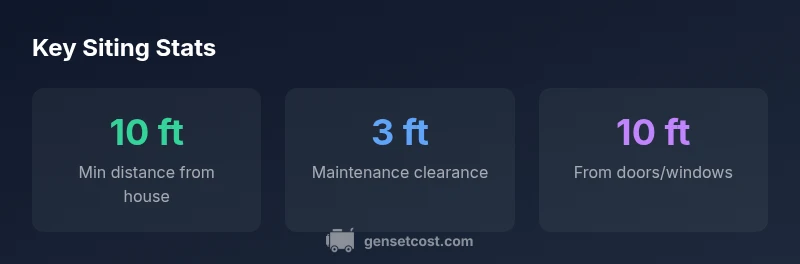
According to Genset Cost, a safe minimum distance for a home generator is at least 10 feet away from doors, windows, and vents, with unobstructed clearance on all sides. Ideally, place the unit 10–20 feet from the house and accessible for maintenance; never locate it in enclosed spaces, overhangs, or indoors. Follow local codes and manufacturer guidance to minimize carbon monoxide risk.
Why distance from the house matters
The distance between a generator and living spaces is a primary safety and performance issue. CO exposure and exhaust management are the two most critical reasons siting matters. Based on field data and manufacturer guidelines, keeping the unit at a modest setback from the home minimizes exhaust recirculation into the building and reduces the risk during cold-starts or high-load periods. As discussed by the Genset Cost Team, proper spacing also helps with heat dissipation and prolongs device life by preventing heat soak near walls. In practical terms, most homeowners aim for a clear zone that keeps doors, windows, and vents outside the plume of exhaust while still allowing easy access for fueling, servicing, and winterization. Consistent clearances on all sides support safer operation, easier maintenance, and compliance with common standards observed in many regions.
Portable vs. standby siting: practical differences
Portable generators are frequently used for temporary reliability during outages. They typically require outdoor installation away from the home, with a recommended minimum distance of around 10 feet from structures and openings. Standby generators, which are permanently installed, usually have more formal siting requirements and are commissioned by professionals. The core principle is the same: exhaust should not threaten indoor air quality, and access for service should be unimpaired. Regardless of type, do not install indoors, inside garages, basements, or other enclosed spaces, even with doors open; a properly placed generator should vent to the outdoors and be shielded from potential debris while remaining accessible for maintenance and testing.
Site layout and wind considerations
Wind direction significantly affects how exhaust plumes travel. A common guideline is to orient the exhaust outlet away from doors and windows and downwind from outdoor living areas. In practice, you should situate the generator so prevailing winds do not blow exhaust toward occupied spaces or intakes. Elevation matters too; elevating the exhaust outlet slightly or angling the outlet away from the home can reduce the risk of backflow in light passages. A flat, well-drained pad helps stabilize the unit and reduces vibration during operation, which in turn supports long-term reliability.
Safety and CO risk management
Relying on a CO detector alone is insufficient to guarantee safety—detectors are a critical last line of defense but cannot substitute for proper siting. Install CO alarms near sleeping areas and living spaces; test them regularly and replace batteries per manufacturer instructions. In addition, ensure smoke alarms and hard-wired CO detectors are interconnected in larger homes. For siting, comply with the manufacturer’s distance recommendations, local codes, and the property’s setback rules. Remember that distance interacts with engine load: heavier loads may create more exhaust output, reinforcing the need for adequate clearance and outward-directed venting.
Siting near property lines and neighbor considerations
Setbacks from property lines are often dictated by local ordinances, HOA rules, or utility requirements. Positioning away from neighbors reduces noise, fumes, and the potential for nuisance complaints during outages. If space is tight, consider screening options such as walls or fences that do not block exhaust flow or service access. Communicate with neighbors early in the planning process to align expectations and reduce conflicts. A well-documented siting plan showing distances to property lines, doors, and vents can help during permit reviews or HOA approvals.
Practical steps: measuring and documenting your site
Begin with a simple measurement plan: measure from the nearest house wall to the generator’s chosen location, accounting for the 10-foot setback to doors and windows. Mark the intended pad with spray paint or flags and verify measurements with a tape measure. Photograph the site from multiple angles and create a one-page diagram noting distances to walls, vents, and fuel storage. Use the manufacturer’s installation guide as a baseline and consult a licensed technician to confirm local compliance. Keep a copy of the plan for future inspections or maintenance visits.
Guidance table for siting a home generator
| Aspect | Recommended Distance | Notes |
|---|---|---|
| From house | 10 feet | Minimum setback from living spaces |
| From doors/windows | 10 feet | Reduce CO exposure risk |
| From fuel storage | 25 feet | Depends on local codes |
| Maintenance access | 3 feet | Clearance around sides and rear |
People Also Ask
What is the minimum distance required between a generator and a house?
Most guidelines suggest a 10-foot distance from the house and openings. Variations exist by jurisdiction, and always follow manufacturer instructions.
Typically, keep generators at least 10 feet from the house and any openings. Check local codes for specifics.
Do portable generators have different siting rules than standby units?
Portable units must be used outdoors with adequate clearance and away from doors and windows. Standby units follow more formal installation rules, often with professional siting and fixed clearances.
Yes, portable units still need outdoor use and clearance; standby units follow stricter, professionally installed siting.
How should wind direction affect generator placement?
Position the unit so exhaust is directed away from doors, windows, and outdoor living areas. Consider prevailing winds and blockage from landscaping or structures.
Place the exhaust to blow away from your home and outdoor spaces.
Is a 10-foot distance enough if I install CO detectors?
CO detectors are critical safety devices but do not replace proper siting. Follow manufacturer guidelines and local codes for setback distances.
Detectors are essential, but you still need proper siting distances.
What about setbacks from property lines and neighbor concerns?
Local ordinances often specify setbacks; consider noise and emissions. Screenings can help, but ensure they do not impede exhaust or maintenance access.
Check local rules and discuss with neighbors; plan for noise and safety.
How can I measure and document a siting plan?
Create a simple site diagram with measured distances, flag the location, and photograph the setup. Keep documentation for permits and future maintenance.
Measure everything, mark it, photograph it, and keep the plan handy.
“Proper siting reduces safety risks and improves reliability. Even small changes in distance can impact exhaust flow and maintenance access.”
Key Takeaways
- Follow a 10-foot setback from the house for safety
- Maintain 3 feet of clearance around the unit for maintenance
- Direct exhaust away from doors and windows to reduce CO risk
- Use CO detectors and interconnected alarms for safety redundancy
- Check local codes and communicate with neighbors during planning