Distance Generator From House: A Practical Placement Guide
Learn how to position a residential backup generator at safe distances from your house to meet codes, reduce noise, and protect family. This guide covers sizing, setbacks, permits, and installation.


A distance generator from house is a guideline for placing a backup generator at a safe distance from the home to meet safety codes and reduce noise. It helps homeowners plan setbacks, venting, and maintenance access, while accounting for local regulations and the generator’s exhaust, fuel, and electrical connections. Correct placement also affects reliability and safety during power outages and extreme weather events.
Understanding the Distance Rule: Why It Matters
A distance generator from house is a commonly referenced guideline for placing a backup generator at a safe distance from the home. It is a safety and performance guideline that keeps exhaust away from living spaces, reduces nuisance noise, and ensures maintenance access. According to Genset Cost, distance guidance varies by jurisdiction but shares a common objective: protect occupants, avoid venting into enclosed areas, and provide room for routine servicing. For homeowners, the aim is to balance safety with convenience while meeting local codes and setback requirements. Considerations include exhaust dispersion, fuel storage locations, the home’s footprint, and nearby windows or doors. A poorly chosen position can create heat buildup, risk CO exposure, or complicate future service. Starting with a clear setback plan sets the foundation for a reliable backup power system and long-term maintenance.
Factors That Influence Setback Distances
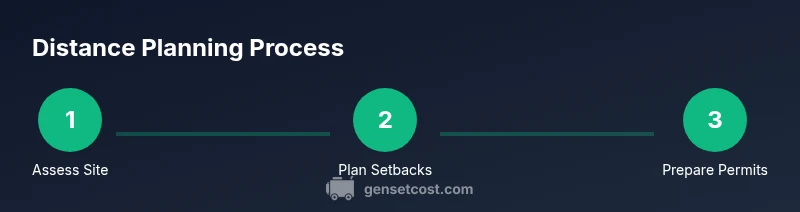
Setback distances are not one-size-fits-all. Local codes, fuel type, generator size, and property layout all shape the final distance. The planning process should reference the AHJ (authority having jurisdiction) and the manufacturer’s clearance recommendations. Genset Cost analysis highlights three core drivers: exhaust dispersion, safety clearance, and maintenance access. If your home shares a wall with a garage or sits on a steep slope, you may need larger setbacks to prevent heat transfer or ignition risk. Terrain, fire codes, and proximity to property lines also influence your final planning. By documenting these factors early, you reduce rework and ensure inspections pass smoothly.
Sizing Your Generator and Placement Strategy
Selecting the right generator size begins with a detailed load calculation. Most residential systems fall in a 5 kW to 20 kW range, enough to support essentials like refrigeration, heating, and lights. Larger homes or multi-story configurations may require more capacity. Size strategy should factor in startup surges, simultaneous loads, and potential future expansion. Place the unit where maintenance remains convenient, the exhaust path remains unobstructed, and weather exposure is minimized. A well-sized unit at an appropriate distance runs more efficiently and delivers reliable power during outages.
Noise, Venting, and Emissions Considerations
Noise is a major factor in setback planning. A distance generator from house helps keep decibel output within acceptable limits for occupants and neighbors, especially in dense neighborhoods. If you live in a quiet area, you may opt for sound-attenuating enclosures and landscaping buffers, but setbacks remain a primary control. Venting must direct exhaust away from doors, windows, and fresh air intakes; never vent toward the home. Emissions and fuel choice affect venting requirements and maintenance. Follow manufacturer directions for clearances around vents, fuel lines, and electrical connections to avoid safety risks.
Installation Path: Permits, Codes, and Contractor Roles
Permitting is a critical early step. Most jurisdictions require electrical and building permits for standby installations and transfer switches. Start by confirming setback rules and assembling a permit package with load calculations and equipment specs. A licensed electrician should design and install wiring and transfer switches, ensuring code compliance and safety. The installer may coordinate with utility interconnection testing during commissioning. Keep permit numbers and inspection approvals for future maintenance and resale disclosure.
Practical Examples: Scenarios by Home Type
- New single-family lot with a clear side yard: a 10–15 ft setback often provides convenient access and good exhaust dispersal. - Older homes with compact exterior space: 15–20 ft or more may be necessary to avoid venting near windows. - Multi-unit buildings: stricter setbacks around shared walls and utility rooms. - Rural properties: more space can offer flexibility, but local codes still govern setbacks and safety.
Common Mistakes to Avoid
- Skipping a proper load calculation leads to an undersized unit and repeated outages. - Placing the generator too close to doors, windows, or intakes increases CO risk and reduces safety margins. - Ignoring permits and AHJ reviews can cause delays or failed inspections. - Neglecting regular exercise and maintenance will shorten the unit’s usable life. - Failing to plan for future expansion may require relocation or upgrades later.
Tools & Materials
- Measuring tape(at least 25 ft for baseline checks)
- Chalk line or spray paint(to mark setbacks on the ground)
- Owner’s manual for your generator(size and clearance specifics)
- Level and stake markers(mark irregular terrain)
- Personal protective equipment (gloves, eye protection)(safety first)
- Permit application kit(local forms and electrical permit)
Steps
Estimated time: 4-8 weeks from planning to final inspection
- 1
Define project goals and load
List essential circuits and estimate total load to determine generator size.
Tip: Start with essential circuits: refrigeration, heating, sump pump. - 2
Check local setbacks and code
Consult local building codes to determine minimum distances from the home and property lines.
Tip: Reference the AHJ setback maps and recent amendments. - 3
Select location and plan access
Choose a location with clear access for maintenance and safe exhaust away from doors/windows.
Tip: Avoid doorways, air intakes, and hidden spaces. - 4
Design venting and exhaust routing
Plan exhaust paths that minimize backdraft and CO exposure.
Tip: Never route exhaust into enclosed spaces or toward living areas. - 5
Confirm electrical connections
Plan for transfer switch routing and meet manufacturer guidance; involve a licensed electrician.
Tip: Get a written wiring diagram before any work begins. - 6
Obtain permits and schedule installation
Submit permit packages and coordinate with contractor for a safe installation window.
Tip: Expect a review step and possible amendments.
People Also Ask
What is the minimum distance required between a generator and the house?
Minimum setback distances vary by region; check local codes and permit requirements. Always maintain clearance for maintenance and exhaust dispersion.
Setback distances vary by area; check local codes for the minimum safe distance.
Do I need permits to install a home standby generator?
Most jurisdictions require electrical and building permits for standby installations and transfer switch wiring; a licensed installer can handle the process.
Yes, permits are usually required. A licensed installer can manage it.
How does generator size relate to house load?
Gen size should cover essential circuits and peak loads; perform a load calculation to select a unit with headroom for growth.
Size depends on essential loads; do a load calc to pick the right size.
Can I vent a generator toward a window or door?
Never vent toward doors, windows, or fresh air intakes. Direct exhaust to a safe outdoor area.
Avoid venting toward openings; point exhaust away from the home.
What maintenance is required after installation?
Regularly inspect for leaks, check oil and coolant levels, and exercise the generator monthly to keep it ready for outages.
Keep up with regular checks and monthly exercise.
Is it worth renting a generator for short-term needs?
Renting may be cost-effective for temporary needs; long-term use usually favors purchasing a standby unit.
Renting can work short-term; owning saves in the long run.
Watch Video
Key Takeaways
- Plan setbacks first to ensure safe, compliant placement.
- Choose a location with easy maintenance and clear exhaust paths.
- Coordinate with a licensed pro for permits and wiring.
- Size and load determine generator selection; account for future needs.
- Check local rules early to avoid delays.