Generator When Power Goes Out: A Home Backup Guide
Learn how to choose, size, install, and maintain a generator when power goes out to keep essential loads running during outages. Practical steps, safety tips, and cost considerations.


During a power outage, a generator when power goes out serves as a reliable backup energy source that keeps essential circuits—like refrigeration, heating, lighting, and communications—running. A properly sized generator paired with a transfer switch ensures safe, automatic or manual power restoration to protected loads, reducing downtime and protecting occupants. The guide below outlines how to choose, install, and maintain one.
Why a generator matters when power goes out
Power outages disrupt daily routines and can escalate risks in winter or heat waves. A generator when power goes out provides a dependable source of electricity for essential loads, helping you keep your fridge running, maintain heat or cooling, illuminate rooms, and charge critical devices. For homeowners and property managers, this isn't just convenience—it can avert food waste, protect medicines, and support remote property management tasks. The Genset Cost team found that outages are increasingly common in many regions due to weather events and aging infrastructure. A correctly sized generator paired with a transfer switch ensures that you restore power to assigned circuits safely, without backfeeding into the grid. Safety guidelines emphasize proper fuel storage, ventilation, and clearances around the unit. In practice, most households experience shorter outages and less stress when a backup power plan exists. We'll walk through sizing loads, choosing a fuel type, and installing a safe, compliant system that meets your home or rental property's needs.
Determining essential loads and priorities
The first step is to identify which circuits must stay powered during an outage. Typical essentials include refrigeration, heating or cooling, lighting, outlets for medical devices, and communication equipment. Create a simple list and group items by peak wattage and continuous running watts. A transfer switch can assign dedicated circuits to the generator, so you don’t backfeed or overload the system. The goal is to cover your critical loads while avoiding over-sizing. If you manage rental properties, consider floor-by-floor priorities and provide a standard load schedule for tenants. Remember that loads vary seasonally; a hot spell may increase cooling requirements, while winter can raise heating needs.
Sizing fundamentals and tool-assisted planning
To size accurately, you’ll calculate total running watts (continuous load) and add starting watts for appliances with high inrush, like refrigerators and air conditioners. A common rule is to target 80–90% of the generator’s continuous rating for planning, leaving headroom for surge. Use a sizing calculator or consult with a licensed electrician to confirm. In many cases, a serviceable range exists between 5 kW and 20 kW for homes, with larger systems for multi-unit properties. The Genset Cost team emphasizes that you should also consider future needs, seasonal variations, and potential energy efficiency upgrades to avoid oversizing for the wrong load.
Fuel options: gasoline, propane, and natural gas
Fuel type affects cost, storage, and runtimes. Gasoline is readily available but has shelf-life limits and odor risk; propane offers stable storage with longer shelf life; natural gas can provide constant supply but may have limited availability during severe outages. When you estimate runtimes, consider fuel storage capacity and consumption under full-load conditions. For reliable operation, pairing a standby generator with an automatic transfer switch minimizes downtime; be aware of fuel delivery logistics in your area and plan for refueling needs during extended outages.
Location, installation safety, and transfer switches
Positioning matters for both safety and performance. Outdoor installations should have proper clearance from structures, vents, and flammable materials, with weather protection and a solid pad. A transfer switch is essential for safe isolation of your home's circuits from the grid, reducing the risk of backfeed. Whether you choose a manual or automatic transfer switch, ensure compatibility with your generator and local electrical codes. Always hire a licensed electrician for the final hookup and inspections; DIY connections can create fire or electrocution hazards. During installation, verify binding to local permits and compliance standards such as NEC guidelines.
Cost considerations and budgeting
Cost ranges for home backup power vary widely based on size, features, and whether you choose a portable or stationary system. Portable generators are typically cheaper upfront but require manual operation and transfer methods. Standby generators installed with a dedicated transfer switch offer automatic restoration but add installation complexity and permit requirements. The Genset Cost analysis shows how total cost includes equipment, wiring, permits, and potential maintenance plans. Plan for fuel storage or supply arrangements, periodic maintenance, and potential replacement parts. A thoughtful budget should include the option for future expansion and professional installation to maximize reliability and safety.
Maintenance, testing, and seasonal checks
Regular maintenance is essential for reliability. Schedule oil changes, air filter checks, spark plug inspections, and battery testing according to the manufacturer’s recommendations. Perform a no-load start and a load test quarterly to verify that the generator starts reliably and can handle peak loads. Keep fuel fresh and clear of contaminants; replace batteries and check transfer switches for wear. Create a simple log to track service dates and performance, so you don’t miss critical milestones. Genset Cost emphasizes that proactive maintenance reduces the risk of unexpected outages and extends equipment life.
Authority resources and next steps
For deeper guidance, refer to credible safety and energy resources. The U.S. Department of Energy and OSHA provide general guidance on safe generator use, while FEMA outlines emergency planning considerations for home and rental properties. Always verify local codes and required permits before purchasing and installing equipment. Next steps include calculating your essential loads, selecting a fuel type, obtaining professional installation, and establishing a maintenance schedule.
Tools & Materials
- Tape measure for load assessment(Measure room dimensions and circuit panel clearances)
- Electrical contractor contact information(Qualified professional for permits and hookup)
- Portable generator or standby unit(Size for essential loads; read manufacturer guidelines)
- Transfer switch kit (manual or automatic)(Must be compatible with chosen generator)
- Extension cords rated for outdoor use(Outdoor-rated, heavy-duty for safety)
- Fuel storage and safety gear(Gasoline, propane, or natural gas connections; fire extinguisher)
- Fire extinguisher and carbon monoxide detector(Safety essentials for generator area)
Steps
Estimated time: 4-6 hours
- 1
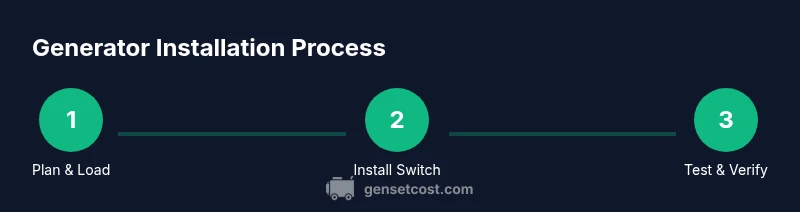
Assess essential loads and goals
Inventory critical circuits and estimate running and starting watts. Prioritize loads by importance and determine whether you need automatic or manual operation.
Tip: Start with a conservative set of loads to avoid over-sizing. - 2
Choose a generator and transfer switch
Select a generator that can handle the peak load plus a safety margin. Ensure the transfer switch is compatible and rated for your panel.
Tip: Consult a licensed electrician to verify compatibility. - 3
Plan location, permits, and ventilation
Decide on an outdoor install with clearances, ventilation, and weather protection. Check local permits and NEC compliance requirements before proceeding.
Tip: Never run a generator indoors or in an enclosed space. - 4
Install or connect with a licensed professional
Have the transfer switch wired to the panel and the generator connected to the switch by a qualified electrician. Verify grounding and proper fuel connections.
Tip: Request a final inspection and keep documentation handy. - 5
Perform a controlled test run
Start the generator and test each critical circuit under load. Confirm automatic transfer works if you have an auto switch.
Tip: Do not overload beyond rated capacity; monitor temperature and fuel levels. - 6
Create a maintenance and refueling plan
Schedule routine oil changes, filter checks, and battery tests. Plan fuel storage and rotation to keep fuel fresh.
Tip: Maintain a service log and set reminders for inspections.
People Also Ask
What size generator do I need for essential loads?
Start by listing essential circuits and calculating their running and starting watts. Add a margin for surge and future needs; many homes fall in a mid-range kW size. A licensed electrician can finalize the exact rating.
Begin with essential circuits, calculate watts, and add surge margin. A professional can confirm the final size.
Is a standby generator worth the cost for a home?
Standby generators offer automatic restoration and quick transfers, which reduces downtime. For rental properties, the value depends on occupancy patterns and climate risk.
Standby units restore power automatically, which minimizes downtime and is often worth the investment for property managers.
Do I need to install a transfer switch?
Yes. A transfer switch isolates your home from the grid and prevents backfeed. It’s essential for safety and code compliance and is required for most standby installations.
A transfer switch is essential for safe, code-compliant backup power.
What fuel type is best for outages?
Gasoline, propane, and natural gas each have trade-offs. Propane stores well and avoids gasoline degradation, though supply can be a concern during storms; natural gas provides continuous supply but depends on distribution.
Fuel choice depends on availability, storage, and how you use the generator during outages.
How do I maintain a generator to stay reliable?
Follow the manufacturer’s service schedule for oil changes, filters, and battery checks. Run a test load quarterly and keep a maintenance log.
Regular maintenance and quarterly load tests keep your generator reliable.
Watch Video
Key Takeaways
- Define essential loads and choose a proper size.
- Automatic transfer switches offer the best reliability.
- Professional installation improves safety and compliance.
- Regular maintenance extends generator life.