How Big of Generator to Run Whole House: A Sizing Guide
Learn how to size a standby generator to run your whole home during outages. Practical steps, typical size ranges, a sizing calculator, and installation considerations.


Understanding Whole-House Generator Sizing
Sizing a whole-house generator begins with distinguishing essential loads (the items you must keep running) from nonessential loads (comfort features you could temporarily shed). The goal is to ensure the generator can handle the most electricity-intensive functions during an outage without pushing fuel consumption and upfront cost beyond reason. Begin by listing critical appliances and systems: heating or cooling, refrigerator/freezer, water heater, well pump, lighting, and fans. Then estimate running watts for each item, using the device nameplate or manufacturer specs. Total up running watts and apply a safety margin to account for startup surges. In practice, many homeowners target a continuous rating in the 60–80% range of the generator’s listed maximum, choosing a model that can handle the surge of motors like compressors and well pumps. The correct sizing improves reliability, reduces nuisance tripping, and avoids overpaying for unused capacity. The process is iterative and benefits from a detailed load worksheet.
Essential Loads vs Whole-House Loads
A common misconception is that you must power every circuit in a home during an outage. In reality, many homeowners opt for essential-load strategies that prioritize heating, refrigeration, and security while temporarily arming noncritical circuits like air-dryers or decorative lighting. The essential-load approach reduces required generator size and fuel use. A whole-house approach, by contrast, aims to keep most circuits available, but it requires a larger unit and more robust transfer equipment. The choice depends on climate, comfort expectations, and budget. A professional assessment helps you decide which loads to cap and which to preserve. Consider whether you want to run multiple HVAC zones, electric water heating, or a large well pump. Documenting the exact loads helps you compare generator options more confidently and prevents oversizing or under-sizing based on guesswork.
How big of generator to run whole house: A practical framework
The question in focus is size—how big should the generator be to run a typical full-house load? Start with your essential-load worksheet and apply a planning margin for startup currents. Most homes with central HVAC, a large refrigerator, and multiple electronics fall into a practical range of 12–20 kW for a single-generator system, though larger or smaller homes will differ. Use a stepwise approach: (1) verify essential-load watts, (2) add a buffer for startup surges, (3) convert to kilowatts, and (4) verify with a transfer switch rating. Remember that natural gas, propane, or diesel can influence efficiency and cost, and some systems such as electric ovens or heat pumps can alter your bottom line. A well-sized generator improves resilience and reduces the risk of nuisance outages.
Generator Sizing Ranges by Home Type
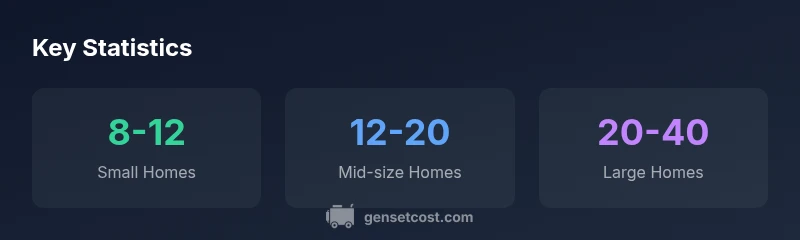
Homes vary by square footage, insulation, climate, and appliance choices. To help you plan, here are typical target ranges by home type (these are general guidelines, not guarantees): - Small homes (1–2 bedrooms): 8–12 kW cover basic essentials like fridge, lighting, and modest HVAC. - Mid-size homes (3–4 bedrooms): 12–20 kW common, with better heater controls and multiple appliances. - Larger homes (5+ bedrooms): 20–40 kW or more when you want to run multiple HVAC zones, electric water heaters, and laundry. If you live in a hot or cold climate, you may need closer to the upper end of each range. Always factor fuel availability, transfer-switch capacity, and installation constraints into your final sizing decision.
Fuel Type, Transfer Switches, and Efficiency
Choosing fuel and proper transfer equipment affects size and cost more than you might expect. A natural-gas or propane system may run more efficiently in some climates, but it requires plumbing and a higher-capacity regulator. Diesel units offer longer runtimes but lower cold-start performance in certain conditions. The transfer switch is critical: it prevents back-feeding and ensures safe handover from utility to generator. An automatic transfer switch (ATS) enables seamless switching, while a manual switch saves cost for smaller setups. Efficiency is influenced by load diversity, generator design, and maintenance. A larger generator with a high-duty rating may run more efficiently at mid-range loads than a smaller one idling at partial loads. Prioritize a unit with good fuel availability and reputable service options in your area.
How to Use a Sizing Calculator and Interpret the Results
A sizing calculator helps quantify your load and translate it into a generator rating. Input your essential loads (watts), any surges, and the desired margin for startup. The calculator converts watts to kilowatts and applies a rounding rule to provide an easy-to-read recommendation. When you review results, check: (1) continuous vs peak rating, (2) whether the result exceeds your existing transfer-switch capacity, and (3) whether you have a path to larger fuel supply or a dual-fuel option. If the number is just below a practical size, consider whether small load reductions can make room for a more efficient unit. Always verify the final recommendation with a qualified electrician or generator installer and obtain an installation quote that includes transfer switches and exhaust routing.
Installation and Maintenance Considerations
Even the best-sized generator can underperform if installation isn’t thorough. Plan for a durable exhaust path, proper clearances, and a weatherproof enclosure if it’s a residential installation. A professional will size the array, confirm wiring, and ensure code compliance. Maintenance matters: schedule post-install checks, change oil, and perform periodic tests, especially in regions with extreme temperature swings. Consider maintenance contracts that cover battery checks, cooling system, and fuel stabilization. A well-maintained system reduces unexpected downtime and extends equipment life.
Practical Saving and Decision-Making
Sizing is a balance among capability, cost, and reliability. Oversizing leads to higher upfront cost and ongoing fuel consumption, while undersizing risks outages and nuisance tripping. Use the calculator, compare quotes from reputable dealers, and verify the transfer-switch rating. Factor installation costs, fuel type availability, and warranty terms into your decision. For many homeowners, a mid-range 12–20 kW system offers a strong mix of resilience and affordability. Genset Cost’s analysis suggests sticking to verified loads and professional sizing for best results, especially in areas with frequent outages or extreme weather.