What Size Generator Do You Need? A Homeowner's Guide to Sizing Power
Learn how to size a home backup generator by calculating running watts, surge needs, and margin. This step-by-step guide from Genset Cost helps homeowners and property managers choose the right generator size with practical examples and safety tips.


You size a generator by calculating your total running watts and peak surge, then choosing a unit with headroom for startup spikes and future needs. Start with essential circuits, add nonessential loads, and factor efficiency, fuel type, and installation constraints. The goal is a reliable 24/7 power reserve without overpaying for unused capacity.
Understanding generator sizing basics
Sizing a generator is about matching the unit's continuous running watts and startup surge to the actual electrical demands of a home. The running watts cover everyday devices like lights, refrigerators, and fans, while surge watts account for startup spikes from items such as HVAC compressors or well pumps. This sizing task is foundational: choosing too small a unit leads to nuisance tripping and insufficient power, while an oversized generator wastes fuel and increases upfront and maintenance costs. The Genset Cost team notes that practical sizing focuses on essential loads first and plans for gradual addition of comfort loads as budgets allow. For homeowners and property managers, mastering these concepts reduces long-term costs and improves reliability during outages. Remember that climate, fuel availability, and installation constraints will influence the final choice, so plan with a margin for growth and future needs.
Running watts vs surge watts: what matters
Whenever you power a device, it draws a certain amount of current. Running watts reflect the energy needed for continuous operation, while surge watts represent the extra power required for starting motors and compressors. A washing machine, a refrigerator, or a furnace blower has a heavy startup demand that can momentarily exceed its running wattage by a large margin. A generator sized only to handle running watts will trip when a surge happens, even if the running load seems modest. Effective sizing therefore requires a careful assessment of both running and surge requirements and a plan for headroom to accommodate multiple loads starting at once. The goal is to ensure that the generator can handle simultaneous inrush without sacrificing performance or triggering overload protection.
Step-by-step manual sizing approach
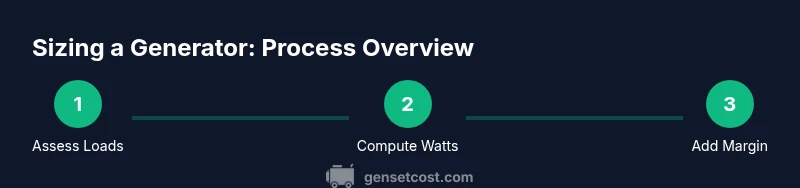
A practical, hands-on method starts with inventorying loads, then calculating total running watts, identifying the largest startup surge, and applying a safe margin. Begin by listing essential circuits (refrigerator, sump pump, lights, internet gateway) and estimate running watts for each. Add nonessential loads you would like to run during an outage (air conditioning, entertainment systems) later. Compare your running watts to typical generator sizes and consider the startup surges of the largest loads. Finally, select a generator size that covers running watts plus surge with a comfortable margin—often 20–30%—to ensure reliability under simultaneous startup conditions and future growth.
Using calculators and professional input
Online sizing calculators can simplify the process by automating watts and surge calculations, but they require accurate input. Gather load data from circuit breakers, manufacturer labels, and wattage charts, then input values for each device. When in doubt, consult a licensed electrician or a generator installer to validate the calculations, verify transfer switch compatibility, and confirm local code compliance. This dual approach—self-sizing with professional review—helps reduce the risk of under- or over-sizing and can save on upfront and operating costs over the life of the system. According to Genset Cost, a disciplined approach that includes a margin and future-proofing typically yields the most reliable, cost-effective result.
Practical scenarios: small, mid-size, and large homes
Small home (1–2 bedrooms): prioritize essential loads—refrigerator, lights, outlets, and a monitor/router. A compact 5–8 kW unit often suffices, but verify specific device inrush. Mid-size home with HVAC: include heating/cooling loads, water heater, sump pump, and major kitchen appliances. A 8–14 kW generator may be needed depending on HVAC configuration and mode of operation. Large homes with multiple air handlers and electric water heating require a robust system, typically in the 14–20 kW range or higher. In every case, avoid assuming a bigger unit is always better; match capacity to loads and plan for peak startup. Your results will vary with insulation quality, climate, and appliance efficiency.
Installation constraints and fuel choices
Your generator must be wired to a transfer switch and meet local electrical codes. Installation costs, permit requirements, and proximity to living spaces influence the total project. Fuel type options include natural gas, propane, and diesel, each with pros and cons for reliability, cost, and availability. Natural gas offers continuous supply but depends on gas line pressure and potential outages, while propane provides a convenient backup fuel with a finite supply. Diesel can deliver high power for larger residences but requires storage and more extensive maintenance. Assess fuel accessibility, storage space, and maintenance plans when finalizing size and type. The right sizing approach balances safety, reliability, and lifetime operating costs.
Common mistakes and myths to avoid
A frequent mistake is sizing by square footage alone or assuming bigger is always better. Another pitfall is ignoring startup surges or neglecting separate loads like well pumps or HVAC fans. Don’t skip a transfer switch assessment, which ensures safe transfer of power from the grid to the generator. Finally, avoid underestimating running watts for modern high-draw devices like heat pumps and electric water heaters. Use a detailed load sheet, verify numbers against manufacturer data, and build in a cushion for growth and seasonal changes. Following disciplined sizing practices reduces the risk of nuisance tripping and ensures you are prepared for the next outage.
Tools & Materials
- Load inventory worksheet(Record running watts for each circuit; separate essential vs nonessential loads.)
- Power calculator tool (online or spreadsheet)(Use to sum running watts and peak surge; cross-check results.)
- Notebook or clipboard(Keep data organized while you collect device specs.)
- Pen or pencil(Mark changes and calculations as you refine the load sheet.)
- Manufacturer load charts(Refer to device labels for precise wattage (running and surge).)
- Electrical tape and safety gear(Basic safety while inspecting service panels (do not work live).)
Steps
Estimated time: 2-4 hours
- 1
Inventory essential and desired loads
Create a complete list of circuits and devices you want to power during an outage. Separate essential loads (refrigerator, lights, sump pump) from nonessential loads (HVAC, entertainment). This helps you decide which loads must be covered first and informs the overall size needed.
Tip: Take a photo of breaker labels to avoid mislabeling circuits later. - 2
Find running watts for each device
For each item on your list, record the running wattage from nameplates or manufacturer charts. If a value isn’t listed, estimate using watts-to-amperes conversion at the device’s voltage. Aggregate these values for total running watts.
Tip: Prioritize exact numbers from labels; estimates add uncertainty. - 3
Estimate startup surge
Identify the largest startup surge among your loads (e.g., well pump, AC compressor). Use manufacturer data or typical startup multipliers to approximate surge watts. The surge determines the minimum generator capacity needed beyond running watts.
Tip: Start with the biggest startup load and check others for overlap. - 4
Add a sizing margin
Apply a cushion of about 20–30% on top of running watts plus startup surge to accommodate unknowns, aging devices, and climate variations. This reduces the chance of overload during peak use.
Tip: A conservative margin helps with future device additions. - 5
Check transfer switch compatibility
Ensure your chosen generator size is compatible with your transfer switch and electrical panel capacity. A mismatch can create safety hazards or require panel upgrades.
Tip: Review documentation or have a pro confirm compatibility. - 6
Consider fuel availability and type
Decide between natural gas, propane, or diesel based on storage, supply reliability, and maintenance. Availability and proximity to your home matter for long outages.
Tip: If you expect frequent outages, choose a fuel with uninterrupted supply. - 7
Validate with a professional
Have a licensed electrician or generator installer review your load sheet and sizing decision. They can confirm calculations, code compliance, and installation requirements.
Tip: A professional assessment helps avoid oversights and safety issues.
People Also Ask
What is the first step to size a generator for a home?
Begin with a load inventory of essential circuits and devices. This defines what must run during an outage and lays the foundation for the size decision.
Start by listing essential circuits to determine the minimum size you need.
Should I size by square footage alone?
No. Square footage does not reliably reflect electrical load. Size by running watts and startup surge for accuracy.
Don't base size on area alone; use wattage and startup needs.
Can I size a generator myself or should I hire a pro?
You can perform an initial sizing but a licensed professional should validate the results and handle installation for safety and code compliance.
It's wise to have a pro review your sizing and install it.
What affects generator sizing beyond wattage?
Fuel availability, climate, and efficiency influence the practical size. Humidity, insulation, and appliance efficiency can shift requirements.
Climate and efficiency can change how much power you need.
How much headroom should I add?
Aim for about 20–30% headroom to handle startup surges and future load growth.
Add roughly a fifth to a third more capacity for growth.
Watch Video
Key Takeaways
- Size loads, not area, to pick the right generator.
- Running watts vs surge watts both matter for startup.
- Plan for headroom and future growth.
- Use calculators and confirm with a professional.
- Ensure transfer switches and fuel choices align with your size.