Which Generator Do I Need? A Practical Sizing Guide
Learn how to determine the right generator size for your home with step-by-step load calculations, sizing basics, and budgeting tips from Genset Cost. Make outages reliable without oversizing.


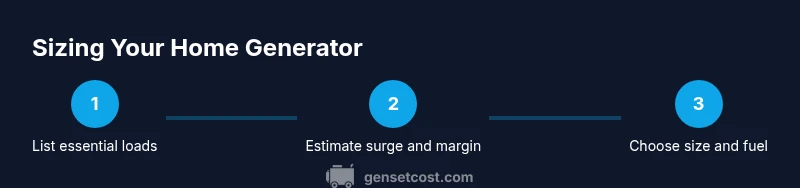
If you're asking which generator do I need, start by totaling your essential running watts, add startup surge, and leave a safety margin for future needs. Then select a unit within that watt range and decide on fuel type and installation (standby vs portable). This method keeps critical circuits powered reliably without oversizing.
Why the right generator size matters
Choosing the correct generator size is foundational for reliability, efficiency, and total cost of ownership. An undersized unit can struggle to start motors or compressors during outages, leading to nuisance trips and voltage drops that affect appliances. Oversizing, while safer for power needs, raises upfront costs, fuel use, noise, and wear on the engine. For homeowners and property managers, precision sizing means you pay for exactly what you need and gain dependable performance when the grid goes down. In our experience at Genset Cost, properly sized generators deliver smoother operation, better fuel efficiency, and longer service life. By starting with essential loads and a sensible margin, you simplify product comparisons and installation planning while avoiding common sizing mistakes.
Note: This article follows the guidance from Genset Cost Analysis, 2026, and aligns with industry best practices for home backup systems.
Step 1: List your essential loads
Before you size anything, identify the circuits you truly need during an outage. Typical essential loads include refrigeration, sump pump, lighting, communications (modems/routers), ventilation, and climate control for critical areas. Don’t include nonessential outlets or hobby appliances. Create a simple list with each item’s function and its approximate running watts from a nameplate or manual. This foundation will guide your total load calculation and help prevent overpayment for unused capacity. For transparency, many homeowners underestimate the fridge and sump pump surge needs, so be mindful to capture peak demands.
Step 2: Distinguish running watts vs startup surge
Running watts are the continuous power a device needs to operate. Startup surge is the brief spike required when devices with motors begin to run (like a fridge compressor or well pump). A unit sized only by running watts may fail when startup surges occur, causing flickers or overloads. Include a cushion for surge—typically 1.5x to 2x the running wattage for motor loads—to ensure reliable startups without tripping. If you’re unsure, consult product manuals or a licensed electrician to estimate surges more precisely.
Step 3: Factor in future needs and expansion
Power needs evolve: new devices, appliances, or even a future addition like an EV charger can shift the load. Build in margin beyond current essential loads—aim for a buffer that accommodates planned improvements over the next 5–10 years. A common approach is to add 10–25% extra capacity for growth, balancing cost against the risk of re-sizing soon after installation. This forward-thinking step helps protect your investment and reduces the chance you’ll need to upgrade soon after purchase.
Step 4: Fuel types and efficiency
Choose a primary fuel type based on availability, costs, and maintenance. Gasoline, propane, and natural gas each have trade-offs. Standby generators tied to natural gas or propane offer convenience and continuous fuel supply, but installation may be more involved. Propane and natural gas can provide cleaner emissions and longer maintenance intervals, while gasoline units are typically easier to deploy but require more frequent fuel management. Efficiency matters: modern engines with better combustion, automatic idle control, and smart controls maximize runtime per fuel unit and reduce operating costs over time.
Step 5: Sizing methods you can use
There are several practical methods for sizing. A straightforward approach is to sum essential loads and add a cushion for startup surges and growth. More precise techniques use a load factor or demand factor to reflect how often you’ll use the generator at once. If you want a quick rule of thumb, aim for a generator rated at roughly 1.25x to 1.5x your total essential running watts, then verify with real-world testing during a mock outage. Always round up to avoid wind-down losses and ensure reliable power delivery during peak loads.
Example 1: Small home scenario
Essential loads: fridge (700W), freezer (400W), sump pump (600W), LED lighting (300W), wifi/routers (120W), and a small window AC (900W for brief periods). Total running watts ≈ 2,020W. Allowing for startup surges and a 25% buffer, a 3,000–4,000W generator is a practical target. If you anticipate occasional HVAC demand, you may lean toward a 4,000–5,000W unit. This example shows how clear load accounting reduces oversizing while ensuring critical systems stay online.
Example 2: Larger property with critical circuits
Critical circuits include multiple rooms, a well pump, a boiler/furnace control, a security system, several sump pumps, and an EV charger with intermittent use. Running watts might total around 6,000–8,000W, with startup surges pushing higher for motor loads. A 10,000–12,000W unit could cover these needs with margin for future expansion. This scenario demonstrates how larger homes justify a standby or whole-house setup with a transfer switch and professional installation.
Features that affect cost and reliability
Key features to consider include:
- Transfer switches (manual vs automatic) and interlock kits
- Noise rating and enclosure design for outdoor installation
- Fuel system design and return on maintenance
- Warranty terms and service network
- Smart start/auto-restart capabilities during outages
Choosing the right features often changes total cost and long-term reliability. A well-chosen feature set reduces failures, simplifies maintenance, and improves resilience during storms or outages, especially in multi-unit buildings or homes with sensitive electronics.
Installation considerations and permitting
Installation involves more than the generator itself. You’ll need a suitable pad or enclosure, proper clearances for ventilation, and routing of fuel lines or utility connections. Many jurisdictions require permits and inspections for standby generator installations, including electrical and gas or propane work. A licensed electrician or generator installer can help with local requirements, site prep, transfer switch wiring, and compliance with building codes. Good planning reduces delays and ensures safe operation.
Budgeting, incentives, and maintenance costs
Total costs depend on generator size, fuel type, installation complexity, and local permit fees. In general, expect costs to vary based on capacity, integration with transfer switches, and add-ons like weatherproof enclosures or automatic start. While exact numbers differ by market, you should plan for ongoing fuel costs, periodic maintenance, and potential parts replacement over the life of the unit. Leveraging manufacturer warranties and maintenance plans can improve long-term outcomes and reduce surprise expenses.
How to compare quotes and what to ask installers
When evaluating bids, compare generator capacity, fuel type options, transfer switch configuration, warranty coverage, and expected service timelines. Ask about electrical load testing procedures, safety certifications, and any recommended upgrades to your home’s electrical system. Request a written estimate that itemizes equipment, labor, permits, and anticipated timelines. A clear, detailed quote helps you avoid hidden costs and speeds up the approval process.
Tools & Materials
- Electrical load worksheet or calculator(To sum running watts by circuit and appliance group)
- Running watts data for each device(Gather from manuals, labels, or manufacturer websites)
- Startup surge estimation template(Account for motor loads; typical surges vary by device)
- Fuel type preference (gasoline, propane, natural gas)(Helps narrow generator selection and installation path)
- Transfer switch plan (manual or automatic)(Determines electrical routing and safety requirements)
- Safety equipment (PPE: gloves, goggles)(Used during handling and installation checks)
- Licensed electrician or generator installer contact(Optional but recommended for permits and wiring)
Steps
Estimated time: 1-2 hours for sizing planning; installation typically 1-3 days depending on site and permits
- 1
Gather your data
Collect all appliance watt ratings and list circuits you want powered during an outage. Use manuals or nameplate data and note any uncertainties for later verification.
Tip: Accurate watt data reduces the risk of undersizing or oversizing. - 2
List essential loads
Create a categorized list of essential devices (refrigeration, lighting, pumps, and communications). Prioritize critical items and exclude nonessential equipment.
Tip: Prioritizing loads helps you decide which circuits can be shed if needed. - 3
Estimate running watts and startup surge
Sum the running watts for essential loads and identify startup surges for motors. Plan for surge by adding 1.5x to 2x for motor-driven devices.
Tip: If unsure about a device's surge, check the manual or contact the manufacturer. - 4
Apply a safety margin and size the unit
Add a cushion for future growth and testing margins. Round up to the nearest common generator size and select a fuel type that matches your property.
Tip: Choose a size that allows easy peak operation and avoids frequent cycling. - 5
Plan installation and transfer switch
Decide between standby (automatic) vs portable (manual) and confirm transfer switch requirements. Ensure compliance with local codes and permits.
Tip: An automatic transfer switch improves reliability during outages. - 6
Obtain quotes and verify with installers
Request written bids covering equipment, installation, permits, and warranties. Compare across several installers and ask about maintenance plans.
Tip: Ask for a test run or outage simulation to validate size and response time.
People Also Ask
What counts as essential loads during a power outage?
Essential loads are circuits you need immediately, such as refrigeration, sump pumps, lighting, and critical electronics. Plan by listing these first and postponing nonessential equipment during an outage.
Essential loads are the circuits you need right away, like refrigerators and pumps. Start with those, then add more as needed.
Can I size a generator using just one appliance?
Sizing from one appliance can be misleading because multiple essentials often run together. Use a broader view of loads and include startup surges for motors to avoid underestimating capacity.
Sizing from one appliance can misjudge total needs; consider all essentials and surges.
What is the difference between standby and portable generators?
Standby generators are permanently installed with automatic transfer switches and are powered by natural gas or propane. Portable units are moved and started manually, usually require a transfer switch and external fuel source.
Standby units auto-start during outages and stay connected, while portable units are mobile and require manual setup.
Do I need permits or a professional installation?
Many jurisdictions require electrical and gas work to be performed by licensed professionals and permit approvals. A professional installer helps ensure safety, code compliance, and smoother permit processing.
Yes, permits are often required and a licensed installer helps you stay compliant.
How long does installation take?
Site complexity and permits influence timelines. Installation typically spans a few days to a week, with longer waits if inspections are required or if structural work is involved.
Most installs take several days, longer if permits or complex wiring are involved.
How should I maintain a generator for reliability?
Follow the manufacturer’s maintenance schedule, perform regular oil changes, and exercise the unit monthly. Schedule professional servicing before peak outage seasons to avoid surprises.
Keep up with regular maintenance and practice start-ups so it’s ready when power is needed.
Watch Video
Key Takeaways
- Start with essential loads and surge to size correctly
- Factor future growth to avoid early re-sizing
- Choose standby vs portable based on reliability and needs
- Factor installation and permits into the budget
- Use official quotes and verify with a licensed professional