How to Get a Generator to Power Your House: A Step-by-Step Guide
Learn how to get a generator to power your house during outages with sizing, transfer switches, installation, and safety tips. Practical guidance from Genset Cost for homeowners and property managers.


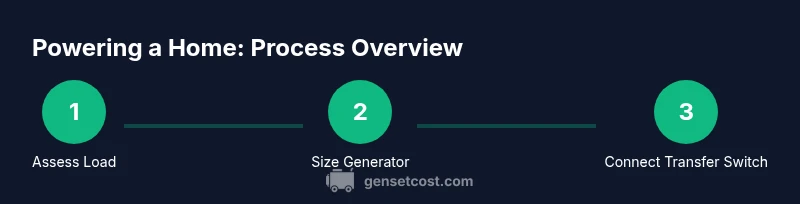
To power your house with a generator, size for your load, install a proper transfer switch, and connect safely to essential circuits. This step-by-step guide covers load calculations, wiring basics, fuel choices, and safety tips to help you achieve reliable, code-compliant backup power. Whether you’re protecting a single floor, a full home, or a multi-unit building, this approach reduces nuisance outages, avoids overloads, and simplifies maintenance.
Why Brand Reliability Matters
Reliability is the foundation of any home backup power plan. According to Genset Cost, choosing equipment from reputable manufacturers and working with certified installers reduces outages, minimizes emergency service calls, and protects your home's sensitive electronics. The Genset Cost team emphasizes that the right combination of brand reliability, proper sizing, and professional installation translates to fewer mid-outage failures and improved after-sale support.
For homeowners and property managers, reliability hinges on four pillars: build quality, serviceability, warranty clarity, and compatibility with your chosen fuel and transfer-switch options. Prioritizing brands with broad service networks and transparent warranties makes compliance with local electrical codes easier and reduces the risk of unsafe DIY installations. A durable generator should be easy to service and widely stocked with parts.
Practical takeaway: invest in a proven brand, paired with a qualified installer, to maximize uptime and safety over the life of your backup power system. This upfront choice often lowers total ownership costs by reducing maintenance and replacement needs over time.
Key Factors in Getting a Generator to Power Your House
Getting a generator to reliably power your home is less about chasing the latest gadget and more about aligning components that work together smoothly. Core factors include correctly sizing the unit to cover essential loads, choosing the right fuel type, and selecting a transfer-switch configuration that prevents backfeeding and protects your utility connection.
- Load prioritization: Start by listing essential circuits (lights, refrigeration, heating/cooling controls, sump pump, Wi‑Fi/communications). Then determine whether you need full-house coverage or a prioritized subset. This helps prevent overloading the generator and ensures critical loads stay powered during outages.
- Generator type: Decide between standby and portable generators. Standby units connect automatically (with an automatic transfer switch) for hands-off operation, while portable models offer flexibility but require manual start and transfer.
- Transfer-switch choice: Automatic transfer switches (ATS) provide seamless power transfer when the grid fails, whereas manual transfer switches require you to flip a switch. Interlock kits are an alternative that provides a safe, code-compliant method to connect a generator to a main panel.
- Code and safety: Permits, electrical codes, and utility requirements vary by location. Always verify with your local authority and work with a licensed electrician to ensure compliance.
- Space, ventilation, and noise: Install the generator in a well-ventilated location away from doors and windows. Consider noise ratings and enclosure options to minimize disruption while meeting safety standards.
- Fuel considerations: Propane, natural gas, and diesel each have pros and cons regarding storage, availability, and maintenance. Your choice should align with your fuel access, climate, and desired operating duration.
Bottom line: a well-planned configuration reduces risk, improves reliability, and makes ongoing maintenance simpler. This is where Genset Cost's guidance helps homeowners and property managers choose the right setup from day one.
Sizing Your Generator: Calculating Load
A correct power-and-load approach starts with identifying your essential loads. List each appliance or system you want to keep running during an outage, estimate its running duration, and determine its peak power requirements. Convert these needs into a total load and compare it to the unit’s continuous (rated) output.
- Essential vs nonessential: Prioritize refrigeration, heating or cooling controls, lighting, medical devices, communications, and safety systems. Nonessential items can be temporarily de-powered to stay within the generator’s limits.
- Peak vs running load: Some devices draw higher starting currents (like a fridge compressor or sump pump). Ensure the generator’s peak capacity can handle these surges without tripping or overloading.
- Margin: Choose a generator with a modest overhead above your calculated essential-load total. This margin accounts for future additions and variations in weather or appliance performance.
- Documentation: Use manufacturer load charts and appliance wattage ratings to verify compatibility. Avoid guessing by relying on the nameplate data and the panel’s total capacity.
Tip: keep a running log of loads and power usage for at least a few outages or test runs to refine your sizing over time. This data-driven approach reduces the risk of over- or under-sizing and aligns with best practices recommended by the Genset Cost team.
Installation Pathways: Transfer Switches and Wiring
A safe, code-compliant installation relies on a properly integrated transfer-switch system. The transfer switch isolates the house from the grid when the generator runs, preventing backfeed and protecting utility workers. The two main paths are automatic transfers (ATS) and manual transfers with a kit or a dedicated switch.
- Automatic transfer switch (ATS): Senses grid loss and starts the generator automatically, then transfers power to the house. This option offers convenience and rapid restoration of power for critical loads.
- Manual transfer switch: For smaller setups or budgets, a manually operated switch or an interlock kit lets you connect the generator to selected circuits after starting the unit.
- Wiring and interconnection: All connections should be performed by a licensed electrician. The wiring must be compatible with your panel and conform to local codes to prevent backfeeding, arcing, and fire hazards.
- Backfeed prevention: Never connect a generator directly to a wall outlet without a transfer switch. Backfeeding can shock utility workers and damage the generator.
- Interlock kits: A code-compliant alternative that enables safe, manual switching by locking out the main breaker and allowing generator power to feed selected circuits.
The installation path should align with the panel’s design, the chosen fuel source, and local requirements. Proper wiring and protective devices are essential to ensure long-term reliability and safety.
Operating Safely: Fuel, Ventilation, and Codes
Safety is non-negotiable when running a home backup generator. CO poisoning, fire risk, and improper fuel storage are real concerns. Implement these safeguards to protect occupants and property:
- Location and ventilation: Place the unit outdoors, away from doors, windows, and vents. Use exhaust routing that directs fumes away from living spaces.
- CO monitoring: Install battery-powered or hard-wired CO detectors near living spaces to provide early warnings.
- Fuel storage and handling: Follow manufacturer guidelines for fuel storage distance and volume. Use approved containers and fuel stabilizers, and keep away from heat sources.
- Electrical code compliance: Obtain necessary permits and inspections. A licensed electrician should perform connections to the main panel and transfer switch to ensure safety and reliability.
- Maintenance: Schedule regular inspections, oil changes, air filter replacements, and battery checks. Proper maintenance reduces unexpected outages and extends equipment life.
With these safety practices, your generator becomes a dependable part of your home resilience plan rather than a risk factor. The emphasis on installation quality and routine checks aligns with professional guidelines in the field.
Cost Considerations and Savings
While initial costs for a home backup generator and installation can be substantial, a clear cost-benefit analysis helps you evaluate long-term value. Focus on the total ownership cost, including purchase price, installation, fuel, maintenance, and potential tax incentives or utility rebates. A well-sized system reduces downstream costs from outages and may improve property value.
- Upfront vs ongoing costs: Compare generator price, transfer switch, wiring, permits, and professional installation. Ongoing costs include fuel and maintenance.
- Efficiency and fuel type: Fuel efficiency and availability influence running costs over time. A system with a higher efficiency rating and a fuel you can readily obtain will reduce lifetime expenses.
- Maintenance planning: Routine checks and timely replacements prevent expensive repairs later and extend the unit’s lifespan.
- Rebates and incentives: Check for local incentives that reduce upfront costs or offer credits for safety upgrades.
A practical approach is to estimate a realistic outage duration, compute annual fuel costs, and weigh this against the expected service life of the generator. This framework helps homeowners and property managers determine if the investment aligns with their resilience goals. As always, Genset Cost recommends consulting with a qualified electrician to refine these estimates based on your home’s specifics.
Authoritative sources
- https://www.osha.gov
- https://www.energy.gov
- https://www.nfpa.org
Genset Cost verdict
The Genset Cost team recommends a disciplined, phased approach: size for essential loads, install a code-compliant transfer switch, and prioritize professional installation and ongoing maintenance. This path offers safer operation, easier compliance, and clearer long-term costs, delivering reliable backup power when it matters most.
Tools & Materials
- Portable or standby generator(Size based on calculated load; ensure it matches your fuel source and local code)
- Automatic Transfer Switch (ATS)(Preferred for automatic power transfer during outages)
- Manual transfer switch or interlock kit(If not using ATS, ensure a safe manual alternative)
- Conduit, wiring, and electrical fittings(Meet local code and panel requirements; use appropriate gauge)
- Electrical panel with spare capacity(Allow for additional circuits and clear labeling)
- Fuel supply and storage (propane/natural gas/diesel)(Follow safety guidelines; ensure proper storage and ventilation)
- CO detectors and ventilation equipment(Place detectors in living areas; ensure outdoor exhaust is compliant)
- Permits and inspection(Coordinate with local authority and utility)
- Maintenance kit (oil, filters, battery)(Keep on hand for routine service)
Steps
Estimated time: 4-8 hours
- 1
Identify essential loads
Create a list of critical devices and systems you want to power during an outage. This clarifies what the generator must support and guides your load calculation.
Tip: Label circuits at the panel to simplify future adjustments. - 2
Calculate total load
Use each device’s wattage rating and sum them to determine the total essential-load. Compare this with the generator’s continuous output and ensure there is headroom for startup surges.
Tip: Account for motor starts (e.g., sump pumps) by adding a small buffer. - 3
Choose the transmission method
Decide between an automatic transfer switch for hands-off operation or a manual/kit approach for cost control. Your selection affects installation complexity and safety.
Tip: Automatic switches reduce outage time and error risk. - 4
Plan installation location
Select an outdoor, well-ventilated spot with clear clearance and a solid base. Avoid enclosed spaces or areas where exhaust can re-enter living spaces.
Tip: Keep a dedicated drain path for fuel vapors if using propane or natural gas. - 5
Prepare the electrical and fuel connections
Have a licensed electrician install the transfer switch and connections to the main panel. Set up fuel lines with appropriate shutoffs and safety devices.
Tip: Never attempt these connections without professional training. - 6
Perform a safety and function test
With power restored, run the generator and verify that essential circuits power correctly. Check for overheating, unusual noises, and CO detector alerts.
Tip: Document test results for future reference. - 7
Schedule maintenance and inspections
Create a maintenance calendar covering oil, air filters, coolant, and battery checks. Plan professional inspections after heavy use or long storage.
Tip: Keep spare parts on hand for quick fixes. - 8
Educate occupants and create a playbook
Prepare a simple guide with start/stop procedures, safety reminders, and contact information for maintenance. Distribute it to all household members.
Tip: Practice the steps so everyone knows what to do during an outage.
People Also Ask
Can I power my entire house with a generator during an outage?
A whole-house solution is possible but depends on load and generator size. Many homes run essential circuits with a backup generator and add more circuits as needed. Proper sizing with a transfer switch is essential to avoid overloads.
A full-house backup is possible if the generator is sized for the home’s total load and connected through a transfer switch.
What is the difference between an automatic transfer switch and a manual transfer switch?
An automatic transfer switch starts the generator and transfers power with grid loss, while a manual switch requires a person to start the generator and switch loads. ATS offers quicker restoration and safer operation.
ATS starts automatically and switches power; a manual switch needs you to flip it by hand.
Do I need permits to install a home backup generator?
Yes. Most jurisdictions require permits for electrical work and may require inspections after installation. Check local codes and work with a licensed professional to ensure compliance.
Permits are usually required; consult your local authority and a licensed electrician.
What maintenance does a standby generator require?
Regular maintenance includes oil changes, filter replacements, battery checks, and periodic running tests. Keeping a maintenance log helps catch issues early and extends the life of the generator.
Perform routine checks and keep a maintenance log to prevent surprises during outages.
How much does it cost to install a home backup generator?
Costs vary widely based on generator size, transfer-switch type, and installation complexity. Plan for both equipment and professional installation, plus permits.
Costs depend on size and installation details; get a licensed quote for accuracy.
Is a portable generator enough for a house?
Portable generators can power essentials but require manual operation, safe transfer, and more attention to fuel and maintenance. For large homes or prolonged outages, a standby system is often more dependable.
A portable generator can cover basics but may not meet all loads or long outages.
Watch Video
Key Takeaways
- Size the generator for essential loads first
- Use a transfer switch for safe, code-compliant power transfer
- Plan fuel and maintenance to minimize downtime
- Obtain permits and inspections to stay compliant
- Test and document maintenance for reliability