Hydroelectric Generator: A Comprehensive Home Comparison
Compare residential hydroelectric generators with diesel backups: costs, sizing, installation, and maintenance. Learn when hydro makes sense and how to assess site viability for reliable home power.


Hydroelectric generators can deliver clean, steady power in water-rich sites, but viability hinges on water flow, head, and long-term costs. For homeowners, micro-hydro often offers lower fuel costs and quiet operation than fossil backup generators, but site feasibility, permitting, and maintenance shape the decision. This comparison highlights the main differences to help you choose wisely.
Hydroelectric generators in home power systems
According to Genset Cost, hydroelectric generators can be a compelling option for homes with consistent water flow, offering long-term savings and low fuel use. This section defines what a hydroelectric generator is and why it matters for residential backup power. A hydroelectric generator uses flowing water to spin a turbine, which drives a generator to produce electricity. In the right setting, it can deliver automatic, clean energy with minimal ongoing fuel costs, reducing energy bills during outages or day-to-day use. However, site viability, permitting, and ongoing maintenance shape feasibility. Homeowners should weigh available water, seasonal variability, head, and water rights, as these factors determine whether hydro will reliably meet demand. This article compares hydro options against traditional backup generators to help you decide whether to pursue a hydro solution.
How hydroelectric generators work: core principles
A hydroelectric generator converts kinetic energy from flowing water into electricity via a turbine directly coupled to a generator. Water flow and head drive turbine speed, which is converted into electrical energy in a generator. Efficiency hinges on turbine design (pelton, impulse, or Kaplan styles) and the sizing of the generator to match load. In residential contexts, designers emphasize low friction bearings, robust seals, and regulator controls so the system can auto-start during outages. The result is a dependable energy source that can run continuously if water and head are stable. The concept is straightforward, but achieving reliability requires careful selection of components and an understanding of how water resource dynamics influence output over seasons.
Site feasibility and water rights
Site feasibility is the first hurdle for any hydroelectric project. A viable residential hydro system needs a dependable water source with consistent flow and sufficient head. Land ownership, watershed rights, and seasonal variability affect year-round availability. In many jurisdictions, you may require water rights permissions or easements to divert water for power generation. Additionally, environmental and wildlife considerations may drive stream protection measures and min-max flow requirements. Before committing, homeowners should perform a professional hydrology assessment, inspect the accessibility for pipes and penstock, and evaluate potential interference with neighbors or local infrastructure. Failing to secure rights or permitting can derail even technically sound installations.
Sizing and load considerations
Sizing a hydroelectric generator starts with a thorough load assessment. Homeowners should list every critical circuit, essential loads, and peak demand during outages. A properly sized system includes a turbine that can drive a generator to meet or exceed the calculated peak load, plus an adequate storage or grid-tied arrangement. Hydroelectric options excel when the water resource and head are stable, delivering a predictable energy profile. If demand spikes unpredictably or water flow fluctuates seasonally, designers often recommend a hybrid approach that complements micro-hydro output with a secondary backup source. This balancing act reduces the risk of under-sizing and ensures power continuity across weather and hydrological variations.
Upfront costs and financing basics
Initial costs for a residential hydroelectric setup include civil works, turbine and generator, control systems, piping or penstock, and potential grid-tie equipment. Because site conditions drive costs, you may see a wide range of upfront investments. While some households face substantial civil and environmental work, others with straightforward stream access experience moderate expenditures. Financing options typically include standard home improvement loans, energy-efficiency grants, and in certain areas, favorable rates for renewable projects. It’s essential to perform a full life-cycle cost analysis that accounts for capital, permitting, installation, yearly maintenance, and anticipated energy savings. The goal is to determine whether total cost of ownership aligns with your property’s needs and budget.
(1) ## Operating costs and long-term economics
Operating costs for hydroelectric systems are largely driven by water resource stability, maintenance, and regulatory obligations. In many cases, operating costs are lower than those of diesel backups because the fuel is free (water) and mechanical wear can be minimized with quality components and periodic service. However, long-term economics depend on water rights, seasonal flow, turbine wear, and potential costs for monitoring and maintaining a regulator. It’s crucial to quantify annual maintenance tasks—bearing lubrication, inspection of seals, and monitoring of water quality and debris—and to compare them against the ongoing fuel costs and maintenance needs of a diesel backup generator. Genset Cost analysis highlights that micro-hydro systems can offer favorable operating economics when water flow is reliable, but not all sites will meet those conditions.
Regulations, permits, and environmental considerations
Hydroelectric installations raise regulatory considerations about water rights, environmental impact, and safety protocols. Permitting may cover water diversion, stream protection, and electrical interconnection with your home. Environmental reviews can inform potential fish passage requirements, sediment management, or flow restrictions that protect ecosystems. If you plan to interconnect with the grid, additional approvals may be required from your utility. Proactive planning should include a licensed professional to navigate local codes, secure necessary permits, and design safeguards. The regulatory landscape varies by locality, so expect differences in documentation, fees, and timelines. A transparent permitting plan reduces the risk of delays and ensures ongoing compliance throughout the system’s life.
Reliability, maintenance, and lifecycle considerations
Reliability hinges on a steady water source, well-chosen turbine and generator, and properly sized equipment. Maintenance tasks typically include regular inspection of bearings and seals, cleaning of intakes to prevent debris buildup, and monitoring of water quality to minimize corrosion. Lifecycle considerations involve component wear, potential turbine resurfacing, and parts availability over two decades or more. Unlike fossil-fuel generators, hydro systems rely on natural resources, so performance may vary with rainfall and snowmelt cycles. A well-documented maintenance plan, scheduled servicing, and a robust remote monitoring setup can dramatically improve uptime and extend the system’s life. Planning for regular inspections helps catch wear before it impacts power delivery.
Installation and integration with home electrical system
Installation requires integration with your home’s electrical design, including a transfer switch, regulator, and protective devices. A licensed electrician will typically handle interconnection with the utility, ensure compliance with electrical codes, and configure the automatic start/stop behavior during outages. In addition to electrical work, the project may involve civil engineering tasks, piping layout, and protective measures against flood or erosion. A carefully planned installation minimizes the risk of backfeed, ensures safe shutoffs, and maximizes energy capture from water flow. After commissioning, perform a formal test to confirm safe operation under various load conditions and outage scenarios.
Real-world deployment scenarios and best-practice cases
While hydroelectric generators are not one-size-fits-all, several realistic scenarios illustrate where they shine. Rural homesteads with year-round streams can achieve substantial energy independence, especially when combined with storage or battery systems. Small riverfront homes with reliable head may realize low operating costs and high reliability, provided water rights are clear and environmental concerns are managed. In urban-adjacent sites, micro-hydro can supplement, rather than replace, grid power, offering resilience against outages and reducing peak demand charges. Best practices include engaging early with a hydrologist, securing rights or permits, choosing durable turbine technologies, and designing an efficient control strategy that matches water flow to load profiles. Real-world deployments show that success hinges on water resource certainty and a deliberate, phased implementation.
Future trends and decision framework for homeowners
The future of home hydroelectric power is shaped by advances in turbine efficiency, smarter controls, and streamlined permitting for small-scale projects. As technology reduces the cost and complexity of hydro systems, homeowners should focus on a structured decision framework: assess water resource reliability, estimate total cost of ownership, plan for grid interconnection or storage, and build a realistic maintenance schedule. In many markets, micro-hydro is most attractive when paired with storage or hybrid strategies that ensure power whenever water flow dips. The key is to align site conditions, budget, and energy goals to decide whether hydro should be a primary source or a robust backup.
Comparison
| Feature | Residential micro-hydroelectric system | Diesel backup generator |
|---|---|---|
| Power output range | ~1-25 kW (micro-hydro) | ~5-50 kW (diesel) |
| Energy source | Water flow & head (continuous) | Diesel fuel (stored) |
| Noise level | Low to near-silent (installation-dependent) | Moderate to high (engine/exhaust) |
| Upfront cost range | Moderate to high (civil works & turbine) | Lower upfront (portable/generator set) |
| Installation complexity | Site assessment, civil works, piping | Standard installation with exhaust vent |
| Operating costs | Low fuel + maintenance | Ongoing fuel costs and maintenance |
| Regulatory considerations | Water rights permits, environmental reviews | Fuel storage and emissions regulations |
The Good
- Low operating costs over time with steady energy supply
- Very low emissions when water quality and source are clean
- Quiet operation compared to internal combustion generators
- High reliability in well-sited environments
- Potential for optimization with storage or smart controls
The Bad
- Site dependency requires reliable water source and head
- High upfront capital and civil works when hydropower is complex
- Regulatory permitting can be time-consuming
- Environmental impact on watershed if water flow isn't managed responsibly
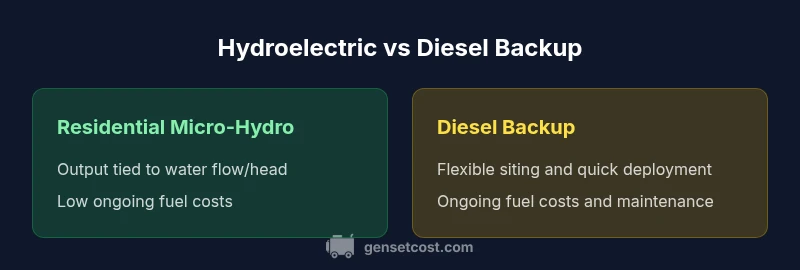
Hydro wins where site conditions are favorable; diesel remains practical where water is limited
Choose hydro when a reliable water source exists and long-term operating costs matter. Choose diesel when quick deployment and portability are priorities or water access is uncertain.
People Also Ask
What is a hydroelectric generator?
A hydroelectric generator converts kinetic energy from flowing water into electricity via a turbine directly coupled to a generator. In a home setting, it requires a reliable water source, a turbine, and proper electrical interconnection.
A hydroelectric generator uses water flow to turn a turbine that generates electricity, typically needing a steady water source and proper electrical setup.
Can a hydroelectric system power an entire home?
Yes, if the system is properly sized for peak loads and water flow is sufficient. Many homes use hydro as a primary source in suitable sites or as a robust backup.
Yes, with correct sizing and reliable water flow, it can power most home loads; some homes use it as the main source or a strong backup.
What factors affect feasibility?
Key factors include water flow, head, seasonal variability, water rights, and local permitting. Without reliable water and rights, hydro may not meet demand.
Feasibility mainly comes down to water flow, head, and permissions—not just the technology.
What permits are typically required?
Permitting often covers water rights, stream access, environmental considerations, and electrical interconnection. Check with local authorities and a licensed installer.
Typically you’ll need water rights permits and electrical/environmental approvals.
Is hydro power reliable during droughts?
Reliability depends on stream flow. During droughts, output can drop unless you have storage or a hybrid system to supplement.
If water flow drops during droughts, output may fall; plan for storage or backup.
How does maintenance differ from a diesel generator?
Hydro systems require turbine and generator maintenance, water management, and debris control; diesel gensets require regular fuel, oil, and exhaust system maintenance.
Hydro maintenance focuses on water flow and turbine care; diesel needs fuel and exhaust upkeep.
Key Takeaways
- Assess water availability and head early to gauge feasibility.
- Compare long-term operating costs, not just upfront price.
- Factor permitting and environmental impact into the decision.
- Plan for integration with your home electrical system and transfer switch.
- Use our framework to decide between hydro and conventional backups.