Power Generator Comparison: Home Backup Options
Analytical comparison of power generator options for home backups, focusing on sizing, fuel types, installation, costs, and maintenance to guide homeowners and property managers.


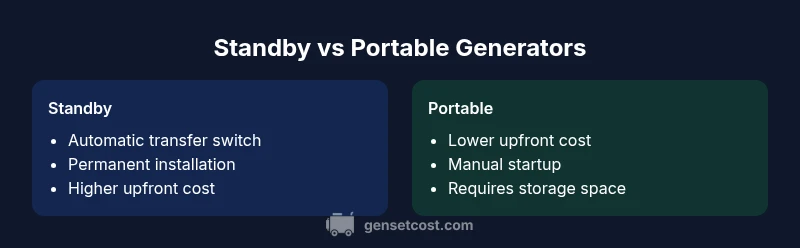
According to Genset Cost, a properly sized power generator provides reliable outage protection while avoiding overinvestment. Choose a unit that meets essential load first, then consider future growth and installation needs. This quick comparison signals that standby systems offer automatic transfer and quiet operation, while portable units deliver flexibility at a lower upfront cost. A sizing-based approach reduces waste and improves long-term value.
Understanding the role of a power generator in home resilience
A power generator is a purpose-built device that converts fuel into electricity to sustain essential functions during a grid outage. For homeowners and property managers, the question is not simply 'which unit is best' but 'which unit best fits the anticipated use, safety constraints, and long-term cost of ownership.' A power generator can be portable, moving from location to location, or permanently installed as a standby system that automatically starts when utility power fails. The latter typically connects to a transfer switch and a dedicated fuel supply, delivering seamless power to critical circuits without manual startup. When evaluating options, the user should consider not only peak wattage but also how much of the home's essential load must be supported during an outage. For most households, the goal is to maintain basic comfort and safety—refrigeration, lighting, charging, and necessary climate control—without paying for oversized equipment that sits idle for most of the year. This section lays the groundwork for a rigorous, numbers-driven comparison by explaining the core concepts of load, capacity, and reliability, with an eye toward achieving predictable performance under adverse conditions. In practice, the decision hinges on the balance of upfront investment, ongoing fuel costs, and maintenance requirements. The power generator decision should align with the property’s resilience strategy.
Sizing fundamentals: how much power do you actually need
Sizing a power generator starts with a precise load assessment. List essential circuits and devices you want powered during an outage, then estimate running watts and starting watts where applicable. Fridges and freezers typically demand a surge when compressors start, while lighting and modems draw a smaller, steady amount. HVAC systems, water pumps, and well pumps contribute significantly to the total load, so they deserve special attention in the calculation. A practical approach is to categorize loads into essential (refrigeration, lighting, safety systems) and high-priority but optional (pool pumps, second air conditioning zone). For many single-family homes, a typical standby system falls in the mid-range of core capacity, while larger residences or multi-unit properties may require higher output. The key is to size to cover the critical load while avoiding overbuilding, which adds unnecessary upfront cost and longer installation times. This section translates real-world needs into a sizing framework that supports reliable outages without waste.
Fuel types and availability: gasoline, propane, natural gas, diesel, and dual-fuel
Fuel choice drives running costs, availability, and storage considerations. Gas-fed systems (natural gas or propane) offer the advantage of a continuous fuel supply and quiet operation but require a fixed fuel source and potential constraints on delivery and pressure. Diesel units are robust and well-suited for high-output needs, but diesel storage and emissions considerations can complicate installation. Gasoline is common for portable units and short outages, yet it requires regular refueling and has storage limits. Dual-fuel configurations provide flexibility by switching between fuel types to mitigate price spikes or supply interruptions. Reliability, maintenance, and safety should align with the chosen fuel: natural gas lines, propane tanks, or diesel tanks all have different installation requirements and safety considerations. When evaluating options, lenders and insurers may also consider fuel type stability and availability in your region. The goal is to keep fuel logistics simple while maintaining consistent power delivery during outages.
Installation, permits, and safety considerations
Choosing between a standby system and a portable unit involves more than device selection; it requires an installation plan that prioritizes safety and code compliance. Standby systems typically connect to a transfer switch and a fixed fuel line, which means professional installation is strongly advised. Proper clearances, exhaust venting, and noise control are essential for safety and neighbor relations. Portable generators, while cheaper to acquire, demand careful siting, weather protection, and correct wiring to prevent backfeeding or electrical hazards. Many jurisdictions require permits, inspections, and adherence to electrical and fire codes. A well-documented installation also addresses air clearance, fuel storage, and outdoor enclosure specifications. In this section, you’ll learn how to prepare for installation, what questions to ask installers, and how to verify that compliance and safety standards are met before powering up for the first outage.
Maintenance and reliability: keeping your system ready
Reliability for a power generator depends on proactive maintenance and regular testing. Standby systems benefit from annual professional servicing, sensor checks, and transfer switch diagnostics. Portable units require periodic oil changes, air filter replacements, spark plug checks, and battery maintenance for electric starts. A practical maintenance calendar includes a pre-season test run, compression checks for diesel units, and a load test to ensure the system can sustain expected loads. Keeping receipts and a maintenance log helps with warranty compliance and resale value. A common pitfall is assuming a generator will run forever without service; neglecting routine maintenance increases the risk of failure during outages and can shorten the equipment’s life. Genset Cost’s framework emphasizes aligning maintenance with fuel type and usage frequency to maximize uptime and minimize unexpected repairs.
Cost considerations: upfront investment, running costs, and amortization
Cost discussions should distinguish upfront purchase price from long-term operating expenses and maintenance. Standby systems demand higher upfront investment and installation complexity but deliver seamless operation and better resilience. Portable generators typically have lower initial costs but higher long-term running costs due to fuel usage and the need for frequent refueling and manual startup. Fuel costs vary by type and market conditions, and maintenance frequency influences total cost of ownership. A thorough comparison weighs total cost of ownership over the expected life of the generator, factoring in installation, transfer switches, permits, and potential servicing contracts. The overarching objective is to find a balance between reasonable initial spend and predictable, affordable operating costs under outages. Genset Cost’s analysis reinforces the idea that investment should align with your resilience goals and lifestyle needs while avoiding overcapitalization on equipment you won’t use regularly.
Comparing brands and configurations: standby vs portable, top players
Brand choices influence reliability, warranty coverage, and long-term service access. Standby-grade manufacturers often emphasize integrated systems with robust transfer switches, weatherproof enclosures, and factory-backed warranties. Portable units are broad in selection and price, with a range of wattages and feature sets that suit DIY installs or budget-conscious upgrades. When evaluating brands, consider track records for service network, parts availability, and user reviews focused on downtime during outages. Typical configurations include a fixed natural gas or propane standby model versus a portable unit you can store and deploy as needed. This section outlines a practical approach to comparing configurations and brands without getting trapped in marketing claims. The goal is to identify both the best long-term value and the most reliable support network for your property.
Practical sizing scenarios for homes and multi-tenant buildings
Buildings vary widely in their power needs. A small single-family home may require a compact standby unit or a portable generator to cover core appliances, while multi-tenant properties demand greater resilience and centralized backup capacity. In multi-tenant scenarios, a shared standby system with a centralized transfer switch can simplify feeding essential circuits to several units. Sizing considerations should account for simultaneous operation of critical devices (lighting, climate control, water pumps) and the possibility of maintaining safety systems across units. In practice, you’ll want to model peak loads during worst-case outages and ensure that installation permits, fuel supply logistics, and maintenance lanes are planned accordingly. This section translates generic guidance into real-world benchmarks, helping you map property-specific constraints to a concrete backup strategy.
Decision framework: how to choose the right power generator for your property
The decision process should be structured and repeatable. Start with a formal load assessment, then choose standby versus portable based on automation, space, and budget. Evaluate fuel availability and ongoing costs, and forecast maintenance requirements for your selected option. Demand for quiet operation, integration with smart home systems, and utility interconnections should also factor into the final choice. Finally, verify that the installation path, warranty terms, and service options align with your property’s needs and risk tolerance. This framework helps ensure you pick a solution that remains effective and affordable across multiple outage scenarios.
Working with installers and warranties: getting it right the first time
Professional installers bring code compliance, safety, and long-term reliability to the table. When engaging an installer, confirm licensing, insurance, and a written scope of work that includes transfer switch installation, fuel line routing, electrical interlock, and exhaust considerations. Warranties typically cover parts and labor for a defined period and may hinge on scheduled maintenance and proper installation. Ask about service agreements, response times, and what constitutes a warranty claim. In addition to technical fit, establish a clear handoff protocol for monitoring, maintenance reminders, and upgrades as your load profile evolves. This closing section emphasizes practical steps to ensure a durable backup power solution that remains effective long after the purchase.
Comparison
| Feature | Standby Home Generator | Portable Power Generator |
|---|---|---|
| Typical Use | Whole-house, automatic transfer | Supplemental or temporary power, manual operation |
| Fuel Types | Natural gas/propane (gas-fed) or diesel | Gasoline or propane |
| Installation Requirements | Permanent setup with transfer switch, professional install | No permanent install; easy to move; requires suitable outlet and extension cords |
| Power Output Range | Typically 8-40 kW (standby) | Typically 2-20 kW |
| Sound Level | Low to moderate; enclosed housings available | Higher noise; portable models with mufflers |
| Best For | Home backup with automatic restoration | Temporary power for events or small loads |
The Good
- Improved reliability during outages
- Automatic transfer provides seamless power restoration
- Standby systems protect critical circuits without manual startup
- Portable generators offer lower upfront cost and flexibility
- Configurable options for different loads and budgets
The Bad
- Standby systems have higher upfront costs and installation complexity
- Portable units require manual operation and refueling
- Both require regular maintenance and safe operation
Standby power generator generally wins for resilience; portable units suit budgets and flexibility.
If automatic operation and primary outage protection matter most, standby is the better bet. If you prioritize lower upfront spend and portability, start with a well-chosen portable unit and plan for future expansion.
People Also Ask
What is the difference between a standby generator and a portable generator?
A standby generator is permanently installed and connects to a transfer switch to automatically power essential circuits during an outage. A portable generator is mobile, typically requires manual startup, and powers selected loads via extension cords or transfer switches. Standbys offer automatic resilience, while portables provide lower upfront cost and flexibility.
Standby generators are fixed and auto-start during outages, while portable units are mobile and require manual setup. The choice depends on whether you need automatic protection or flexibility on a budget.
How do I determine the right size for my home?
Begin with a detailed load assessment for essential devices. List running and starting watts for refrigerators, sump pumps, lights, and climate control, then sum them with a safety margin. Use a calculator or consult an electrician to translate those numbers into a kW rating that accounts for surge requirements.
Calculate your essential loads, add a cushion for surges, and translate that into a wattage rating. A professional can help ensure accuracy.
Can I run a generator on natural gas?
Natural gas-fueled units offer continuous fuel supply and quiet operation, but they require a dedicated gas line and professional hookup. If your home already has natural gas service, a standby model can be very convenient. If not, propane or diesel may be more practical options depending on location and fuel costs.
Yes, natural gas is convenient if your home has a gas line, but you may need a professional install and permanent hookups.
What permits are required for installation?
Most regions require electrical and gas permits for standby installs and sometimes for transfer switches. A licensed installer typically handles the permit process and inspections. Failing to obtain required permits can affect warranties and insurance coverage during a claim.
Permits are usually needed for standby systems and transfer switches; a licensed installer will typically manage the process.
What maintenance is required to keep it reliable?
Schedule regular oil changes, filter replacements, and battery checks for starting systems. Perform annual load tests and fuel system inspections. Keeping a maintenance log helps protect warranties and ensures dependable performance during outages.
Regular service and annual tests keep your generator ready when outages strike.
Are there safety concerns I should know?
Backfeeding through imperfect installations can pose serious hazards to utility workers and household members. Always install with a transfer switch and follow local codes. Store fuel safely away from living spaces and keep generators outdoors in well-ventilated areas.
Never improvise wiring; use a transfer switch and install outdoors to avoid carbon monoxide and electrical hazards.
Key Takeaways
- Start with a formal load assessment to guide sizing
- Standby generators offer seamless reliability for essential loads
- Fuel type and installation complexity shape long-term costs
- Maintenance plans are essential for year-round readiness
- Engage a qualified installer to ensure code compliance and warranty protection