What Generator For Welder: A Practical Sizing Guide
Learn how to decide what generator for welder fits your setup and size it safely, covering load calculations, starting vs running watts, waveform quality, transfer switches, and safe installation. Genset Cost guidance.


To answer what generator for welder best meets your needs, first determine the welder’s starting and running power needs, then ensure the generator can sustain those loads with stable voltage. Check the nameplate, estimate the duty cycle, and verify transfer-switch compatibility. This quick guide shows the steps to pick a reliable backup power solution.
Understanding welding power needs
Welders present distinct power demands because of startup surges and variable load during operation. When you pull the trigger, the arc draws a brief spike before stabilizing. A generator must handle both the surge and the continuous running load without dropping voltage. According to Genset Cost, the most reliable method starts with the welder’s nameplate values and translates them into generator requirements. Look for the input voltage, the current at rated output, and the duty cycle. For the question what generator for welder fits your shop, this is your starting point.
In practice, you’ll also account for any auxiliary equipment that shares the same power source, such as grinders, drills, or shop lights. Building a load profile that includes these devices helps prevent overload and keeps voltage stable, which in turn supports consistent arc quality. Voltage stability matters because erratic voltage can affect arc force and filler metal deposition. Finally, consider the generator’s regulation quality and waveform. A unit that maintains steady voltage as load varies will deliver cleaner welds and reduce spatter. With these power needs defined, you can move on to sizing with confidence and avoid common mistakes such as selecting a generator that’s too small or too large for a welding setup.
How to size a generator for a welder
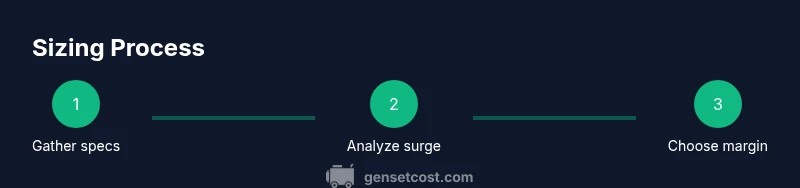
Start by collecting the welder’s electrical specifications from the nameplate and the user manual. Note the voltage, the rated current, and the recommended duty cycle. You’ll then identify two key loads: the startup surge and the continuous running current. Add a sensible safety margin to accommodate the surge and any small concurrent loads like lights or grinders. When evaluating generator options, compare starting watts and running watts, and prefer models with good regulation and a responsive AVR (automatic voltage regulator). A high-quality sine wave output is important for arc stability, especially for TIG and MIG welding. If you plan to power other tools from the same source, map those loads into your profile and ensure the generator can handle the combined demand. Finally, verify that the generator can power the welder with an appropriate transfer switch configuration. If your setup requires automatic switching, confirm the switch is compatible and rated for the total load. By following these steps, you’ll move from a rough estimate to a sizing decision that reduces the risk of nuisance trips or unstable arcs.
Key features to compare in generators for welding
When you compare generators for welding, several features matter beyond raw wattage. Start with starting and running power, ensuring the model can handle the welder’s surge without dropping voltage. Look for a solid automatic voltage regulator (AVR) that maintains a stable output as load changes. A clean sine-wave output minimizes arc irregularities, benefiting especially from TIG welding. Noise levels and fuel type influence daily use in a shop or garage, so consider your environment and fuel availability. Transfer-switch readiness is crucial if you want seamless power during outages or if you’re coordinating with an existing electrical panel. Finally, electrical protection features such as overload protection, ground fault protection, and proper grounding help prevent equipment damage and safety hazards. By focusing on these features in addition to nominal wattage, you’ll choose a generator that supports consistent, high-quality welding performance.
Genset Cost analysis shows that compatibility with your existing electrical setup, ease of maintenance, and available service support should be part of the decision process. Keep in mind the intended use—home shop welding versus field projects—as this will influence fuel type, portability, and noise considerations.
Practical pairing scenarios
For a small hobby shop running a basic arc welder, a portable generator with reliable voltage regulation and good surge handling is often sufficient. If you frequently switch between MIG, stick, and TIG welders, prioritize a generator that delivers clean power across a range of loads and includes a sturdy AVR. In a larger workshop with multiple tools (compressors, grinders) alongside a heavier-duty welder, a medium-duty portable with decent runtime and transfer-switch flexibility can cover daily operations; consider stepping up to a standby model if outages are a routine concern. Field welding demands rugged, transport-friendly units with solid fuel supply and straightforward start procedures. Finally, if you anticipate future upgrades or expansions, select a generator with extra headroom so you won’t outgrow it after adding a larger welder or more simultaneous loads.
Installation considerations and safety
Installing a generator to support a welder requires attention to electrical safety and code compliance. Always operate engines outdoors, in well-ventilated spaces, and never indoors due to carbon monoxide risk. Use appropriately sized cords and connections to minimize voltage drop, and keep cords off walkways to prevent damage. If you require automatic power transfer, hire a licensed electrician to install a transfer switch that is rated for your total load and compatible with your generator. Grounding and bonding must follow local electrical codes to reduce shock risk and improve fault protection. Regular maintenance—oil changes, air filter checks, and battery conditioning—ensures reliable performance and safer operation during long jobs. Finally, follow welder-specific Safety Data Sheets (SDS) and manufacturer guidance when coordinating power with welding processes to avoid arc flash or equipment damage.
Quick-start checklist
- Gather welder nameplate data (voltage, amps, duty cycle).
- List all devices you plan to run with the generator.
- Choose a generator with strong regulation and appropriate surge handling.
- Confirm transfer switch compatibility (manual or automatic).
- Plan for outdoor use, ventilation, and safe fueling practices.
- Schedule a pre-use test to verify voltage stability and arc performance.
Tools & Materials
- Welder nameplate and manual(Capture input voltage, rated current, and duty cycle; take a photo if needed)
- Power meter or wattmeter(Helpful for verifying actual running/startup loads during test)
- Portable generator with AVR(Ensure model supports intended transfer switch or manual interlock)
- Appropriate extension cords(Heavy-gauge cords rated for outdoor use; avoid daisy-chaining)
- Transfer switch or interlock kit(Required for seamless outage power or professional installation)
- Fire extinguisher and PPE(Keep within reach during testing and operation)
Steps
Estimated time: 60-90 minutes
- 1
Gather welder specs
Collect the welder’s voltage, rated current, and duty cycle from the nameplate and manual. This establishes the baseline for sizing.
Tip: Take a photo of the label for reference. - 2
Identify surge vs running load
Determine two loads: startup surge (arc ignition) and steady running current. Both must be supported by the generator.
Tip: Don’t assume startup equals running load; surges can be substantially higher. - 3
Add a safety margin
Include a comfortable margin to accommodate small concurrent loads like lighting or grinders and to cover variations in the welder’s performance.
Tip: Margin helps avoid nuisance trips during startup. - 4
Compare generator specs
Look at starting watts, running watts, AVR quality, and waveform cleanliness. A generator with a stable output improves arc consistency.
Tip: Choose models with good customer reviews on stability. - 5
Plan transfer switch setup
Decide if you’ll use a manual or automatic transfer switch and ensure compatibility with the total draw of all loads.
Tip: Professionally install an automatic switch if outages are frequent. - 6
Test under load
Run the welder on the generator in a controlled test; observe voltage stability and arc behavior, then adjust as needed.
Tip: Always test in a safe, outdoors area with appropriate PPE.
People Also Ask
What is the difference between starting watts and running watts?
Starting watts refer to the surge required to ignite the arc, while running watts cover the continuous power during welding. A generator should provide adequate both to avoid voltage drop and poor arc quality.
Starting watts cover the surge needed to ignite the arc, while running watts handle the ongoing weld power. Ensure the generator can handle the startup spike and maintain steady voltage.
Can I use a portable generator for welding at home?
Yes, you can, provided the generator can supply sufficient startup and running power, has good voltage regulation, and matches your transfer-switch setup. Always follow safety rules and local codes.
Yes, you can use a portable generator for home welding if it can handle the startup surge and provide stable power, with proper safety and setup.
Is an automatic transfer switch necessary for welding setups?
An automatic transfer switch simplifies outages and ensures a clean handoff to the generator. It’s especially helpful in workshops with critical equipment and regular outages.
An automatic transfer switch makes outages seamless and safer when welding, but a manual switch can work for occasional use.
What fuel type is best for a welding generator?
Fuel choice depends on availability, storage, and runtime needs. Propane, gasoline, and diesel each have trade-offs in cost, storage, and maintenance.
Fuel choice varies by availability; consider storage and run-time when picking a fuel type for welding.
How do I calculate the required size for a welder with 240V input?
Start with the welder’s voltage and current on the nameplate, then consider startup surge and any other loads. Choose a generator that can manage both without voltage dips.
Use the welder's nameplate data plus startup surge to pick a generator that maintains steady voltage.
Why is waveform quality important for welding?
A stable, clean waveform reduces arc fluctuations and improves weld consistency, especially for TIG welding where precision matters.
A clean waveform keeps the arc steady and improves weld quality, particularly for TIG.
Watch Video
Key Takeaways
- Assess welder power needs from nameplate data
- Size with a proper safety margin for surge loads
- Prioritize stable voltage and clean waveform
- Plan for transfer switch compatibility and safety
- Test under load before real work