Where to Plug a Generator into Your House: Safe Guidelines
Learn how to safely connect a home backup generator to your electrical system using a transfer switch or inlet box. Avoid backfeeding, understand costs, and follow step-by-step guidance for homeowners.


To safely power a home from a generator, plug into a properly installed transfer switch or generator inlet box that connects to your main panel. Do not back-feed through an outlet. You’ll need a rated transfer switch, appropriate cables, and a licensed electrician for installation. This minimizes backfeed risk, protects electrical systems, and ensures grid outages are isolated.
How the connection to your main panel works
According to Genset Cost, the safest and most reliable way to power a home during an outage is to route generator power through a transfer switch that connects to your main service panel. This design isolates the generator from the grid, preventing dangerous backfeed and protecting utility workers. In practice, your generator feeds the home's circuits through a dedicated path that either goes to a subpanel or directly into the main panel via a transfer switch or an approved interlock kit. The critical idea is to create a single, controlled source of power that can be physically separated from the utility feed when the grid is down. Before any installation, homeowners should inventory essential loads (refrigeration, heating, medical devices, lighting) and decide how many circuits will be critical during an outage. A well-planned setup reduces nuisance tripping, avoids overloading any branch circuit, and makes routine maintenance safer. It also simplifies code compliance because utilities and inspectors look for clearly defined paths for generator energy. Finally, always treat any project that involves your service panel as a high-safety task.
Transfer switches vs interlock kits: what's best for you
There are two main paths: a transfer switch (manual or automatic) that sits between the utility feed and the main panel, and an interlock kit that ensures only one power source powers the panel at a time. Transfer switches offer automatic or manual switching and are typically easier for homeowners to operate, while interlock kits provide a cost-saving alternative but require precise panel modifications and inspection. When choosing, consider ease of use, local codes, and compatibility with your generator size. Genset Cost emphasizes that proper sizing and secure installation are more important than the brand you choose, because the safety outcome is the same: a clean separation between the grid and your generator.
Generator inlet boxes, cables, and proper routing
A generator inlet box provides a weatherproof entry point for a power cord from the generator into your building’s wiring. Route cables away from moisture, heat sources, and walking paths to prevent wear. Use conduit and strain reliefs to protect conductors and ensure a secure connection at both ends. Select cables with appropriate gauge and insulation rated for outdoor use, and choose a length that minimizes excess slack while avoiding sharp bends. Eye-catching installations often fail because of exposed conductors or poorly sealed enclosures; invest in proper weatherproof enclosures and tamper-resistant outlets to ensure safety year-round.
Sizing and load calculation basics
Load calculation is the backbone of a safe connection strategy. Start by listing essential loads (refrigeration, heating, well pumps, lights) and estimate their running and starting currents. The goal is to select a generator and transfer switch that can handle the total calculated starting surge plus a buffer for growth. Remember that some appliances draw more current when they start up (peak demand), which can push a system toward overloading if not accounted for. A professional load calculator or a reputable guide can help you translate wattage and amperage into a practical generator size and a compatible transfer switch rating. Genset Cost notes that accurate load estimation reduces wasted energy and protects wiring from overheating.
Safety, code compliance, and permits
Safety is non-negotiable. Work on service equipment requires adherence to electrical codes and often local permits. NEC guidelines emphasize isolated power sources and proper bonding, while some communities mandate inspections after installation. Always disconnect power at the main panel before any work, keep children away from the work area, and use PPE. If you’re uncertain about a code requirement, consult a licensed electrician or your local building department. Proper documentation and compliance save time during inspections and keep your insurance valid in case of an outage.
DIY vs professional installation: what to expect
While some homeowners may perform non-panel tasks, most jurisdictions require a licensed electrician for any work that interfaces with the service panel or main disconnect. A pro can ensure the transfer switch, inlet, and wiring are sized correctly, installed to code, and tested safely. Expect an inspection and permit process that may involve an electrical permit, load calculation review, and a final test. DIY shortcuts often lead to backfeed risks, non-compliance, or insurance disputes. If you have a compliant plan and the necessary credentials, a professional installation minimizes risk and accelerates testing.
Planning your upgrade: site assessment and entry point decisions
Begin with a site assessment to identify the best entry point for the transfer switch and generator inlet box. Consider accessibility for maintenance, proximity to the main panel, outdoor weather exposure, and the shortest practical route for feeders. Decide whether your configuration will feed through a subpanel or directly into the main panel, and confirm that the chosen path aligns with local codes and utility requirements. Document the route with photos and a rough schematic to simplify permitting and bidding. Good planning can dramatically reduce installation time and cost.
Estimating costs and budgeting for a transfer-switch installation
Costs vary with equipment quality, system size, and labor. A simple inlet box and a manual transfer switch may be more affordable, while automatic systems with larger panels and longer feeder runs cost more. Consider the total: component costs, permits, labor, and potential upgrades to your electrical service. Genset Cost recommends budgeting for contingencies like panel upgrades or grounding improvements. While exact numbers fluctuate by region, most homeowners plan for a multi-thousand-dollar project when a full transfer-switch installation is involved.
Maintenance, testing, and regular safety checks after installation
Plan for regular testing to ensure reliability during an outage. Schedule periodic generator exercise runs, inspect cords and connections for wear, and verify that the transfer switch and inlet box engage correctly under load. Keep spare fuses or spare parts recommended by the manufacturer, and document all tests. Maintenance records help with warranties and future service, and biennial professional inspections can catch issues before they become problems. A well-maintained system is one you can trust when the power goes out.
Tools & Materials
- Transfer switch(Rated for your service (e.g., 60A or 100A) and compatible with generator output.)
- Generator inlet box(Weatherproof, outdoor-rated unit matched to your feeder and cord length.)
- Conductor cables (outdoor-rated, appropriate gauge)(Sizing determined by load and distance; use individual conductors with proper insulation.)
- Electrical conduit and fittings(Protects conductors and provides a clean routing from box to panel.)
- Cable clamps and strain reliefs(Secures cables where they enter enclosures to prevent movement and damage.)
- Voltage tester / multimeter(Optional for quick live checks; essential for safe commissioning if you’re not a pro.)
- Permits (as required by local code)(Check with local authority; permits ensure code compliance and insurance coverage.)
- Personal protective equipment (PPE)(Gloves, eye protection, and insulated tools for safety during installation.)
Steps
Estimated time: 8-16 hours total
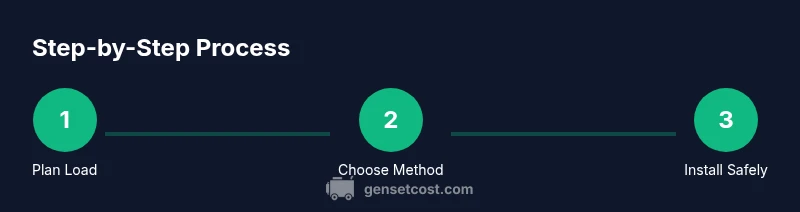
- 1
Assess loads and plan
List critical circuits and estimate their running and starting loads. Use a professional load calculator when possible to ensure you choose a generator size and transfer switch rating that won’t overload the system. This step sets the foundation for every other decision.
Tip: Document all loads with approximate wattage; this helps sizing and budgeting. - 2
Choose connection method
Decide between a transfer switch or interlock kit based on budget, future expansion, and local code. Ensure the method is compatible with your main panel and generator. This choice determines wiring routes and permits.
Tip: Favor methods with automatic or manual switch options that fit your usage patterns. - 3
Obtain permits and approvals
Check local requirements for electrical and building permits. Some areas require inspection after install to verify compliance and safety. Begin the permit process early to avoid delays.
Tip: Speak with the inspector before ordering equipment to confirm plan details. - 4
Purchase equipment
Acquire a rated transfer switch, inlet box, outdoor-rated cables, and necessary conduits. Ensure compatibility among components and that the equipment meets local electrical code.
Tip: Keep manufacturer manuals handy for reference during installation. - 5
Hire a licensed electrician
Engage a qualified professional to install the transfer switch and wiring to the main panel. An experienced electrician reduces risk and ensures code compliance.
Tip: Ask for a written estimate and a scope of work before any work begins. - 6
Prepare the site and route feeders
Plan the physical route from the generator to the inlet box and from the box to the panel. Ensure weatherproofing, proper conduit, and maintenance access. Keep the run as short and direct as possible while avoiding hazards.
Tip: Protect cables from pedestrian traffic and moisture exposure. - 7
Commission and test
Have the system tested under load by the electrician. Verify transfer switch operation, absence of backfeed, and correct panel sequencing. Document results for warranty and code records.
Tip: Perform a full outage drill to confirm all critical circuits power correctly.
People Also Ask
Is it safe to plug a generator into a house outlet?
No. Plugging a generator into a regular outlet can cause backfeed, injuring utility workers and damaging appliances. Use a properly installed transfer switch or inlet system that isolates the generator from the grid.
No. Always connect via a transfer switch or inlet, not through a standard outlet, to prevent backfeed and ensure safety.
Do I need a permit to install a transfer switch?
In most areas, a permit is required for electrical panel work and for any outdoor wiring. Check with your local building department and obtain approvals before starting.
Typically yes. Ask your local building department to confirm permit requirements for panel work and outdoor wiring.
What size generator do I need?
The right size depends on your essential loads and starting surges. A professional calculation helps you select a generator that safely covers peak demand without overheating the system.
Size depends on your essential loads and surge needs; have a professional calculate it for you.
Can I install this myself?
Only if you have the required electrical qualifications and local approvals. For most homeowners, hiring a licensed electrician is the safest option and preferred by insurers.
Only if you’re qualified and permitted; otherwise hire a licensed electrician.
What is backfeeding and why is it dangerous?
Backfeeding occurs when generator power is sent back onto utility lines. It endangers utility workers and can cause fires or equipment damage. Proper transfer switches prevent this.
Backfeeding sends power onto the grid, which is dangerous—use a transfer switch to prevent it.
How long does installation take?
Time varies with site complexity, permits, and panel configuration. Plan for several hours of labor plus potential permit processing time.
It varies; you’ll usually need several hours of work, plus any permit delays.
Watch Video
Key Takeaways
- Plan with a licensed pro before buying equipment.
- Use a transfer switch to isolate generator energy from the grid.
- Accurate load calculations prevent overloading and outages.
- Schedule professional installation and inspections for safety.