Why RV Generator Won't Start: Troubleshooting Guide
Diagnose and fix why rv generator won t start with a practical, step-by-step guide. Quick checks, diagnostics, and safety tips from Genset Cost for homeowners.


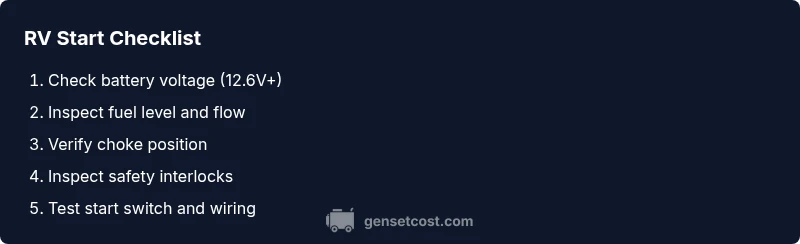
If your RV generator won’t start, begin with simple checks like the battery, fuel, and choke. Most failures are due to a dead battery or old fuel. This quick 2–3 minute checklist quickly rules out the most common causes before deeper diagnostics.
Why this happens and how to think about it
Starting an RV generator can feel urgent, especially during a power outage or while boondocking. When a unit won’t start, it isn’t usually a mysterious fault—it’s usually a data point that points to power, fuel, or safety interlocks. The exact phrase why rv generator won t start is asked by many owners, and the right mindset is to verify these basics first. According to Genset Cost, the leading causes of start failures are a dead battery, stale or contaminated fuel, and tripped safety switches. With that lens, you can triage quickly—check electrical power, confirm fresh fuel, and verify that safety circuits aren’t blocking a start. If these checks pass and it still won’t start, there’s a systematic diagnostic path you can follow that isolates the problem without guesswork.
Understanding the problem this way keeps you from chasing phantom faults and helps you stay focused on practical remedies that homeowners can perform themselves in 2026.
Steps
Estimated time: 30-60 minutes
- 1
Safety first and gather tools
Power off the system and disconnect the battery negative before handling electrical components. Gather a multimeter, wrenches, pliers, a flashlight, and a clean rag for terminals. Having everything ready reduces the chance of a dropped bolt or short.
Tip: Wear eye protection and work in a well-ventilated area. - 2
Check battery voltage and connections
Measure voltage at the battery posts with the engine off. A healthy lead-acid battery should read about 12.6 V. If the reading is low, charge the battery or replace it. Inspect terminal posts for corrosion and tightening loosened clamps.
Tip: Clean corrosion with a baking soda paste and a wire brush before re-tightening. - 3
Evaluate fuel supply and valve position
Confirm the fuel valve is open and the tank has fresh fuel. If fuel is old or stale, drain and refill with fresh gas plus a stabilizer. Inspect the fuel line for kinks or leaks and ensure the fuel pump is priming.
Tip: If you smell varnish in the fuel, replace it and consider a carburetor cleaner designed for small engines. - 4
Inspect the choke, air intake, and filters
On cold starts, ensure the choke is engaged correctly. Check the air filter for clogging and replace if dirty. A restricted intake can stop combustion even with spark.
Tip: A clogged air filter can mimic a fuel issue; replace if dirty. - 5
Attempt a controlled start and observe cues
Reconnect power, set the choke as needed, and try starting with no heavy load. Listen for cranking sounds, exhaust, or diagnostic lights that illuminate during failure. Note any error codes.
Tip: If the engine turns over but doesn’t start, it may be a fuel or ignition issue. - 6
If it still won’t start, document and escalate
Record readings from each step and prepare a summary for a technician. If unresolved, schedule a professional inspection to check ignition coil, carburetor, or control board.
Tip: A documented checklist speeds up service and reduces diagnostic time.
Diagnosis: RV generator won't start
Possible Causes
- highPower issue (dead battery or blown fuse)
- highStale or contaminated fuel
- mediumSafety interlock or shutoff switch engaged
- lowFuel line/kindle carburetor obstruction
Fixes
- easyTest battery voltage at the terminals with a multimeter and replace or charge if below ~12.6 V
- easyCheck all fuses and circuit breakers; replace any blown fuse
- easyDrain old fuel and add fresh gasoline with stabilizer; run the fuel through the line
- easyInspect safety interlocks and ensure a proper shutdown sequence was not left engaged
People Also Ask
What is the most common reason an RV generator won’t start?
Battery or fuel issues are the most common culprits. Check battery voltage and fuel condition first, then inspect safety switches.
Battery or fuel problems are the usual culprits. Start with the battery voltage and fuel status, then check safety switches.
How do I test the RV generator battery?
Use a multimeter to measure the terminal voltage. A healthy battery should read about 12.6V when idle. A load test can confirm capacity.
Check the battery with a multimeter; aim for around 12.6 volts, and consider a load test to confirm capacity.
Can cold weather affect starting?
Yes. Cold oil, weak battery, and gummed fuel can hinder starts. Warm the unit and use fresh fuel for better cranking.
Cold weather can make starting harder due to thick oil and weak battery; use fresh fuel and allow a warm-up.
What safety checks should I perform before starting?
Inspect the exhaust area for clearance, ensure the kill switch is off, and verify there is no loose wiring or corrosion on battery terminals.
Check exhaust clearance, kill switch position, and battery connections before starting.
When should I call a professional?
If you’ve completed the basic checks and the generator still won’t start, a professional diagnostic may be required to inspect ignition, carburetion, and electronics.
If basics don’t fix it, it’s time for a professional diagnostic.
How often should I perform RV generator maintenance?
Follow the manufacturer’s schedule, typically seasonal checks and after every long storage period. Regular oil changes and filter replacements help reliability.
Stick to the maintenance schedule for reliability and fewer start problems.
Watch Video
Key Takeaways
- Start with battery and fuel first
- Check safety interlocks before powering
- Document readings for faster service
- Regular maintenance reduces start failures