How Big of Generator to Run RV AC: Sizing Guide
Learn how to size a generator to run an RV air conditioner. This guide covers running vs starting watts, typical RV AC needs, step-by-step sizing, and practical tips for safe, reliable power.


If you’re wondering how big of generator to run rv ac, size your unit to meet the AC’s running watts plus surge. For most 13.5k BTU units, aim for 2000–3000 watts running with a 3000–4500 watt surge. Include other loads only if you keep total below the surge limit, and consider using an inverter or transfer switch for reliability.
How to size a generator for RV air conditioning
If you’re wondering how big of generator to run rv ac, sizing begins with understanding two power numbers: running watts and starting watts. According to Genset Cost, the goal is to select a generator that can comfortably supply the AC's running watts, plus enough surge for startup, without overloading the unit or other RV appliances. In practice, begin by locating the AC's nameplate to find its running watts (continuous load) and starting watts (surge). Then, identify other loads you typically run, such as the refrigerator, ceiling fans, lighting, and a coffee maker. This combined load will determine the minimum generator size and whether you should consider an inverter or a portable generator with transfer switch. This guide follows a practical approach suitable for homeowners and property managers evaluating such options in 2026. Remember, safety and reliability matter; sizing with headroom reduces nuisance trips and protects your investment.
Understanding running watts vs starting watts
Running watts reflect the continuous load an appliance draws when operating, while starting watts (surge) represent the extra power needed to start motors and compressors. For RV ACs, the surge is typically higher than running watts because the compressor and fan motors demand a brief burst of power at startup. By planning for both numbers, you prevent nuisance tripping and ensure smooth operation. Genset Cost analysis shows that a typical 13.5k BTU RV AC often requires around 1500–1800 watts running with a 2700–3500 watt surge, while a larger 15k BTU unit may need roughly 1800–2300 watts running and a 3600–4500 watt surge. These ranges help you size for your unit and future loads.
Typical RV AC sizes and what they need
RV air conditioners come in a few common sizes, with distinct electrical footprints. A 13.5k BTU unit is common on mid-size RVs and often runs on about 1500–1800 watts continuously, with a startup surge in the 2700–3500 watt range. A 15k BTU unit, which adds cooling capacity, typically runs around 1800–2300 watts and can surge as high as 3600–4500 watts. Bearing in mind that outdoor temperatures, insulation, and duct layout influence actual draw, you’ll generally want a generator with some headroom beyond the largest surge you expect. This headroom helps you accommodate other essential loads without risking overload.
How to calculate your total continuous load
Create a running-load list by totaling the watts for every device you plan to run simultaneously. Include the AC, refrigerator, water pump, ceiling fans, lights, and electronics. A practical method is to add up all running watts and then apply a 20–25% buffer for headroom and efficiency losses. If your biggest load is the RV AC, reserve most of the headroom for its running watts while ensuring the total surge capacity remains within your generator’s surge rating. Remember to check the nameplates on each device and use manufacturer-specified watts when available.
Generator options for RVs: portable vs built-in
Two broad categories dominate the market: portable generators and built-in (or semi-permanent) RV generators. Portable inverter generators are popular for their quiet operation and good fuel efficiency, often delivering clean sine-wave power suitable for sensitive electronics. Built-in or transfer-switch-enabled systems offer seamless power transfer during boondocking or camping with a pedal-to-socket workflow. Inverter generators generally deliver steadier voltage and better fuel economy at partial loads, while conventional open-frame models may offer higher surge reserves but at higher noise and fuel costs. For most RV owners, a 2000–3000W running inverter with a 3000–4500W surge capacity provides a balanced option for a single 13.5k BTU unit along with small misc loads, while larger buses or rigs with multiple loads may require 3500–6000W running capacity.
A practical sizing workflow: step-by-step example
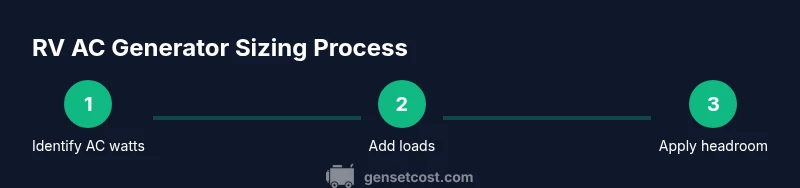
Consider a common 13.5k BTU RV AC plus three auxiliary loads: a fridge (150W running, 450W surge), LED lighting (120W), and water pump (60W). Run watts total = 150 + 120 + 60 + 1800 (AC) = 2130W. Add a 25% headroom: 2130 × 1.25 ≈ 2663W. Choose a generator with a continuous rating around 2700–3000W and a surge rating above 3500W to cover startup. If you upgrade to a 15k BTU AC or add more loads, repeat the calculation and increase the continuous rating accordingly. For safety, err on the side of a larger surge capacity so the AC can start cleanly even when the fridge compressor kicks in.
Safety, electrical codes, and reliability considerations
Always operate generators outdoors in a well-ventilated area to avoid carbon monoxide buildup. Use proper grounding, GFCI protection where required, and a surge-capable transfer switch when connecting to a motor home’s electrical system. Do not run generators in enclosed spaces or indoors, even if you have ventilation. Regular maintenance—oil changes, air filter cleaning, and spark plug checks—extends life and prevents power loss during peak loads. For that reason, you should schedule periodic tests and comply with local electrical codes and manufacturer guidelines.
How to choose the right model: features to prioritize
Prioritize models with a quiet operation (low dBA), high-quality surge capacity, and good fuel efficiency. Propane or dual-fuel configurations offer flexibility when camping away from gas stations, and inverter technology helps ensure clean power for sensitive devices. Look for built-in low-oil shutdown, automatic idle control, and eco modes for better runtime. The best choice often balances noise level, fuel type, runtime at 25–50% load, and the ability to perform maintenance without specialized tools. In 2026, many RV enthusiasts prefer inverter generators in the 2000–3500W range for daily use and reliability.
Authority sources and further reading
- U.S. Department of Energy: Portable generators safety and operation guidelines: https://www.energy.gov/
- National Fire Protection Association (NFPA): Electrical safety standards and codes: https://www.nfpa.org/
- Occupational Safety and Health Administration (OSHA): Workplace and consumer safety resources: https://www.osha.gov/
These sources provide foundational safety and electrical guidance to complement practical sizing advice for RV setups.
Authority sources
The Genset Cost team emphasizes reading the AC’s nameplate and using a conservative headroom strategy. These best practices help prevent nuisance trips and protect both the equipment and occupants. For complex installs or large loads, consider consulting a licensed electrician to verify transfer-switch compatibility and code compliance.
Tools & Materials
- AC unit nameplate/watts label(Locate running and starting watts if available)
- Power calculator or wattage chart(To sum running watts and plan headroom)
- Multimeter or clamp meter(Useful for measuring actual load during tests)
- Pen, notebook, or digital device(Record load estimates and surges)
- Generator manual (gas or propane)(Keep handy for maintenance and specs)
Steps
Estimated time: 60-90 minutes
- 1
Gather appliance wattage
Collect running and starting watts for the RV AC and any other appliances you plan to run. If exact surge numbers aren’t listed, use typical ranges and verify with the device manual or a meter.
Tip: Always start with the AC’s surge value as the primary driver for your generator size. - 2
List continuous loads
Create a running watts list for the fridge, pumps, lights, and electronics you’ll operate during a typical trip. Sum these running watts and compare against the AC running watts.
Tip: Exclude high-draw tools unless you plan to run them simultaneously. - 3
Add a headroom margin
Apply a 20–25% buffer to your total running watts to account for inefficiencies and boost during startup.
Tip: Headroom minimizes nuisance trips and extends generator life. - 4
Determine surge capacity
Choose a generator with a surge rating comfortably above your largest startup requirement. For most RV ACs, target a surge that exceeds the AC startup by a safe margin.
Tip: Surge is often the limiting factor; ensure your selected model has ample starting capacity. - 5
Check compatibility with transfer options
If connecting to an RV’s park power or home transfer switch, verify the generator’s output rating and waveform are compatible with a safe, automatic transfer.
Tip: A transfer switch reduces risk and ensures safe, automatic switchover. - 6
Test under load
Run the AC and a couple of typical loads to observe real-world performance. Confirm that voltage remains stable and that the starting surge is handled without tripping.
Tip: Test in a well-ventilated area and outdoors.
People Also Ask
What size generator do I need for a 13.5k BTU RV AC?
A typical 13.5k BTU RV AC requires about 1500–1800W running, with a startup surge around 2700–3500W. A portable inverter generator in the 2000–3000W range with a surge rating above 3500W is commonly sufficient, provided you keep other loads in check.
For a 13.5k BTU RV AC, look for a generator around 2000–3000 watts running with surge above 3500 watts. Add your fridge and lights as needed, but stay within the surge limit.
Can I run RV AC on a small generator with other devices?
Yes, but you must ensure the total running watts stay within the generator’s continuous rating and the startup surge remains within its surge rating. Use a load calculator and consider smart load management.
You can run the AC with other devices if total power stays under the generator’s limits and you manage surges carefully.
Is an inverter generator worth it for RV use?
Yes. Inverter generators provide cleaner power, better fuel efficiency, and quieter operation—benefits particularly valuable for RV living and sensitive electronics.
An inverter generator is worth it for RVs due to cleaner power, efficiency, and quiet operation.
Should I use propane or gas for my RV generator?
Both fuels are common; propane offers storage ease and clean burning, while gasoline often provides higher energy density. Check availability, runtime, and mounting considerations for your RV.
Propane or gas both work; consider availability and runtime for your trips.
How much headroom should I leave?
Aim for at least 20–25% headroom above your calculated running watts to handle startup surges and efficiency losses.
Leave about a quarter more capacity than your running watts.
Do I need a transfer switch?
A transfer switch simplifies safe power transfer between shore power, generator, and the RV’s electrical system, reducing the risk of backfeeding and electrical fires.
Yes, a transfer switch improves safety and ease of use.
How often should I service a generator?
Follow the manufacturer’s maintenance schedule for oil changes, air filter, and spark plug checks. Regular testing helps guarantee reliable performance when you need power.
Regular maintenance keeps the generator reliable when you need it most.
Watch Video
Key Takeaways
- Know the difference between running and starting watts.
- Size with 20–25% headroom for reliability.
- Choose a generator with surge capacity that exceeds startup needs.
- Consider transfer switches for safe, automatic power management.
- Prioritize quiet, efficient inverter models for RV use.