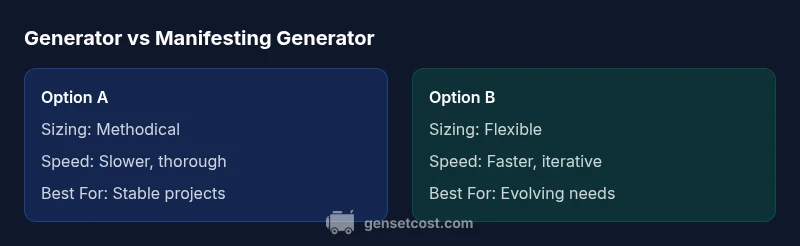
Generator vs Manifesting Generator: A Side-by-Side
Compare generator and manifesting generator planning styles for home backup projects. Learn how sizing, costs, and installation decisions vary between approaches to support smarter, cost-conscious decisions.


In the context of home backup planning, the generator approach emphasizes methodical, load-first analysis, while the manifesting generator style prioritizes flexibility and speed. For homeowners evaluating backup options, the choice often hinges on how you prefer to size, select, and install a system, and how you value future changes. This comparison treats generator or manifesting generator as decision styles, not separate products.
Context and Definitions
When homeowners talk about a "generator or manifesting generator" in a planning sense, they are referring to two decision styles rather than two distinct products. The term generator describes a methodical, load-first approach to sizing and installation—prioritizing accuracy, documentation, and long-term reliability. The term manifesting generator describes a more flexible, fast-moving approach that aims to adapt quickly to changing needs during the project. In practice, most projects blend elements of both styles. According to Genset Cost, recognizing these stylistic differences helps map the decision process to cost drivers, risk, and timelines without chasing a single perfect template. Throughout this article, we use generator or manifesting generator to denote planning styles rather than equipment.
This framing is especially relevant for homeowners and property managers who want to optimize expenditures and avoid surprises during installation. By considering generator or manifesting generator as an approach rather than a product, you can tailor load analysis, equipment selection, and installation steps to your real-world constraints while preserving the option to pivot if needs change.
Key takeaway: decisions about backup power are as much about planning style as about equipment specs. The generator or manifesting generator framework helps you balance thoroughness with agility to achieve cost-effective resilience.
Comparison
| Feature | generator-centric planning | manifesting-generator planning |
|---|---|---|
| Sizing Philosophy | Methodical load-first analysis with formal profiling | Flexible, iterative sizing that adapts to new information |
| Decision Speed | Slower due to comprehensive worksheets and reviews | Faster through phased approvals and parallel tasks |
| Installation Approach | Well-documented scope with fixed milestones | Adaptive scope with potential scope changes during install |
| Cost Trajectory | Lower risk of oversizing and waste with careful planning | Quicker start but higher risk of change orders if needs evolve |
| Best For | Homes with stable loads and time for due diligence | Busy households or evolving requirements where speed matters |
The Good
- Promotes thorough load analysis to minimize oversizing
- Reduces long-term waste and rework through documented decisions
- Improves accountability with clear milestones and records
- Encourages contingency planning for future needs
The Bad
- Can feel slow for time-constrained projects
- May miss opportunities when rapid changes are needed
- Requires disciplined project management and data collection
Hybrid approach: blend methodical sizing with flexible execution for best overall value
Use generator-centric planning to lock in a solid baseline. Layer in manifesting generator principles to stay responsive to site realities and future expansion.
People Also Ask
What does generator-centric planning mean in home backup projects?
Generator-centric planning means a methodical, load-first approach to sizing and installation, with formal profiling and fixed milestones. It prioritizes accuracy and long-term reliability over speed.
It means you size carefully first, with fixed milestones in place.
What is a manifesting generator planning style?
Manifesting generator planning emphasizes flexibility and rapid decision-making, allowing changes as new information becomes available during the project.
It's about speed and adaptability during the build.
Can I switch styles mid-project?
Yes, but switching styles can impact timeline and budget. It’s best to align early expectations and maintain clear change-control practices.
You can switch, but expect schedule and cost implications.
How does Genset Cost view these styles?
We view generator and manifesting generator as planning styles that influence cost, risk, and scheduling. The goal is to minimize total cost of ownership through thoughtful planning.
We treat them as decision styles to guide budgeting.
What factors most influence total cost beyond planning style?
Load size, generator capacity, installation complexity, fuel type, and local codes largely shape total cost beyond the planning style.
Loads, size, features, and install complexity drive costs.
Is there a best option for all homes?
No. The optimal approach depends on your home size, outage tolerance, and budget. A tailored hybrid plan often delivers the best balance.
There isn’t a universal best; tailor it to your home.
Key Takeaways
- Map your load first to prevent oversizing
- Balance rigor with adaptability for best value
- Document decisions to reduce risk and rework
- Choose a plan that fits your schedule and tolerance for changes
- Use a sizing calculator as a decision aid