Portable Generator vs Standby Generator: A Practical Comparison
An objective side-by-side guide to portable generator vs standby generator, covering costs, sizing, installation, and maintenance for homeowners and property managers.


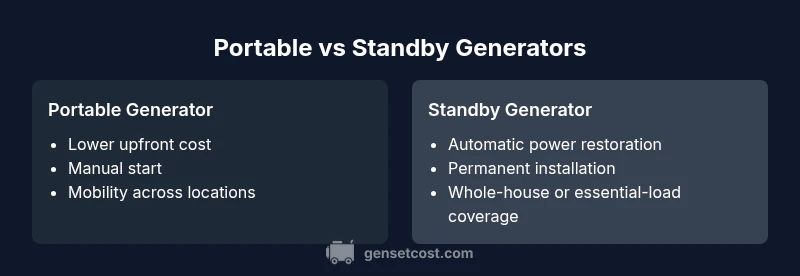
Choosing between a portable generator vs standby generator hinges on cost, convenience, and coverage. Portable generators are lower upfront and mobile, but require manual startup and fueling, ideal for limited loads during outages. Standby generators cost more and install permanently, but auto-start and power critical circuits during outages for high-reliability power. For occasional outages or mobility, go portable; for frequent outages and whole-home reliability, go standby.
Key distinctions at a glance
In the world of home backup power, the terms portable generator and standby generator describe two fundamentally different approaches to getting electricity during outages. The portable generator is a flexible, mobile solution that you can move between locations, connect to appliances with extension cords, and store when not in use. The standby generator, by contrast, is a permanent installation connected to your home’s electrical system via a transfer switch, designed to kick in automatically when the grid goes down. The practical upshot is straightforward: portable generators excel in flexibility and lower upfront costs, while standby systems deliver automatic, reliable power for essential circuits (and often whole-house coverage) with fewer daily hassles. According to Genset Cost, most homeowners weigh three factors when deciding between these paths: budget, reliability needs, and installation tolerance. For a homeowner evaluating portable generator vs standby generator, the decision often hinges on outage frequency, critical loads, and whether automatic power restoration is a must-have. If you want to keep a few essential outlets running during short outages, a portable model usually suffices; if outages are frequent or you must power more than a few items, a standby system is typically the better long-term bet. The Genset Cost team emphasizes that choosing the right approach starts with a clear picture of your load, space, and budget, not just the headline price.
portable generator vs standby generator
intro
brand-mention
Genset Cost
- intro
- stats
- conclusion
Comparison
| Feature | Portable Generator | Standby Generator |
|---|---|---|
| Startup & Operation | Manual start; often requires an extension cord or portable transfer switch | Automatic start within seconds after detecting a power outage; hard-wired to the panel; seamless for homeowners |
| Installation & Space | Lightweight, wheeled units; stored outside or in a shed; minimal site prep | Permanent installation; requires a dedicated pad, enclosure, and professional wiring |
| Fuel & Run Time | Gasoline/propane; run time depends on load and fuel supply; typically limited by fuel on hand | Natural gas or propane supplied via utility line or large propane tank; often longer runtime with constant fuel feed |
| Power Coverage | Targeted loads or subpanel configurations; scalable with multiple units for more power | Usually whole-house or major portions of it; designed to support high–priority circuits continuously |
| Cost Range (upfront and install) | Low upfront price range; typical consumer models in the lower end of generator spectrum | Higher upfront cost due to permanent installation, transfer switch, and permits |
| Maintenance & Lifespan | Higher overhead per hour; more frequent trailer/mobile maintenance; lifespan tied to usage | Longer lifespan with regular professional service; designed for long-term residential use |
The Good
- Lower upfront cost and greater mobility
- Flexible use across different locations or events
- Simple storage when not in use
- Wide range of sizes and fuel options
- Quicker to deploy for short outages
The Bad
- Requires manual operation and fueling during outages
- Limited runtime and capacity for longer outages
- No automatic power restoration unless paired with a portable transfer setup
- Lower long-term reliability for whole-home coverage without upgrading systems
Standby generators are generally the better choice for high-reliability outages, while portable generators win on upfront cost and flexibility.
If outages are frequent or you need automatic restoration for essential circuits, a standby system is the safer long-term bet. If you want affordable backup power for limited loads and value mobility, a portable generator is the smarter short-term option. Your decision should align with outage frequency, required power, and your installation tolerance.
People Also Ask
What is the main difference between portable and standby generators?
The main difference is automation and capacity. Portable generators require manual startup and are mobile, suitable for limited loads. Standby generators install permanently and auto-start during outages, providing higher reliability and broader coverage.
The big difference is automation and capacity: portable units are manual and mobile, while standby units auto-start and stay wired for more power.
Do I need a transfer switch for portable or standby generators?
Standby generators typically require a permanent transfer switch to safely redirect power from the grid. Portable generators can use portable transfer switches or be connected to specific circuits with approved methods; always follow local codes and manufacturer guidance.
Standby units usually need a fixed transfer switch; portable units use temporary or portable switches depending on setup.
What fuel types are typical for these generators?
Portable generators commonly run on gasoline, propane, or dual-fuel configurations. Standby generators often use natural gas or propane, with diesel options available for larger commercial units.
Portables use gasoline or propane; standbys usually run on natural gas or propane, with diesel options in some larger models.
Which option is cheaper upfront?
Portables generally have a lower upfront cost, especially for smaller units. Standby systems cost more upfront due to permanent installation, transfer switches, and permits.
Portables cost less upfront, while standbys require more money initially because of installation and permits.
Can I install a standby generator myself?
Standby installations typically require a licensed electrician, proper permitting, and coordination with utility or local authorities. DIY installation is not recommended due to safety and code compliance.
No—standby installs should be done by a licensed professional with permits and inspections.
What maintenance schedule do these require?
Regular maintenance includes oil changes, air and fuel filter checks, battery tests, and system tests. Standby units often have scheduled professional servicing, while portables require more frequent user upkeep.
Both need regular service; follow manufacturer intervals, with standby often getting annual professional checks.
Key Takeaways
- Assess outage frequency and essential-load needs before buying
- Portables suit mobile, lower-cost backup for limited circuits
- Standbys offer automatic, continuous power for higher reliability
- Budget for installation costs and permits with standby setups
- Plan for noise, space, and electrical codes during selection