Why Use an Inverter Instead of a Generator for Home Backup
Explore when an inverter is a better choice than a traditional generator. Compare noise, efficiency, runtime, maintenance, and cost to determine the best home backup option.


If you’re asking why use an inverter instead of a generator for home backup, the answer is that inverters tend to deliver cleaner power, quieter operation, and higher overall efficiency. They also enable automatic transfer and smarter load management, which reduces runtime waste. For households with sensitive electronics, the stable, sinusoidal output minimizes the risk of equipment damage. In short, an inverter-based system can improve comfort during outages while lowering long-term operating costs, though upfront investment and surge-capacity requirements must be considered. In practice, homeowners start by mapping critical appliances (refrigerator, modem, medical devices) and then weighing whether an inverter’s capacity and control features meet those needs without excessive overbuild. The goal is a balanced system that protects essential loads while avoiding unnecessary complexity or expensive oversizing.
Why inverter power is often preferred for home backup
This section explains the rationale behind choosing inverter-based backup for many homes. The question many homeowners ask is why use an inverter instead of a generator, and the short answer is that inverters tend to deliver cleaner power, quieter operation, and higher overall efficiency. They also enable automatic transfer and smarter load management, which reduces runtime waste. For households with sensitive electronics, the stable, sinusoidal output minimizes the risk of equipment damage. In short, an inverter-based system can improve comfort during outages while lowering long-term operating costs, though upfront investment and surge-capacity requirements must be considered. In practice, homeowners start by mapping critical appliances (refrigerator, modem, medical devices) and then weighing whether an inverter’s capacity and control features meet those needs without excessive overbuild. The goal is a balanced system that protects essential loads while avoiding unnecessary complexity or expensive oversizing.
How an inverter system works in a home backup setup
Modern inverter backup setup combines energy storage with electronics that convert stored DC energy into clean AC power. When power fails, an automatic transfer switch detects the outage and rapidly routes critical circuits to the inverter. The inverter then regulates voltage and frequency to produce a stable sine wave, protecting devices from surges and brownouts. Depending on the configuration, you may use a single large inverter, a modular bank, or a hybrid system that couples solar charging with battery storage. Each approach has implications for maintenance, upgradeability, and resilience. This section outlines typical architectures, including standalone inverters, grid-tied systems with batteries, and portable kits, and explains how selection affects reliability, response time, and the ability to scale up for future loads.
Power quality: waveform, THD, and protection for electronics
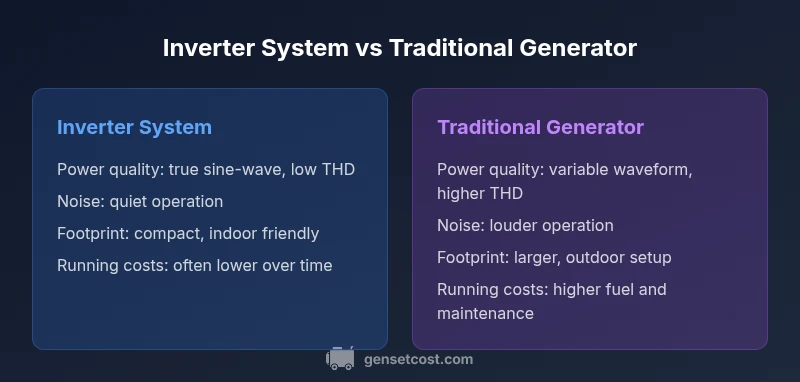
Power quality is a central differentiator between inverter-based systems and conventional generators. Inverter systems deliver true sine-wave output with low total harmonic distortion (THD), protecting electronics from surges and flicker. Sensitive devices—computers, medical equipment, and audio/video gear—benefit from this stability. The inverter’s digital controls also monitor voltage, frequency, and fault conditions, automatically shutting down on unsafe readings to protect loads. This yields a safer home environment during outages and preserves the longevity of household electronics.
Noise, size, and installation footprint
Noise is a practical constraint in most homes. Inverter systems are typically compact and designed for indoor or semi-indoor placement, often in a utility room or garage. They generate little noise compared with standby generators, which can be loud and disruptive. The smaller footprint also makes compliance with local noise ordinances easier and reduces the amount of outdoor space required for fuel storage. When evaluating options, consider ventilation and heat dissipation, as some inverter modules require airflow to maintain efficiency. A well-planned installation can minimize vibration and maximize reliability.
Fuel, efficiency, and running costs
Running costs are a major part of total ownership. Inverter systems with efficient motor control and sophisticated load management can minimize energy waste and, in many cases, reduce fuel or electricity costs compared with a stand-alone generator. Battery-based configurations may draw power from the grid or from solar charging sources, reducing or even eliminating fuel costs during many outages. Maintenance intervals for inverters are typically longer than for engines, but battery health and inverter firmware updates require ongoing attention. A total cost of ownership analysis should include initial hardware, installation, ongoing energy consumption, and expected replacement cycles.
Reliability and maintenance considerations
Reliability in inverter-backed systems depends on component quality, software, and service networks. Fewer moving parts than combustion engines generally means less mechanical wear, but battery degradation and inverter cooling can set long-term limits. Maintenance best practices include periodic battery tests, firmware updates, and monitoring of thermal performance. When choosing a provider, look for clear warranty terms, accessibility of spare parts, and remote diagnostic capabilities. A robust maintenance plan reduces downtime during storms and other outages and supports predictable performance across seasons.
When generators still make sense
Even with advancing inverter technology, there are scenarios where a traditional generator is appropriate. Very long outages or extreme climates with high instantaneous loads may justify a larger, fuel-powered unit outdoors. Generators can offer rapid surge capacity and easier handling of multi-day runtime without battery state concerns. A pragmatic approach is to consider a hybrid arrangement: an inverter system for daily resilience and a small standby generator for peak loads or extended outages. This hybrid approach is common in multi-unit buildings and remote properties.
Sizing and load planning basics
Sizing is the foundation of a reliable backup system. Start by listing essential loads, then estimate running watts and surge requirements. An inverter system should be matched to that profile, with a margin for growth and startup surges. This section provides a practical approach: categorize loads into critical and non-critical, apply a safe design factor, and verify compatibility with the chosen transfer switch and battery bank. We also discuss common mistakes, such as overestimating nonessential loads or neglecting start-up spikes from motors and heat pumps.
Costs and total cost of ownership
A rigorous cost assessment compares upfront hardware prices, installation costs, fuel or electricity costs, maintenance intervals, and replacement cycles. Inverters often come with higher initial costs but lower ongoing expenses, especially when paired with energy storage or solar charging. Traditional generators may appear cheaper at purchase but incur higher long-run costs due to fuel, oil changes, and parts replacement. When estimating, include permit fees, warranty terms, service plans, and potential grid-interconnection costs. A disciplined analysis reveals which option gives the best balance of reliability and total expense over the system’s life.
Installation steps and integration with panel
Professional installation ensures safe and code-compliant integration. The process typically begins with an electrical load assessment, followed by selecting an appropriate transfer switch and panel configuration. An experienced installer will verify grounding, wire sizing, and system isolation to prevent back-feed into the grid. They will also set up monitoring, alarms, and remote diagnostics so you can verify readiness before outages. High-quality installations minimize nuisance tripping and maximize dependable performance.
Buying tips: brands, warranties, and support
Choose brands with proven reliability, broad service networks, and transparent warranty terms. Confirm whether the system supports firmware updates, mobile monitoring, and predictive diagnostics. Review the warranty window for both hardware and batteries, and understand servicing expectations in your region. It can be helpful to read user reviews and request a local reference list to gauge post-installation support. A clear service agreement reduces risk during storms and simplifies insurance considerations.
Real-world scenarios and decision framework
Consider three representative scenarios to guide your choice: a small home with modest loads, a mid-sized property with multiple circuits that require uninterrupted power, and a remote house where a scalable, off-grid solution is essential. For each, perform a load audit, evaluate battery options, and compare total cost of ownership. The decision framework prioritizes power quality, quiet operation, and long-term costs. With these inputs, you can determine whether an inverter-based solution, a generator, or a hybrid arrangement best meets your goals for reliability and comfort during outages.
Authority and sources
Grounding this guide in credible sources helps you make a confident decision. Reputable references from energy policy and solar research institutions emphasize inverter diode protection, waveform quality, and safe integration with home electrical systems. While specifications vary by model, the underlying principles of efficiency, reliability, and user experience remain consistent across trusted publications. For readers who want to explore further, the following authoritative references provide foundational context and practical checklists that can be used during vendor discussions and site assessments.
mainTopicQuery90sNounPhrase公交lineVisibleIfAny
Comparison
| Feature | Inverter System | Traditional Generator |
|---|---|---|
| Power quality (waveform / THD) | Low THD, true sine-wave output | Variable waveform, higher THD under load |
| Noise level | Quiet operation (often indoors) | Louder, outdoor operation |
| Footprint & installation | Compact, indoor-friendly | Larger, outdoor setup with fuel storage |
| Fuel source & running costs | Battery-fed or solar-assisted; lower ongoing energy costs | Gasoline/propane/diesel; ongoing fuel costs |
| Maintenance & lifespan | Fewer moving parts; longer service intervals | Engine maintenance; oil changes; part wear |
| Initial vs long-term cost | Higher upfront, potential long-term savings | Lower upfront, potentially higher lifetime costs |
| Best for loads | Sensitive electronics, quiet operation, backup power | High surge loads, long outages, whole-house power |
The Good
- Cleaner power suitable for sensitive electronics
- Quieter operation and easier integration indoors
- Lower long-term operating costs with smart load management
- Automatic transfer switches reduce outage downtime
- Compact footprint eases installation and retrofit
The Bad
- Higher upfront cost compared to basic generators
- Battery degradation and replacement can add long-term expenses
- Limited surge capacity for very large startups without sizing
- May require professional installation and permitting
Inverter systems generally provide better power quality and lower ongoing costs for most homes, with quiet operation and easier installation, while generators still excel for extreme outages and very high surge needs.
Choose an inverter-based backup for everyday resilience, sensitive electronics, and a calmer outage experience. Opt for a generator if you anticipate long multi-day outages or require maximum surge capability without battery concerns. A hybrid approach can balance both strengths.
People Also Ask
What is the key difference between an inverter and a traditional generator?
An inverter-based backup converts stored energy into clean AC power with low distortion and automatic transfer, while a traditional generator relies on fuel-driven engines that can produce noisier output and higher maintenance needs. Inverters generally offer better efficiency and protection for sensitive electronics.
Inverters give you cleaner, quieter power with automatic switching, while generators are fuel-driven and louder, often costing more to maintain.
Can I run all my home appliances on an inverter backup?
Inverters can support most essential loads, but very high-wattage appliances or startup surges may require a larger system or a hybrid configuration. Always map critical loads and verify the inverter’s surge rating.
Most basics run fine, but check big appliances and startup spikes.
Are inverter systems more expensive upfront?
Upfront costs for inverter systems can be higher than a basic generator, but many homeowners save on fuel and maintenance over time. A total-cost-of-ownership view is essential.
Yes, often higher initial price, but you may save later in energy and maintenance costs.
How do I size an inverter backup system?
Start with a detailed load assessment of critical circuits, then add a safety margin for growth and startup surges. Ensure compatibility with a transfer switch and battery capacity before purchasing.
Do a load check and size with a margin for growth.
Do I need permits or professional installation?
In many regions, a licensed electrician is required to install backup power systems to ensure safety and code compliance. Permits may also be necessary.
Yes—get a pro to handle installation and permits.
What maintenance is required for inverter backups?
Maintenance typically includes periodic battery health checks, firmware updates, and monitoring of thermal performance. Exact schedules depend on the system and use.
Keep up with battery checks and firmware updates.
Key Takeaways
- Prioritize power quality and quiet operation for daily life
- Plan with a load audit to size batteries and inverters accurately
- Factor total cost of ownership, not just upfront price
- Consider a hybrid system for mixed outage scenarios
- Ensure professional installation and panel integration