Inverter Generators vs Regular Generators: An Analytical Comparison
Analytical comparison of inverter vs regular generators—efficiency, noise, sizing, and cost considerations for home backup power in 2026.


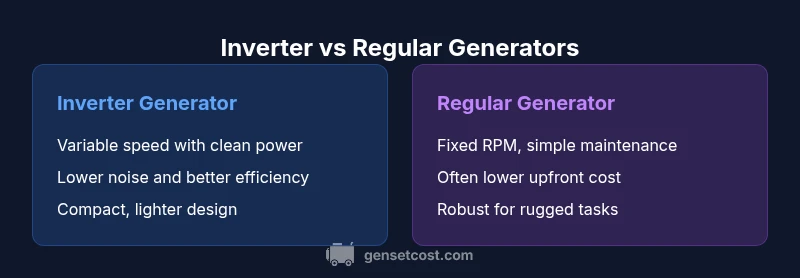
An inverter generator is a modern power source that uses electronic regulation to produce a clean, stable AC output while varying engine speed to match load. Regular generators run at a fixed speed, which can waste fuel and create more noise. For home backup power, inverter units typically deliver better efficiency, quieter operation, and cleaner power for sensitive electronics, though they often cost more upfront. See our full comparison for a balanced view across use cases.
What is an inverter generator compared to a regular generator?
The question what is an inverter generator compared to a regular generator is best understood by focusing on technology, operation, and user experience. Inverter generators pair an internal combustion engine with an electronic inverter that converts the raw AC to DC and back to a stable AC output. This enables the engine to slow down or speed up according to the load, reducing fuel consumption, heat, and noise. By contrast, regular generators maintain a relatively constant engine speed through a governor, which can lead to more fuel use and louder operation at partial loads. For homeowners and property managers evaluating backup power, the distinction matters because it influences fuel bills, noise levels, size, and compatibility with electronics that require clean power. The practical takeaway is that inverter-based designs emphasize efficiency and power quality, while traditional units emphasize simplicity and ruggedness.
How output regulation differs in practice
Inverter technology integrates sensors and a microcontroller that continuously modulate the alternator output. When a load changes, the engine RPM adjusts automatically, and the inverter polishes the resulting waveform to keep voltage and frequency within tight tolerances. Regular generators rely on mechanical governors to hold speed, which can cause voltage sags or surges as demand shifts. The result is cleaner power from inverters and a power delivery profile that better suits modern electronics and sensitive equipment often found in homes and small offices. Understanding this distinction helps with choosing a unit that aligns with critical devices, noise tolerance, and daily usage patterns.
Efficiency and fuel economy explained
Fuel efficiency is a major differentiator. Inverter generators are designed to match output to demand, so they burn less fuel during light or moderate loads than a fixed-speed model running at full throttle. The same load that would cause a traditional unit to run hard may trigger a lower engine speed in an inverter setup, conserving fuel and reducing emissions. This advantage compounds over time, especially for households that experience frequent outages or variable power needs. It’s important to note that the efficiency gain depends on load profiles and model design; not all inverter generators perform identically under all conditions. A careful assessment of typical loads helps estimate potential savings over the life of the unit.
Noise, emissions, and user experience
Noise is a common concern for backup power. Inverter generators are typically quieter at partial and moderate loads due to the throttle control and smoother waveform. Lower noise can be particularly valuable in residential areas, shared walls, and midnight outages. Emissions are generally lower per kilowatt-hour because these units operate more efficiently and produce less exhaust heat. For households with thermal or ventilation constraints, the quiet operation and reduced overheating risk can equate to a more pleasant user experience during outages or outdoor work.
Size, portability, and maintenance considerations
Portability often favors inverter models because many are lighter and more compact than traditional counterparts with the same or similar power ratings. The streamlined design makes storage easier in garages or sheds. On maintenance, inverter units rely on electronic controls and sensors, which can add complexity but also enable diagnostics and auto shutoffs for safeguards. Traditional generators tend to have robust mechanical components and simpler maintenance routines, which some users prefer for straightforward, rugged reliability. The trade-off is that you may pay more for inverter electronics and a smaller footprint, while maintenance tasks can be more model-specific.
Durability, reliability, and warranties
Durability for either type depends on build quality, fuel choice, and maintenance discipline. Traditional generators often have proven track records for rugged operation in harsh conditions and may offer longer service intervals in certain markets. Inverter generators, when properly maintained, deliver dependable power with the added benefits of flexibility and cleaner output. Warranty terms vary by brand and model, but most reputable inverter units include coverage for electrical components and electronics as part of a balanced support package. It’s worth reviewing the warranty scope for transfer-switch compatibility and service network reach.
Cost considerations: upfront vs long-term ownership
Upfront cost typically reflects technology complexity. Inverter generators generally cost more initially due to electronic regulation, sensors, and higher-quality wiring. However, these units can result in lower ongoing fuel costs, especially for operations with frequent partial loads, which improves the total cost of ownership over time. Regular generators may have lower upfront prices and a wider selection in mid-range power, but fuel waste and potential noise penalties can add to lifetime costs. When evaluating cost, consider not only purchase price but also fuel consumption, maintenance needs, and potential downtime expenses during outages.
Sizing guide for home backup: how to plan
Start with a load assessment of essential circuits and devices you want to power during an outage. Create a list of critical loads like lighting, refrigeration, and communication devices, then estimate running watts and surge watts for each. Use a sizing calculator or consult a professional to translate these figures into a generator rating. Inverter generators shine when you have variable loads due to their load-matching capability, while traditional units may be preferred for very high peak power requirements at a lower upfront cost. Always account for future expansion and the possibility of temporary power needs, and remember that a safely installed transfer switch significantly improves overall performance and safety.
Practical usage scenarios: when to choose each type
For silent, ongoing outages or outdoor projects near living spaces, inverter generators offer a compelling balance of efficiency and power quality. If you expect long outages with varying loads and value electronics safety, an inverter model is often the better fit. For simple, budget-conscious backup where you need to power basic tools or a few essential appliances, a traditional generator can provide straightforward, reliable power at a lower purchase price. For property managers overseeing multiple units, weighing total cost of ownership and maintenance expectations helps determine whether the extra features of an inverter unit justify the investment. A hybrid approach—using smaller inverter units for critical rooms and a larger regular model for nonessential loads—can sometimes optimize both cost and resilience.
Authority sources and further reading
For deeper technical background and policy-aligned guidance, consider the following authoritative sources:
- Energy.gov: Backup power and generator safety guidelines
- U.S. Department of Energy (DOE): Power quality and appliance compatibility
- National Renewable Energy Laboratory (NREL): Clean power and inverter technology insights
Final considerations and decision framework
To decide between an inverter generator and a regular generator, start with your essential loads, noise tolerance, and budget. If you prioritize fuel efficiency, quiet operation, and better protection for sensitive electronics, an inverter model is generally the smarter long-term choice. If upfront cost and a rugged, simple solution for occasional use are your primary concerns, a traditional unit may suffice. Regardless of choice, pairing the generator with a properly sized transfer switch and professional installation enhances safety and reliability for home backup scenarios.
Comparison
| Feature | Inverter Generator | Regular Generator |
|---|---|---|
| Power delivery method | Variable-speed inverter output with a clean sine wave | Fixed-speed output with governor-regulated sine wave |
| Fuel efficiency | High efficiency due to load matching | Lower efficiency at light loads |
| Noise level | Quieter operation across loads | Typically louder, especially at higher RPMs |
| Size/portability | Generally lighter and more compact | Heavier and bulkier for comparable power |
| Initial cost | Higher upfront cost | Lower upfront cost |
| Maintenance/parts | Electronic controls; may require model-specific service | More mechanical components; widespread parts availability |
| Best use case | Home backup with sensitive electronics; quiet operation | Budget-focused backup; tried-and-true basic power |
The Good
- Better fuel efficiency and longer runtime per load
- Cleaner power suitable for electronics with lower THD
- Quieter operation compared to many traditional units
- Smaller size and easier storage in tight spaces
- Potential long-term savings offsetting higher upfront cost
The Bad
- Higher upfront price
- More complex maintenance and potential repair costs
- Limited peak power on some models compared to basic generators
- Availability varies by power rating and brand
Inverter generators generally offer better efficiency and power quality for home backup, with quieter operation, but they cost more upfront; regular generators may fit budget needs and simple use cases.
Choose inverter if you value efficiency, quiet operation, and electronics safety. Choose regular if upfront cost and straightforward operation are the priority, especially for basic backup scenarios.
People Also Ask
What is the primary difference between inverter and regular generators?
The main difference is how power is generated and delivered. Inverter generators use electronic regulation to adjust engine speed and produce a stable, clean AC output, while regular generators run at a fixed speed with a governor. This affects efficiency, noise, and suitability for sensitive electronics.
Inverter units adjust speed for efficiency and provide clean power; regular generators run at a constant speed and can be louder and less efficient.
Are inverter generators more expensive upfront?
Yes, inverter generators typically cost more upfront due to the additional electronics and control systems. However, they can reduce fuel costs over time and offer better power quality, potentially offsetting the initial price.
They cost more to buy, but they can save fuel and run more quietly in the long run.
Can inverter generators power sensitive electronics safely?
Yes. Inverter generators deliver a stable, clean sine wave with low distortion, making them safer for computers, TVs, and other sensitive devices compared with some traditional models.
Yes, they’re better for electronics because they produce steadier power.
Do inverter generators require more maintenance?
Maintenance needs can be similar in scope to regular generators but may require more model-specific servicing for the electronic components. Regular maintenance remains important for both types.
They may need a bit more checkups on the electronics, but routine care matters for all generators.
Which generator is better for a whole-home backup?
For whole-home backup with quiet operation and efficiency, inverter generators are often the preferred choice. If cost constraints are primary, a high-quality traditional unit can still cover essential loads with proper sizing.
Inverter is often best for a quiet, efficient home backup, but a well-chosen traditional unit can work too.
How should I size a generator for a home?
Start with your essential circuits, estimate running watts, and account for surge watts. Use a sizing calculator or consult a professional to translate loads into a generator rating, ensuring you can handle critical loads during outages.
Figure out what you need to run, add up running and surge needs, and pick a size that comfortably covers them.
Key Takeaways
- Assess your essential loads before choosing.
- Inverter units excel with variable loads and sensitive electronics.
- Expect higher upfront costs for inverter models, with possible long-term fuel savings.
- Pair any generator with a proper transfer switch for safety and reliability.
- Consider a hybrid approach for multi-unit properties or varied power needs.