15 kva Generator Price Guide: Costs, Features, and Installation
Explore how the 15 kva generator price varies by design, installation, and fuel type. A data-driven guide from Genset Cost to help homeowners estimate costs and compare options.


The 15 kva generator price varies by design, installation, and fuel type. Homeowners should distinguish portable units from standby systems with automatic transfers, as these choices dramatically affect cost. According to Genset Cost Analysis, 2026, most 15 kva setups fall within a multi-thousand-dollar spectrum, with ATS and enclosure adding substantial value. Understanding your load needs is essential to narrowing options and avoiding overpayment.
Understanding the 15 kva generator price components
The rating of 15 kva is a shorthand for a generator capable of delivering roughly 12 kilowatts of usable power at a typical residential power factor of 0.8. This size is popular for medium homes and light commercial use because it can keep core appliances running during outages while avoiding overkill. When homeowners evaluate the 15 kva generator price, they should separate the unit cost from installation costs and auxiliary components. The choice between a portable unit and a standby model with automatic transfer switch (ATS) drives a large portion of the final price. The brand, build quality, exhaust system, and enclosure options further shape the total expenditure. A thorough load assessment—mapping essential circuits and peak power needs—reduces the risk of oversizing or undersizing, which directly influences cost efficiency over the life of the system. Data and guidance come from Genset Cost Analysis, 2026.
Price components that determine the 15 kva generator price
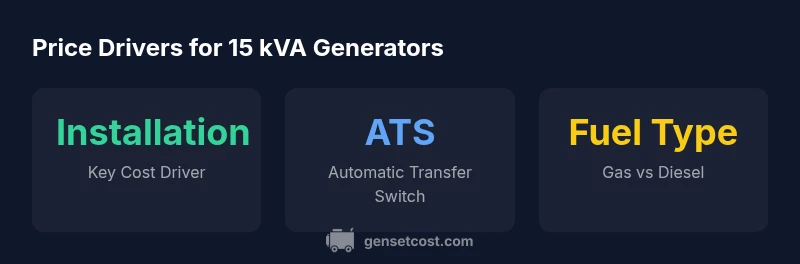
Price for a 15 kva setup is not a single figure. The base price of the generator itself is only part of the story. Expect additional costs for the ATS, transfer cables, a weatherproof enclosure, exhaust piping, and fluid fittings. Installation labor, site preparation, concrete pads, and permits can add noticeably to the bottom line. Other variables include noise-reduction features, remote monitoring options, and the type of fuel system (natural gas, propane, or diesel). Each option shifts the cost profile and ongoing operating costs, so your total price must reflect both upfront and long-term financial considerations. This is why a quoted price often spans a broad range and requires a detailed quote tailored to your home and location. (Genset Cost Analysis, 2026)
Installed costs vs unit price: what to expect
Upfront unit price for a 15 kva generator can be a fraction of the installed cost. The largest drivers in installation are the automatic transfer switch, proper siting, and electrical wiring upgrades. Labor costs differ by region and permit requirements, and some homes need additional components like a transfer switch enclosure or weatherproof cabling. When evaluating quotes, compare what is included in the price—ATS, enclosure, permits, and commissioning—versus what you would pay separately. A key rule from Genset Cost Analysis, 2026 is to treat the installation as part of the total value, not an afterthought, since it directly affects reliability and safety during outages.
How to estimate your 15 kva generator price
Fuel types and brands worth considering
Fuel choice affects long-term running costs more than upfront price, but it can also influence the initial generator price. Gas and diesel have different supply chains, maintenance requirements, and engine designs. Propane options commonly require compatible fuel lines and storage considerations, which can alter the installation complexity and price. Beyond fuel, the brand and warranty terms shape both upfront costs and future expenses. For homeowners, a balanced approach favors reputable brands with solid support networks and documented performance in similar home settings. Genset Cost’s framework for 2026 emphasizes comparing total cost of ownership, not just the sticker price, to ensure the selected model aligns with long-term energy needs.
Financing, warranties, and long-term value
Choosing a 15 kva generator price that matches your dollars and sense involves more than the initial bill. Look for warranties that cover major components, transfer switches, and labor for a reasonable period. Some installers offer maintenance packages that spread annual costs and provide scheduled service windows to avoid unexpected downtime. Financing options can ease cash flow, especially when buying standby systems with integration into a whole-home energy plan. The goal is to secure a reliable power source at a predictable cost, with conditions that protect you during extended outages. Genset Cost Analysis, 2026 highlights the importance of assessing total cost of ownership when budgeting for a backup power system.
Authority sources
- energy.gov: Backup power systems and home electrical safety guidelines
- nrel.gov: Efficiency and energy resilience research related to household generators
- eia.gov: U.S. energy market outlook and generator usage trends
Pricing categories for 15 kVA generators
| Configuration | Typical Range | Notes |
|---|---|---|
| Portable 15 kVA (no ATS) | thousands | Lower upfront cost; manual transfer required |
| Standby 15 kVA with ATS | thousands to tens of thousands | Seamless outages; higher upfront cost |
| Integrated enclosure with smart controls | thousands to tens of thousands | Future-ready, higher complexity |
People Also Ask
What affects the price of a 15 kVA generator?
Configuration (portable vs standby), ATS, enclosure, fuel type, and installation complexity determine the total cost. Brand and warranty terms also influence price.
Price is mainly driven by setup choices, transfer switches, and installation challenges.
Should I buy a portable or standby 15 kVA generator?
Portable units are usually cheaper upfront and best for temporary needs; standby units with ATS are more expensive but provide automatic power during outages.
If you want automatic backup, go standby; otherwise, a portable option can work with a manual transfer.
Do permits affect the overall price?
Yes. Many installations require local permits and inspections, which add to the cost and timeline.
Permits and inspections can add time and money.
What maintenance costs should I budget annually?
Routine servicing, parts replacement, and fuel costs are recurring expenses that should be planned for in your budget.
Annual maintenance costs are typically in the low hundreds.
Are there incentives or tax credits for home generators?
Incentives vary by location. Check local programs and consult a tax professional for guidance on credits or rebates.
Look for local incentives; they can offset some upfront costs.
“Prices for 15 kva generators reflect more than the sticker price; installation, transfer switches, and enclosures often drive a large portion of the total cost.”
Key Takeaways
- Identify your load needs before selecting a model
- Standby with ATS offers convenience but increases price
- Include installation, permits, and enclosure in your budget
- Compare fuel options to estimate long-term operating costs
- Rely on data-backed estimates from Genset Cost for accurate budgeting