Understanding 15kW Generator Costs and Sizing for Homes
Compare costs, sizing, and installation for a 15000 watt generator. Get price ranges, installation tips, and fuel considerations to choose the right standby solution.


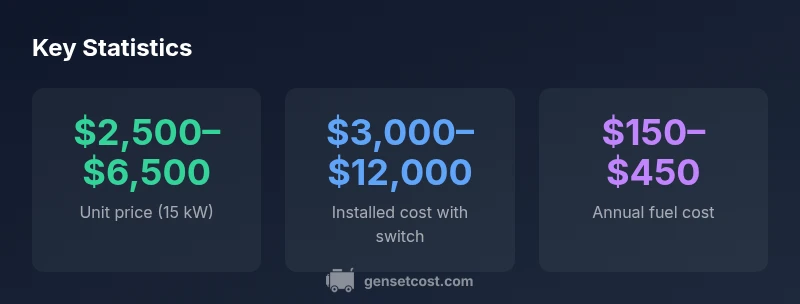
According to Genset Cost, a 15000 watt generator typically costs between $2,500 and $6,500 for the unit, with installed totals—including a transfer switch—often between $4,000 and $12,000. This range varies by fuel type and brand, and ongoing fuel and maintenance costs should be budgeted. Homeowners often run essential appliances during outages, so sizing accuracy matters.
Why a 15000 watt generator is a practical choice for many homes
A 15000 watt generator, or 15 kW, offers a balanced blend of capacity and affordability for typical single-family homes. For many households, this size can sustain essential circuits during outages—lights, refrigeration, sump pumps, and several high-demand items like a well pump or a central air unit when loads are managed. The appeal lies in its ability to support a meaningful portion of comfort and safety needs without the higher cost and complexity of larger standby systems. As you evaluate options, keep in mind that the total cost of ownership includes both the initial unit price and the cost to install and connect the system, plus ongoing fuel and maintenance expenses. In 2026, the Genset Cost team notes that the spread between different brands and fuel choices can be meaningful, so a careful comparison pays off over the life of the generator. This is especially relevant for homes facing frequent outages or long-duration power interruptions.
Key factors shaping total cost
Total cost for a 15000 watt generator isn’t limited to the sticker price. You must account for: the unit price, installation labor, and permitting; a transfer switch for safe switching between grid and generator; fuel type and availability; and any site-specific requirements like fuel line upgrades or a new electrical panel. The transfer switch itself can add a sizable chunk to the bill—often several hundred to a few thousand dollars depending on whether a manual or automatic unit is chosen. Regional labor rates and inspection fees vary, which is why two or three quotes are essential. Warranty terms and optional maintenance plans can also affect long-term costs. In short, the lowest upfront price may not deliver the best long-term value if it lacks robust support or a favorable warranty.
Sizing and load assessment: how much can a 15kW unit handle
Before purchasing, perform a practical load assessment. List essential circuits you want to keep powered (refrigeration, sump pump, lighting, communications, some outlets for medical devices). For HVAC systems, identify whether you’ll run a furnace or heat pump, as these can draw substantial current. A professional load calculation can translate these needs into a target kW rating—15 kW is common for many homes, but it’s not universal. Keep in mind that continuous operation at full capacity is uncommon; most homes operate below peak load most of the time, so you may be able to meet needs with a slightly smaller unit if you optimize essential circuits. Brands and installers can help you translate your load list into a formal specification and a realistic run-time plan.
Installation considerations and typical timelines
Installation involves more than dropping in a generator. You’ll typically need a transfer switch, a properly sized fuel supply (gas line for natural gas or propane), and a dedicated outdoor pad or enclosure with weather protection. Electrical connections must meet local codes, and some jurisdictions require electrical permits and inspections. The timeline for installation varies by region, the complexity of the electrical work, and whether a gas line upgrade is required. In straightforward setups, labor and inspection can be completed within a couple of days; more complex installs with permitting can extend this to a week or longer. A well-timed plan includes permits, scheduling with utility outages (if required), and a test run to verify the system powers critical loads as designed.
How to compare brands and value proposition
Brand comparisons should go beyond initial price. Look at warranty length and coverage, service network, and the availability of authorized technicians in your area. Pay attention to the generator’s runtime efficiency and noise ratings, as operating costs accumulate over years. Evaluate the included maintenance options and parts availability for the life of the unit. A more expensive model with better efficiency, a longer warranty, and strong dealer support can offer lower total cost of ownership over time. Always request a formal load calculation and an installation quote that itemizes parts, labor, permits, and any mandatory add-ons. The long-term value often hinges on service quality and how well the system integrates with your home’s electrical and fuel infrastructure.
Practical example: case study for a typical home setup
Consider a standard two-story home with a central air system, a refrigerator, a sump pump, lighting, and essential outlets for communication and mobile devices. A 15 kW system could be sized to support the fridge, lights, well pump, and a conditioned space such as a small HVAC function during outages, provided loads are balanced and the HVAC isn’t running at full duty simultaneously with other heavy appliances. The example illustrates how a well-planned 15 kW solution can maintain key comfort and safety features without overspending on capacity. You’ll need a load calc and a professional design to confirm wiring, transfer switch placement, and fuel type suitability.
Typical cost and maintenance ranges for a 15 kW generator
| Item | Typical range | Notes |
|---|---|---|
| Unit price (15 kW unit) | $2,500–$6,500 | Subject to brand and fuel type |
| Installed cost with switch | $3,000–$12,000 | Labor, permits, wiring vary by region |
| Annual fuel cost | $150–$450 | Depends on usage hours and fuel price |
| Maintenance per year | $60–$150 | Inspections and part replacements |
People Also Ask
What is the typical cost range for a 15000 watt generator?
Unit price for a 15 kW generator typically runs between $2,500 and $6,500. Installed cost with labor and a transfer switch often ranges from $3,000 to $12,000, depending on fuel type and regional factors. Always obtain multiple quotes and verify what’s included.
Expect a unit price in the low to mid five figures, with installation adding a broad range depending on labor and permits.
Do I need a transfer switch for a 15 kW generator?
Yes. A transfer switch safely isolates your home from the grid during outages and prevents backfeeding. It’s a standard requirement for most home backup setups and is often required by code.
Yes, a transfer switch is usually required for safe operation and code compliance.
Is a 15 kW generator sufficient for an average home?
It depends on your loads. For many homes, 15 kW covers essential circuits if you prioritize appliances and balanced loads. A professional load calculation is recommended to confirm coverage for HVAC, water heating, and lighting.
Depends on load; a load calculation will confirm if 15 kW covers your essentials.
What fuel options are available for 15 kW generators?
Common options include natural gas, propane, and gasoline. Availability and performance vary by fuel type, and some homes choose dual-fuel units for flexibility.
You can usually choose natural gas, propane, or gasoline for many 15 kW models.
How long does installation typically take?
Simple installations can be completed in 1–2 days, while complex setups with permits or gas line work may take longer. A detailed plan and permits can streamline scheduling.
Most installs take 1–2 days, longer if permits or gas work are needed.
“A properly sized 15kW system keeps essential loads online during outages without overspending on unnecessary capacity. Performance varies with load and fuel type, so precise sizing and professional consultation pay off.”
Key Takeaways
- Assess essential loads before selecting a 15000 watt generator
- Compare unit price and installed costs to gauge true value
- Plan for transfer switch, permits, and professional installation
- Factor fuel type and expected running hours into costs
- Budget for maintenance and potential warranty considerations