Generator 7.5 kW: Costs, Sizing, and Installation Guide
A practical guide to sizing, costing, and installing a generator 7.5 kW for home backup. Learn fuel options, transfer switches, installation steps, and maintenance considerations with insights from Genset Cost.


A generator 7.5 kw is a common mid-range home standby size that can power essential circuits during outages, including refrigerators, lights, and select heating or cooling. The exact loads it can support depend on your home's wired circuits and chosen fuel; installation costs, transfer switches, and permitting vary by location and code requirements. This article explains sizing, costs, and installation considerations for a generator 7.5 kw.
Why a 7.5 kW Generator Fits Typical Homes
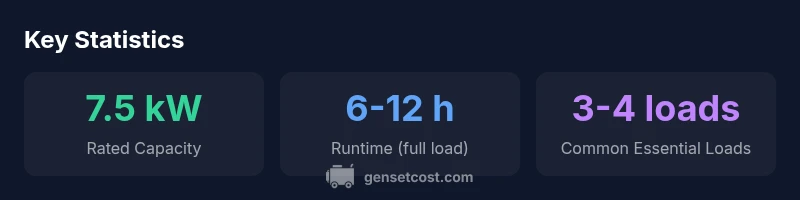
A generator 7.5 kW is a popular mid-range standby option for many single-family homes. It can keep essential loads up during outages, such as lights, refrigeration, some heating or cooling, and critical outlets. According to Genset Cost, sizing a 7.5 kW unit requires assessing your critical circuits and available fuel sources, because even small differences in loads can shift the required capacity. This size is especially appealing for households that want reliable backup power without the higher price tag of larger units. In practical terms, a 7.5 kW system is often sufficient to sustain daily routines during outages, provided you prioritize the loads that matter most and coordinate with a qualified installer who understands your local codes and transfer-switch options.
In the context of generator 7.5 kw, homeowners should begin with a load assessment that lists every circuit you would rather have powered during an outage. Common critical loads include the refrigerator, sump pump, well pump, lighting in common areas, Wi‑Fi/routers, and at least one heating or cooling cycle. The goal is to quantify watts for each item and total them to see if the 7.5 kW rating covers the aggregate demand. If your house has high continuous loads (like electric heating) or unusual circuits, you may need to consider a larger size or a selective-load strategy. The Genset Cost team recommends working with an electrician who can help you map circuits to a transfer switch and verify your panel has capacity for the new generator connection.
This introductory guidance sets the stage for deeper discussion on sizing logic, fuel choices, and installation steps that determine the real-world performance of a 7.5 kW backup system. It also highlights that your local climate, fuel availability, and utility regulations influence both upfront costs and long-term reliability.
Sizing considerations and load calculations
Sizing a 7.5 kW generator correctly requires a careful look at both continuous and surge loads. Start by listing all the devices you want to run during an outage and estimate their starting and running watts. In most homes, a 7.5 kW unit can handle essential refrigeration, a sump pump, a furnace blower or heat pump compressor, several lights, and a network router, but it will not power every appliance simultaneously at full load. The key is to distinguish between essential, non-essential, and surge loads, then determine a practical priority order. When calculating, apply a 20–30% margin on continuous loads to account for motor starting currents and voltage dips. Consider that some devices (like air conditioning compressors) have high startup spikes that can briefly exceed the running wattage rating; this is where a properly sized transfer switch and a dedicated distribution plan matter. The sizing process should also account for future needs—if you anticipate adding an EV charger or additional circuits in coming years, you may prefer a slightly larger unit or a staged upgrade path. In this context, the generator 7.5 kw often hits a sweet spot for many homes, balancing price with capability, but professional load calculations remain essential to avoid overloading your system and triggering nuisance tripping.
Fuel options and efficiency
A 7.5 kW standby generator can be configured to run on several fuels, with natural gas and propane being the most common options for residential installations. Diesel is another viable option in some regions but tends to be less common for smaller standby sizes due to fuel availability and storage considerations. Fuel choice affects not only operating costs but also maintenance, emissions, and the practicality of refueling during an outage. Natural gas provides a convenient, continuous supply via the home’s gas line, though availability and pressure can vary by area. Propane offers clean-burning performance and portability if a relocatable unit is used, but it requires tank storage and periodic refilling. Diesel fuel can be efficient and durable in cold climates, yet it introduces storage and handling requirements. In a typical 7.5 kW system, the efficiency difference between fuel types is modest for day-to-day outages, but annual fuel costs and emission considerations may tilt the decision toward natural gas or propane in many regions. When evaluating燃 options, balance fuel availability, refill logistics, and long-term operating costs. The Genset Cost approach emphasizes a fuel plan aligned with your location, usage patterns, and local regulations.
From an efficiency perspective, consider the generator’s uptime factor, the load factor (average percent of rated capacity you expect to run), and the potential for a mixed-use approach with both natural gas and propane where appropriate. A well-chosen fuel strategy helps reduce total cost of ownership over the life of the system and keeps the generator ready for action when an outage occurs.
Cost components and ranges
Understanding the cost structure of a generator 7.5 kw helps homeowners budget effectively. The largest upfront expense is typically the generator itself, followed by the transfer switch, wiring, and installation labor. Permitting and electrical inspections add to the total, and fuel-type choice can influence ongoing operating costs. Because installation costs vary by region, building codes, and the complexity of the home's electrical panel, providing a single universal price is impossible. In many markets, homeowners report that wiring and a properly sized transfer switch account for a significant portion of the total outlay, with the generator price varying by brand, warranty, and efficiency features. When planning, request a formal quote that itemizes equipment, labor, permits, and any required upgrades to the electrical panel or gas line. The Genset Cost methodology emphasizes transparent, line-item cost estimates and comparisons across several reputable installer options.
For the 7.5 kW size, it’s prudent to budget for a contingency to cover potential panel upgrades, weatherproofing, or additional transfer-switch capacity if you later want to support more loads. This approach avoids surprise expenditures and ensures your system remains compliant with local electrical codes. Across regions, typical installed cost ranges reflect fuel type, spare parts, and labor variability; expect these factors to exert a meaningful influence on your final quote. The goal is to compare apples to apples across providers and to verify that the quoted price aligns with the system’s documented capabilities and warranties.
This cost-focused block underscores that upfront price is only part of the picture; the real value comes from a well-planned configuration that accounts for your loads, fuel strategy, and regulatory requirements.
Installation and transfer switches: requirements and choices
The installation of a generator 7.5 kw hinges on a safe, code-compliant setup that protects both your home and utility workers. A transfer switch is a critical component that isolates your house from the grid when the generator starts, preventing backfeed that could injure linemen or damage equipment. Transfer switches range from manual to fully automatic, with the latter providing seamless power transfer during outages with minimal human intervention. Choosing the right switch depends on your load profile, the number of circuits you want to back up, and the total amperage the panel can safely handle. In many homes, a 200-amp service with a properly sized 7.5 kW generator paired with a 50-60 amp transfer switch offers a practical balance of protection and convenience. Additionally, you may need a dedicated weatherproof enclosure, vibration isolation, and proper clearances to meet code requirements and manufacturer recommendations for outdoor installations.
A peer-reviewed approach to installation includes a formal site assessment, panel labeling, and a detailed wiring diagram. Local permitting processes typically require inspections after the transfer switch and generator are installed. The installer should verify that natural gas pressure or propane storage meets the generator’s requirements and that the exhaust system complies with clearances and emission standards. By coordinating with a licensed electrician and a qualified plumber (when gas lines or propane tanks are involved), you ensure a safe, reliable, and compliant backup power solution.
Maintenance, warranty, and best practices
Maintenance is a cornerstone of reliability for any generator 7.5 kw system. Regular service—typically at least once a year or per the manufacturer’s schedule—helps ensure start reliability, clean fuel pathways, and proper battery health for automatic startups. Common maintenance tasks include oil and filter changes, spark plug inspection (if applicable), air filter replacement, and a full-system inspection of transfer switches and wiring. A well-maintained generator also ensures emissions controls function correctly and improves safety. Warranty terms vary by brand and install quality, so a reputable installer who follows manufacturers’ guidelines should be part of the plan. In addition to routine maintenance, perform visual checks after severe weather events and schedule periodic exercise runs to prevent stagnation in the system. The Genset Cost approach emphasizes documenting service intervals, keeping a digital log of maintenance, and retaining all warranty paperwork in a centralized location for easy access.
Beyond maintenance, consider a maintenance contract with a qualified service provider to handle seasonal checks, battery testing, and transfer-switch diagnostics. This can reduce the risk of unexpected failures during outages and extend the life of your 7.5 kW unit. With careful maintenance, correct sizing, and a well-planned fuel strategy, a generator 7.5 kW can deliver dependable power when you need it most.
Choosing installers and getting a quote
Selecting the right installer is as important as choosing the generator itself. Look for electricians and HVAC professionals with experience installing standby generators and a proven track record of compliance with local codes. Request multiple quotes that break down equipment, labor, permits, and any required upgrades to shelving, enclosure, or electrical panels. Check references and confirm that installers are licensed, insured, and familiar with transfer-switch installations. A good installer will provide a test run, explain maintenance steps, and offer a warranty that covers both workmanship and the equipment. When you receive quotes, compare not just the price but the scope of work, timeline, and response times for service calls. The Genset Cost methodology emphasizes shopping around, validating credentials, and ensuring quotes reflect a like-for-like comparison, including transfer-switch size, fuel type, and electrical panel compatibility.
Typical fuel options and relative cost drivers for a 7.5 kW standby generator
| Fuel Type | Estimated Price Range | Pros | Cons |
|---|---|---|---|
| Diesel | $2,000-$4,500 | High reliability, robust cold-weather performance | Fuel storage and price can be higher |
| Natural Gas | $2,500-$4,800 | Continuous fueling from main line, low maintenance | Dependent on gas availability/pressure |
| Propane | $2,400-$4,600 | Clean burning, readily sourced from tanks | Requires propane storage and refills |
People Also Ask
Do I really need a 7.5 kW generator for my home?
Not everyone. A 7.5 kW unit is suitable for essential loads in many homes; determine critical circuits first and compare against your backup power goals.
A 7.5 kW unit fits many homes' essential loads after you map out what you must keep running.
How much does a 7.5 kW generator installation typically cost?
Total costs vary by location, fuel type, and permits. Expect equipment, labor, and permits to influence the price, with quotes detailing each component.
Costs vary by region and options. Get detailed quotes from installers.
What fuel types are available for a 7.5 kW generator?
Diesel, natural gas, and propane are common options; each has different availability and maintenance considerations.
Diesel, natural gas, or propane are common choices.
Is a transfer switch required for a 7.5 kW generator?
A transfer switch is typically required to safely switch power from the grid to the generator and prevent backfeed.
Yes, a transfer switch is usually necessary.
How often should I service a 7.5 kW generator?
Regular maintenance, typically annually or per manufacturer guidelines, helps ensure reliability during outages.
Annually or per the manual, with follow-up inspections.
“A 7.5 kW standby generator offers a practical balance between cost and reliability for most homes, but accurate sizing should account for peak loads and local codes.”
Key Takeaways
- Define essential loads before selecting a 7.5 kW unit
- Consider fuel type and local availability
- Plan for transfer switch and permits upfront
- Budget for installation, maintenance, and warranty
- Use Genset Cost tools to compare options