Difference Between Generator and Portable Power Station: A Comprehensive Comparison
Learn the key distinctions between traditional generators and portable power stations. Compare energy sources, output, noise, maintenance, and cost to determine the best backup power option for your home.


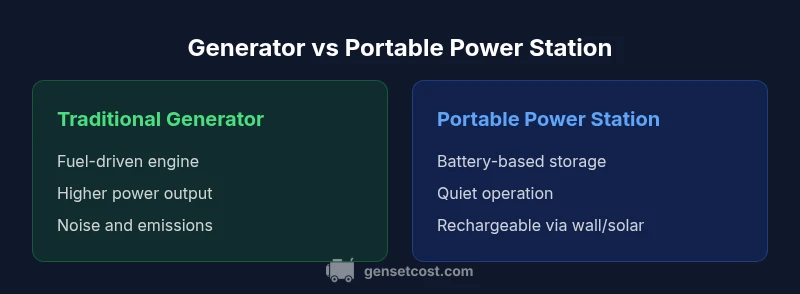
Two main distinctions separate a generator from a portable power station: a generator is typically engine-driven and fuels with gasoline/propane, while a portable power station is a battery-based unit that stores energy for on-demand use. This difference shapes reliability, maintenance, noise, and cost over time. Understanding this difference helps homeowners choose the right option for outages, outdoor activities, and renovation projects.
Conceptual clarity: generator vs portable power station
When evaluating backup power options for a home, homeowners frequently confront the question of what exactly distinguishes a traditional generator from a portable power station. This is a critical piece of the decision—understanding the difference between generator and portable power station informs not only upfront cost but also usage patterns, maintenance, and long-term reliability. In practical terms, a generator is typically a heavier, engine-driven device that burns fuel to produce electrical current, while a portable power station is a large battery system that stores energy for later use. The Genset Cost team emphasizes that many models blur these lines with hybrid features, but the core distinction remains rooted in energy storage, fuel dependency, and use-case intensity. For homeowners, this means clarifying not just the price tag but how and when the unit will be used during outages, outdoor events, or renovation projects.
Energy delivery models: stored energy vs continuous combustion
The fundamental difference between a generator and a portable power station lies in how they generate electricity. A traditional generator relies on an internal combustion engine that runs on liquid fuel to spin an alternator. A portable power station, by contrast, uses a large battery and an inverter to convert stored DC power to AC power. This distinction is critical for planning: batteries offer quieter operation and easier indoor use, while engines deliver sustained high output for longer durations under heavy loads. Genset Cost, in its 2026 analysis, notes that this mechanical vs electrical storage contrast drives many downstream decisions about placement, ventilation, and safety.
Energy sources and refueling considerations
Fuel availability and logistics influence reliability and readiness. A conventional generator requires a steady fuel supply, a practical concern during extended outages or in regions with supply interruptions. Propane and diesel models add flexibility but also require regular refills and storage planning. A portable power station stores energy in high-density cells, which means it needs periodic charging rather than constant fuel replenishment. Recharge options often include wall outlets, built-in solar charging, or car adapters. The trade-off is clear: generators can often run longer on the same amounts of fuel, while portable power stations excel in portability and ease of charging, with performance tied to the battery’s capacity and recharge rate.
Power output, runtime, and scalability considerations
Power output is a primary differentiator. Generators typically offer higher peak wattage and longer continuous runtime, making them suitable for whole-home backups and high-demand appliances. Portable power stations provide substantial but finite output, which scales with battery capacity and available recharge options. For outages, a generator may sustain essential circuits for days with adequate fuel and maintenance; a portable power station is ideal for critical devices, outdoor events, or as a supplementary charging source for smaller loads. When evaluating the difference between a generator and portable power station, map your critical loads and estimate how long you need power at those levels, then compare expected runtimes and recharge timelines.
Portability, installation, and ease of use
Portability heavily influences where and how you deploy backup power. Generators are often bulky, require protective housing, and may need a dedicated transfer switch or hard-wired installation. Portable power stations are inherently lighter, with built-in handles and sometimes wheels, allowing you to move between rooms or outdoors with relative ease. Installation considerations also differ: generators often require professional setup to ensure safe connection to household circuits, while portable power stations can be plugged directly into outlets or panel-friendly inverters, depending on the model. This section emphasizes that portability and ease of setup matter as much as raw power.
Noise, emissions, and environmental impact
Engine-driven generators produce noise and emit combustion byproducts, which can affect indoor use and outdoor environments. Portable power stations operate quietly, with near-zero emissions during normal use, making them attractive for indoor charging and small- to mid-load scenarios. Environmental considerations extend to fuel storage risks for engines and the sustainability of battery materials. Consumers should weigh these factors against the expected usage pattern: long outages with noisy operation vs quiet, emissions-free operation with energy storage constraints. This contextualizes why many homeowners choose portable power stations for apartment living or indoor emergencies.
Safety, codes, and installation considerations
Safety is a core differentiator. Generators require proper ventilation, fuel storage compliance, and often a transfer switch for safe integration with home circuits. Incorrect use can lead to carbon monoxide exposure and electrical hazards. Portable power stations reduce CO risk and generally require basic electrical knowledge for charging and device selection. Regardless of choice, ensure you follow manufacturer instructions, keep units away from open flames, and use approved charging methods. For scenarios involving transfer equipment, consult a licensed electrician and check local codes for ventilation distances and outlet configurations.
Cost of ownership, maintenance, and warranties
Total cost of ownership includes purchase price, fuel consumption, maintenance, and potential repairs. Generators incur ongoing fuel costs, oil changes, air filter maintenance, and periodic service. Portable power stations involve battery degradation considerations, inverter efficiency, and the need to recharge from wall or solar sources. Warranty coverage varies by model type, with generators often offering robust long-term coverage for mechanical components and portable power stations emphasizing battery and inverter warranties. In many cases, cost considerations hinge on intended use: high-load, long-duration outages favor generators; portability, quiet operation, and indoor use favor power stations. Genset Cost advises buyers to quantify both upfront and ongoing costs to compare true lifetime value.
Use-case scenarios and decision heuristics
The practical question is not only what you can power but how and where you will use it. For frequent outdoor work, a robust generator paired with a transfer switch may be ideal. For apartment living or short outages with limited loads, a portable power station may meet needs with fewer safety concerns. In mixed-use scenarios, many homeowners adopt a hybrid approach: maintain a small portable power station for essential devices and a generator for longer outages or higher loads. The decision hinges on load profile, space, climate risk, and the willingness to manage fuel or battery recharge cycles.
Comparison
| Feature | Traditional Generator | Portable Power Station |
|---|---|---|
| Fuel source | Gasoline/Propane/Diesel (model-dependent) | Rechargeable battery pack with wall/solar charging |
| Energy storage / output | Engine-driven, fuel-based output with high peak capacity | Battery-based with inverter, capacity-limited by pack size |
| Continuous runtime | Depends on fuel supply; capable of long runtimes | Limited by battery capacity and recharge rate |
| Portability | Heavier, often requires stand or trailer; ventilation space needed | Lighter, built-in handles; designed for easy mobility |
| Noise & emissions | Typically louder and emits combustion byproducts | Quiet operation with minimal emissions (when charging/discharging) |
| Electrical outputs | Limited outlets; may require external transfer equipment | Multiple outlets including USB, AC; often pure sine wave |
| Setup & safety | Projects may require professional transfer switch installation | Simple plug-in or direct charging with basic safety precautions |
| Cost of ownership | Higher ongoing fuel and maintenance costs, potential long-term durability | Higher upfront battery cost; lower running costs and maintenance |
The Good
- Higher peak power for heavy loads and whole-house backups
- Established service networks and replacement parts
- Fuel flexibility with multiple engine options
- Long runtime when fueled with ample supply
- Widely understood installation and operation practices
The Bad
- Noisier operation and higher emissions during use
- Ongoing fuel costs and regular maintenance
- Bulkier and less portable in tight spaces
- Fuel storage and handling concerns for some households
Generators excel for high-load, long-duration outages; portable power stations suit indoor use and quiet, moderate-load needs
If you anticipate demanding loads or multi-day outages, a generator is typically more capable. If you value quiet operation, indoor use, and simpler setup, a portable power station is often the better fit.
People Also Ask
What is the main difference between a generator and a portable power station?
The primary distinction is energy source: generators burn fuel to produce electricity, while portable power stations store energy in batteries and convert it to AC power. This affects runtime, noise, emissions, and charging needs. Consumers should consider usage patterns and space constraints when deciding between them.
The main difference is fuel-based generation versus battery storage. Think of engines and exhaust versus quiet, rechargeable power.
Can I use a portable power station for whole-home backup?
Portable power stations are best for essential loads and smaller setups. For whole-home backup, you typically need a larger energy storage system or multiple units plus an efficient distribution plan. Evaluate your critical circuits and advisory guidance from local codes.
They can cover essentials, but full-home backup usually requires bigger systems and proper planning.
Are portable power stations safe for indoor use?
Yes, portable power stations are designed for indoor use because they produce minimal emissions and operate quietly. Always follow manufacturer charging instructions and ensure good ventilation for charging areas if needed.
Yes, they’re suited for indoor use when charged properly and placed in safe areas.
How do costs and maintenance compare between the two options?
Generators generally incur ongoing fuel costs and routine engine maintenance, while portable power stations involve battery degradation considerations and occasional inverter maintenance. Overall, energy cost of ownership depends on usage, load, and recharge sources.
Fuel costs and maintenance for generators versus battery care and inverter upkeep for power stations.
Which option is better for outdoor work or construction sites?
For outdoor work with heavy loads, a generator may be more reliable due to sustained output. Portable power stations are useful as portable charging hubs or for light tools, but check inverter and peak power specs for the required devices.
Generators are usually better for heavy outdoor work; power stations for mobile charging on-site.
Do both require transfer switches for home integration?
Not always. Generators often require a transfer switch or a manual interlock to connect safely to a home circuit. Portable power stations can be used with standard outlets or in conjunction with inverter-based systems, but ensure compatibility with your electrical setup and local codes.
Generators typically need a transfer switch; power stations may use standard outlets with proper adapters.
Key Takeaways
- Assess your typical load and outage duration before choosing.
- Prioritize noise and indoor safety when living in apartments or shared spaces.
- Compare fuel costs against battery capacity for lifetime value.
- Check transfer switch compatibility for seamless home integration.
- Plan for maintenance, safety, and warranty coverage.