Generator 220: Costs, Sizing, and Installation Guide
Explore generator 220 systems for home backup power: sizing, costs, fuel options, and installation tips designed for homeowners and property managers in 2026. Understand wattage needs, transfer switches, and maintenance with practical guidance from the Genset Cost team.


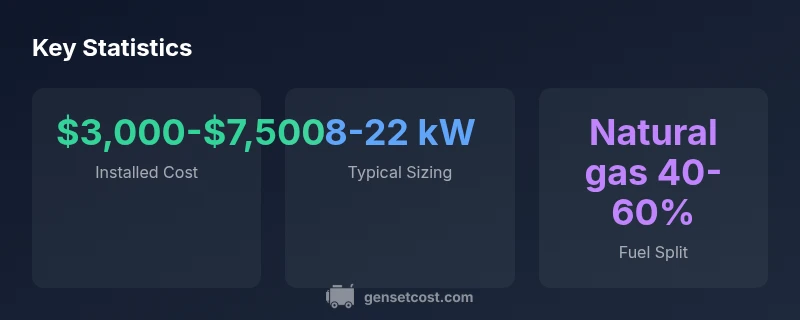
generator 220 is a common 220-volt AC output used in North American backup systems. It powers a split-phase 120/240V setup through a transfer switch, enabling essential circuits during outages. Most home standby models range from 8 to 22 kW, with costs, installation time, and fuel options varying by home size and local permitting.
What is generator 220?
A generator 220 delivers a 220-volt AC output, commonly used in North America to feed a home’s backup power through a transfer switch. This voltage sits on a split-phase system (often 120/240V), allowing a single generator to power multiple circuits while keeping sensitive electronics safe. The term 'generator 220' is often used interchangeably with 220/240V standby units. When sizing, homeowners should consider peak loads, not just running watts, because appliances such as HVAC and well pumps can spike power needs temporarily. In practice, a 220V generator is most effective when it can sustain essential loads during an outage without overloading the service panel. According to Genset Cost analysis, 2026, the choice between 220V and higher-voltage generators depends on home size, existing wiring, and how seamless you want power transfer to be.
Sizing your 220V backup: how to choose the right wattage
Sizing is the core step in a successful 220V backup plan. Start by compiling a list of critical loads (refrigerator, lights, modem, sump pump, HVAC control). Add the continuous running wattage, then include a 25-50% safety margin to accommodate startup surges. Practical method: total the running watts, estimate startup watts for the heaviest items (often HVAC or well pump), then select a generator in the next higher kilowatt band. Use a sizing calculator or consult a licensed electrician; many homes benefit from a mid-range 12–18 kW unit for whole-house reliability. Remember that installation constraints, local codes, and supply chain factors can affect recommended size.
Fuel options and efficiency for 220V generators
Fuel choice shapes not only running costs but availability and emissions. Natural gas is convenient for many homes with a gas line, and it generally offers steady operation with low refill needs. Propane provides a clean-burning alternative and is widely available but typically carries higher fuel costs per hour than natural gas. Diesel units can be economical for high-load applications but require more maintenance and storage space. Efficiency varies by engine design, altitude, and load factor; most 220V standby generators run most efficiently at moderate loads (40–80% of rated capacity). For homeowners, balanced fuel choice often means natural gas for reliability and propane as a backup option, with diesel reserved for commercial-scale setups. As always, check local regulations and maintenance schedules from reliable manufacturers.
Installation considerations: transfer switches, permits, and safety
Installation is more than dropping a generator on the driveway. A properly sized automatic or manual transfer switch isolates the home from the grid and prevents back-feed, protecting utility workers and appliances. Permits are common in many jurisdictions; plan for inspection and possible trenching or conduit work. A licensed electrician should verify wiring, grounding, and venting, especially for propane or natural gas connections. For 220V systems, ensure the panel has space for the sub-feed and that the generator’s output matches your service disconnect rating. Finally, consider noise, ventilation, and location: keep the unit out of enclosed spaces, maintain clearance, and install weatherproofing as needed.
Cost expectations and the economics of 220V generators
Total ownership costs include the generator price, delivery, installation, transfer switch, and permit fees. Typical installed standby systems at 220V often fall in the broad range of several thousand dollars, with variation by capacity, fuel type, brand, and local labor costs. Ongoing costs include fuel (which varies by local prices and usage) and routine maintenance. Compared to portable models, standby systems at 220V offer instant power restoration and greater resilience but demand higher upfront investment. For planning, it helps to model both worst-case outages and typical weekly usage to estimate annual running costs; many homeowners discover a favorable balance between upfront cost and reliability by opting for a mid-range 12–18 kW unit and a dedicated transfer switch.
Maintenance and reliability: keeping your 220V generator ready
A proactive maintenance schedule extends generator life and ensures reliability when outages strike. Key tasks include regular oil changes, air and fuel filter replacement, battery checks, and exercising the unit monthly or quarterly (depending on the model). Keep an eye on spark plugs, coolant levels, and vent cleanliness. Storage considerations differ by fuel type: natural gas units require line pressure maintenance, propane systems need tank management, and diesel units demand clean fuel and anti-gel additives in cold climates. Label service intervals per manufacturer recommendations and maintain logs for warranty compliance. In 2026, many installers emphasize remote monitoring and smart controls to alert you to faults before outages occur.
Common myths and pitfalls with 220V systems
Myth: All 220V systems are too noisy for residential use. Reality: Modern standby units use sound-dampening enclosures and low-RPM engines to reduce noise significantly. Myth: Bigger is always better. Reality: Oversizing wastes fuel and increases upfront costs without improving reliability for daily outages. Myth: You can DIY a full installation. Reality: Improper wiring or incorrect transfer-switch configuration can cause back-feed and fire hazards. Myth: Natural gas is always cheaper. Reality: Fuel prices and consumption vary by region, and propane or diesel may be more economical for high-load scenarios. Always work with qualified professionals, consult local codes, and verify warranty terms before purchase.
Comparison of common 220V generator options
| Model Type | Typical Wattage (kW) | Fuel Options |
|---|---|---|
| Portable 220V | 1-3 | Gasoline/Propane |
| Inverter 220V | 0.5-2 | Gasoline/Propane |
| Standby 220V (whole-house) | 8-22 | Natural gas/Propane |
People Also Ask
What is the difference between a 220V and a 120/240V system?
A 220V system delivers a single 220-volt circuit, commonly in split-phase homes, while a 120/240V system provides both 120V appliances and 240V circuits. The latter is more versatile for larger homes and heavier loads. Both require proper transfer-switch configurations to prevent back-feed.
A 220V system provides a single 220-volt circuit for essential loads, while 120/240V setups support more circuits. Both need a transfer switch to stay safe.
Do I need a transfer switch for a 220V generator?
Yes. A transfer switch isolates the house from the grid when the generator runs, preventing back-feed and protecting utility workers and appliances. It also enables automatic or manual switching depending on the setup.
Yes—use a transfer switch to safely switch from grid to generator power.
How long does installation take?
Installation time varies by home, permits, and the complexity of the transfer switch. Typical projects span several hours to a full day, depending on permit timing and panel configuration.
Expect several hours to a day, depending on your home and permits.
Which fuel type is best for 220V standby units?
Natural gas is commonly favored for reliability and refueling convenience, with propane as a flexible backup. Diesel is less common for residential setups due to storage and maintenance needs.
Natural gas is usually best for reliability, with propane as a backup option.
Can I buy a 220V portable generator?
Yes, there are portable generators that output 220V, but they typically require manual transfer and may lack seamless automatic switching. Consider a dedicated standby system for full-home reliability.
Yes, but portable units aren’t as seamless as standby systems.
Are there warranty differences for 220V units?
Warranty terms vary by brand and fuel type, but most reputable 220V systems include several-year coverage on the generator and warranty terms for the transfer switch and installation.
Warranties vary, but expect coverage on both the generator and transfer components.
“Sizing and proper transfer-switch selection are the cornerstones of a reliable 220V backup system. When paired with routine maintenance, these essentials minimize outage disruption.”
Key Takeaways
- Define your essential loads before sizing a 220V system
- Natural gas is typically the most reliable fuel option
- A transfer switch is essential for safe, automatic power transfer
- Expect installed costs to vary by capacity and local labor
- Regular maintenance preserves reliability during outages