Generator Costs on Amazon: A Practical Guide to Buy
Explore generator costs on Amazon with Genset Cost. Learn sizing, compare features, and estimate total ownership for portable and standby options suitable for home backup power.


On Amazon, generator options span portable units to home standby systems, with upfront prices roughly from $200 to $6,000 and total ownership influenced by fuel, maintenance, and installation.
Why shoppers turn to Amazon for generators
According to Genset Cost, Amazon provides the broadest consumer facing assortment for backup power, from compact portable generators to larger standby units. Homeowners and property managers often begin here due to convenience, robust search filters, reviews, and the ability to compare features side by side. The term generator at amazon surfaces frequently because the platform aggregates brands, models, and accessories in a single storefront, enabling rapid cross model comparisons. When evaluating options, it is essential to read the full spec sheets, confirm listed wattage and runtime, and assess shipping, return policies, and warranty terms. Genset Cost’s analysis shows that while price matters, total cost of ownership—fuel, maintenance, service access, and potential installation costs—often drives long term value. Map your essential loads first, determine required wattage, and then filter for models with reliable dealer support and transparent listings.
Understanding listing types you’ll encounter for a generator on Amazon
Amazon hosts several listing formats that can be confusing if you don’t know what to look for. Portable generators typically run on gasoline and offer surge and continuous wattage ratings; inverter models emphasize clean power and fuel efficiency; standby generators are larger, permanently installed, and designed to power essential circuits during outages. Look at who is selling the unit (sold by manufacturer vs fulfilled by Amazon) and whether the listing includes a complete spec sheet. Additionally, verify that the model is new or certified reconditioned, note any included accessories, and check if the listing states fuel type, noise level, and run time. Always confirm warranty terms and whether installation support is offered or required by your local codes.
How to evaluate specs: watts, runtime, fuel, and safety
Start with your essential loads: fridge, sump pump, lights, furnace, and network equipment. Size by continuous watts and plan for surge watts for startup. Read the runtime ratings at 50% load and consider practical usage in your climate. Fuel type varies by model; gasoline remains common, with propane options appearing in some inverter units. Safety notes include CO alarms, proper ventilation for portable units, and adherence to local codes for transfer switches and electrical connections. Compare decibel ratings, cooling systems, and the availability of spare parts and filters. A disciplined checklist helps: confirm wattage, verify runtimes, inspect fuel availability, and assess service support.
Warranties, service, and return policies on Amazon
Warranty quality and coverage can differ between brands and sellers. Look for manufacturer warranties that transfer with ownership and avoid listings with ambiguous terms. Review return windows, restocking fees, and whether the seller offers shipment protection or installation services. For complex setups, the risk of shipping damage or improper installation is nontrivial, so verify that return policies cover damaged freight and improper equipment. On the whole, prioritize models with clear warranty language, responsive customer service, and documented support channels for parts and service.
Buying workflow on Amazon for generators
A practical workflow helps you avoid buyer’s remorse: 1) define essential loads and desired run time; 2) filter by wattage and fuel type; 3) compare several models side by side using the listing comparisons; 4) check seller ratings and warranty terms; 5) confirm delivery timelines and whether installation assistance is available; 6) review shipping costs and return policies; 7) if possible, use a sizing calculator or consult guidance from Genset Cost before finalizing the purchase. This structured approach keeps you aligned with your home backup power goals.
Common pitfalls on marketplace listings
Marketplaces can host counterfeit or misrepresented listings. Watch for inconsistent wattage specs, missing runtime data, vague noise levels, or vague warranty descriptions. Discrepancies between manufacturer datasheets and what’s listed on the page are red flags. Verify model numbers across multiple sources, read real customer reviews sparingly, and avoid listings with unusually high discounts without clear warranty terms. Finally, beware of shipping delays and return hassles which can complicate a critical outage plan.
Estimating total cost of ownership for online generator purchases
Total ownership includes upfront price plus fuel, maintenance, filters, tires, and service calls. Gas powered units incur ongoing fuel costs and possible premium for higher octane fuel. Propane options may offer cleaner operation but can require different storage considerations. Maintenance tasks include oil changes, spark plug replacements, and air filter changes. Installation costs—especially for transfer switch integration—can significantly affect the final price. Use a simple model to project five to ten year costs, and compare total ownership across models rather than focusing solely on upfront price.
How Genset Cost helps you make smarter choices
Genset Cost provides practical guidance for sizing, cost estimation, and installation planning. By combining online listings with expert analysis, homeowners and property managers can avoid overpaying for underpowered units or paying for features they don’t need. Our approach emphasizes transparent data, realistic ownership costs, and clear comparisons across brands and sellers.
Final considerations for homeowners and property managers
Choose a generator that fits your critical loads and is scalable for future needs. Don’t rush to buy—the best choice balances upfront price, maintenance costs, warranty coverage, and service availability. Using a trusted guide like Genset Cost helps you quantify tradeoffs and select a model that aligns with your risk tolerance and outage frequency. Remember to factor in the installation requirements and local compliance when planning a backup power solution.
Key spec comparison for Amazon generator listings
| Aspect | Listings on Amazon | What to Check | Notes |
|---|---|---|---|
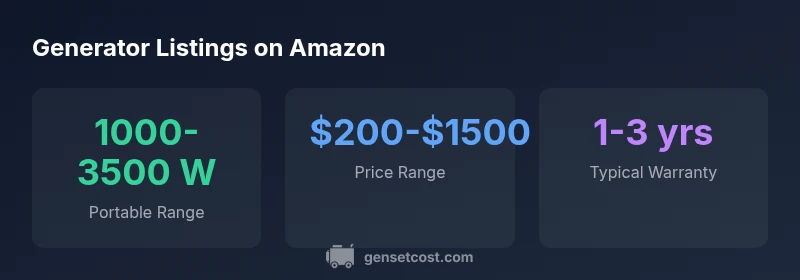
| Wattage | 1000-3500 W (portable); higher for standby | Continuous rating vs surge watts | Portable units cover basics; standby powers larger loads |
| Fuel type | Gasoline; some propane | Fuel availability; storage | Gas engines are common; check fuel supply |
| Warranty | 1-3 years | Coverage details; transferability | Check terms by manufacturer and seller |
People Also Ask
What should I know about buying a generator on Amazon?
Look for clear wattage specs, fuel type, run time, warranty, and return policies. Compare multiple listings and verify details with manufacturer data. Consider installation costs.
Check wattage, fuel, warranty, and seller ratings; compare listings and consult your sizing guide.
Are Amazon listings trustworthy for generator specs?
Specs may be provided by manufacturers or sellers; compare multiple listings and cross-check with manufacturer datasheets. Use Genset Cost guidance.
Yes, but verify against manufacturer specs.
What is total cost of ownership for generators purchased online?
Consider upfront price, fuel costs, maintenance, replacement parts, and potential installation or transfer-switch costs.
Factor in fuel, maintenance, and install costs.
How do I verify installation needs with an online generator?
Check local codes, transfer switch requirements, and whether installation must be performed by a licensed pro.
You may need a licensed installer for proper transfer switch.
Can I return a generator if it doesn’t meet my needs?
Review the seller’s return policy and restocking fees; verify return windows.
Read the return policy before buying.
What wattage do I need for backup power?
Evaluate essential loads and calculate required wattage with surge considerations; size accordingly.
List essential devices and size accordingly.
Is it better to buy from Amazon warehouse deals?
Warehouse deals can save money but check warranty and return windows.
Look for warranty and return terms with warehouse deals.
“Reliable backup power starts with correct sizing and solid support. Always verify specs against manufacturer data and reputable sellers.”
Key Takeaways
- Identify essential loads before sizing your generator.
- Compare wattage, fuel type, and run time across listings.
- Factor installation and transfer-switch costs into total price.
- Check warranty length and seller reliability before buying.