Generator Choose: A Side-by-Side Comparison for Home Backup Generators
An objective, in-depth comparison of home backup generator options, focusing on fuel types, sizing, installation, and long-term costs to help homeowners choose the best generator option.


Choosing a home backup generator comes down to fuel availability, load, and reliability. The generator choose decision is easiest when you evaluate your load, your fuel options, and your transfer-switch setup. If you have reliable natural gas or propane supply, a fixed standby unit often saves money over time; if you need portability or uncertain fuel access, gasoline remains a flexible option.
Understanding the Generator Choose Landscape
When homeowners begin the generator choose process, a structured approach matters more than an impulse buy. Start with your actual electrical load, including essential circuits you want powered during an outage. Then assess fuel access: do you have a natural gas line, LP gas infrastructure, or convenient access to gasoline? Finally, consider installation constraints: available space, noise concerns, and whether you prefer a portable unit or a permanently installed standby model. By framing the decision around load, fuel availability, and installation feasibility, you can narrow the field and reduce post-purchase regrets. This section explores how these dimensions influence the choice between gasoline, propane, and natural gas generators, and how to balance upfront costs with long-term value.
Key idea: The generator choose process is iterative. Revisit your load estimates after shortlisting models to ensure you don’t oversize or undersize.
Fuel Types: Gasoline, Propane, and Natural Gas
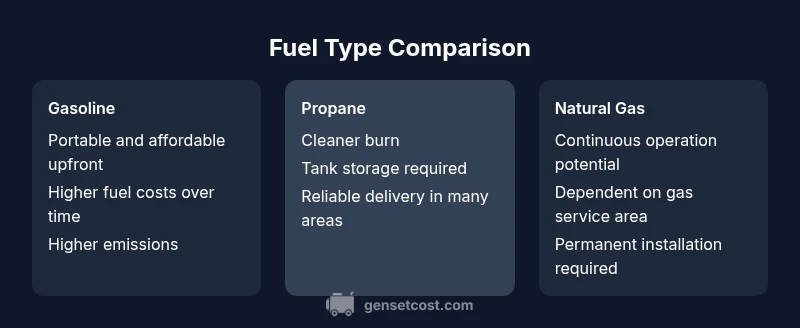
Fuel type is often the most consequential decision in the generator choose process. Gasoline generators tend to offer the lowest upfront cost and greatest portability, making them appealing for temporary or seasonal use. Propane (LP) generators provide a cleaner burn and easier storage for those who already maintain LP tanks, but they require space for tanks and supply logistics. Natural gas generators are usually tied to a home’s fixed gas line, offering convenience for continuous operation and longer runtimes without frequent refueling. Each fuel type carries tradeoffs related to availability, storage, emissions, and maintenance. When evaluating options, map your fuel access to your outage patterns and your property layout to identify the option that minimizes hassle while maximizing reliability.
Sizing: How to Determine Required Power
Sizing a generator correctly is foundational to the generator choose decision. Start by listing all essential loads you want during an outage: lights, refrigeration, heating or cooling controls, water services, and communications. Calculate peak wattage for each item and sum them to establish your minimum required capacity. Then apply a safety margin, typically 20–30%, to accommodate startup surges. Consider whether you want a whole-home solution with an automatic transfer switch or a smaller, targeted system for critical circuits. For many homes, a standby generator sized for essential circuits is enough to preserve safety and comfort without overpaying for unused capacity. Finally, confirm whether the chosen unit can be wired into your panel and whether supplemental transfer equipment is needed.
Installation Footprint and Transfer Switch Options
The installation footprint and transfer switch configuration are central to the generator choose decision, especially for permanent standby systems. Gasoline models are often portable and require minimal site work, but they may need a vented enclosure and constant refueling. Propane systems require storage space for tanks or a reliable supply line for bulk tanks, plus proper mounting and line safety. Natural gas installations usually involve permanent wiring, a service disconnect, a regulator, and a compatible automatic transfer switch (ATS). An ATS automatically starts the generator when grid power is interrupted and transfers the load to the generator. The installation cost and complexity increase with permanent setups, but the improved reliability and convenience are substantial advantages for homes with shutoffs or extended outages.
Operating Costs and Fuel Logistics
Fuel logistics drive long-term costs and affect the generator choose decision as much as any upfront price. Gasoline generators tend to have variable running costs tied to fuel price volatility and refueling needs, which can complicate budgeting for frequent outages. Propane offers more stable supply in many areas and cleaner combustion, but LPG storage and periodic tank refills add recurring logistics. Natural gas can provide the most stable operating costs where a reliable gas line exists, because it eliminates refueling during normal outages; however, service interruptions do occur if the utility experiences a wider failure. When comparing operating costs, look at fuel price history in your region, expected run times, and the maintenance needs associated with each fuel type.
Reliability, Maintenance, and Warranty Considerations
Reliability and maintenance are core to the generator choose process. Gasoline engines may require more frequent carburetor maintenance and fuel system cleaning, especially if gasoline sits in the tank for long periods. Propane engines burn cleaner and can require less maintenance, but valve adjustments and regulator checks are still important. Natural gas units benefit from consistent fuel supply but require careful inspection of gas lines and regulators, plus periodic transfer switch testing. Warranty terms often hinge on proper installation, regular maintenance, and the presence of a licensed technician for service. Evaluating the quality of after-sales support from local dealers and manufacturers can directly influence your long-term ownership costs and uptime during power outages.
Emissions and Indoor Air Quality Implications
Emissions considerations are not just about the environment; they affect indoor air quality and your family’s health. Gasoline units generally emit higher levels of pollutants and require proper ventilation or outdoors-only placement. Propane burns cleaner than gasoline and is a popular choice for enclosed spaces with proper housing. Natural gas tends to produce the lowest emissions among common home standby fuels when the unit is properly tuned and maintained. For homes with tight energy efficiency goals or sensitive occupants, propane or natural gas can offer meaningful advantages in emissions and air quality compliance.
Practical Scenarios: When to Pick Gasoline, Propane, or Natural Gas
For seasonal or pickup-use scenarios, gasoline generators shine thanks to portability and quick setup. If you already own LP equipment or regularly store LP for cooking or heating, a propane generator can be a natural extension that keeps running costs predictable. If your home already has a natural gas line and you want a permanent, low-maintenance standby system, a natural gas generator is often the most convenient choice. In multi-unit buildings or properties with frequent outages, a networked natural gas standby can reduce the risk of refueling interruptions and simplify maintenance scheduling. Your decision should align with your outage profile, available space, and maintenance tolerance.
Cost of Ownership: Long-Term Value and Total Cost
Total cost of ownership (TCO) includes upfront purchase price, installation, fuel, maintenance, and potential replacement costs. Gasoline systems typically have lower upfront costs but higher ongoing fuel expenses and refueling needs. Propane systems balance initial costs with cleaner operation and easier storage logistics; however, tank management adds recurring activity. Natural gas systems often have higher upfront installation costs but lower ongoing fuel expenses and convenient access for continuous operation. When evaluating TCO, consider not only the price tag but also the value of reliability, ease of maintenance, and the impact of fuel logistics on your daily life during an outage.
How to Compare Models: A Step-By-Step Checklist
A methodical checklist helps avoid impulsive buys. Step 1: determine your essential loads and the required generator size; Step 2: map fuel availability in your area plus storage constraints; Step 3: evaluate transfer switch compatibility and whether you need a whole-home ATS or a partial-load solution; Step 4: compare warranties, service networks, and maintenance requirements; Step 5: estimate total costs over 5–10 years, including fuel and replacement cycles. Finally, create a short list of 2–3 models per fuel type and test them in a side-by-side comparison using your checklist as the criterion.
Making the Decision: A Structured Process
To finalize your choice, use a structured decision framework. Assign weights to factors such as reliability, fuel accessibility, installation complexity, and long-term cost. Score each option against your weights, then consider the practicalities of your property and lifestyle. In many cases, the strongest choice blends your preferred fuel type with a safe, compliant installation and a service plan that minimizes downtime. Remember: the best generator choose is one that reliably powers your essential loads without creating ongoing headaches.
Implementation Checklist and Next Steps
Prepare a concrete action plan: confirm load requirements, verify fuel access, obtain permitting if needed, schedule installation with a licensed professional, and set up maintenance reminders. Test the system with a full-load simulation and document all settings for the ATS and transfer equipment. Keep fuel storage organized and within code requirements where applicable, and schedule annual inspections to maintain performance. A proactive approach reduces risk and improves confidence in your generator choose decision.
Feature Comparison
| Feature | Gasoline Generator | Propane Generator | Natural Gas Generator |
|---|---|---|---|
| Fuel Source | Gasoline | Propane (LP) | Natural Gas |
| Upfront Cost | Lower to moderate | Moderate to high (tank/regulator) | Higher (permanent hookup) |
| Installation & Space | Portable, flexible placement | Tank storage and lines required | Permanent installation with gas line |
| Fuel Availability | Widely available nationwide | Tank refills required; availability varies | Dependent on utility service area |
| Running Comfort | Refueling needed; variable runtime | Cleaner burn; predictable refills via LP system | Continuous operation possible when gas line is active |
| Maintenance | Carburetor and fuel stabilization require attention | Generally lower maintenance; regulator checks | Line pressure and regulator maintenance essential |
| Emissions | Higher emissions; outdoor placement typical | Cleaner burn; better for enclosed spaces | Lowest emissions when tuned and connected to gas line |
| Best For | Portable back-up, seasonal outages | Homes with LP infrastructure or storage needs | Homes with natural gas and permanent standby goals |
| Reliability in Outages | Depends on fuel availability and refueling cadence | Reliable with stable LP supply; less refueling | High reliability with steady gas supply |
The Good
- Lower upfront cost and portability for gasoline options
- Propane offers cleaner combustion and easier storage logistics
- Natural gas provides permanent standby potential with less refueling
- Automatic transfer switches improve reliability across all fuels
- Fuel availability in your region can align with your outage patterns
The Bad
- Gasoline can incur higher running costs and refueling needs
- Propane requires tank management and storage space
- Natural gas relies on utility service; outages can impact availability
- Permanent installations demand more upfront planning and permits
- Maintenance needs vary by fuel type and unit design
Natural gas with a permanent standby solution often offers the best long-term balance of reliability and ongoing costs.
Choose natural gas if you have reliable gas service and want continuous operation without refueling. Gasoline remains viable for portability or low upfront cost, while propane can suit homes with LP infrastructure and cleaner burn goals.
People Also Ask
What is the best fuel type for a home standby generator?
The best fuel type depends on your fuel access, outage duration, and budget. Natural gas is convenient for long outages if a service line exists, while propane and gasoline offer portability and lower upfront costs respectively. Consider reliability and maintenance when deciding.
The best fuel depends on your setup and needs. Natural gas is convenient if you have a line; propane and gasoline offer portability and lower upfront costs. Think about reliability and maintenance when deciding.
How do I size a generator for my home?
Start by listing essential loads and calculating their total wattage. Add a safety margin for startup surges and select a generator rated for at least that continuous load. Consider whether you want whole-home coverage or a targeted circuit approach and confirm panel compatibility.
List your essential loads, total their wattage, and add a safety margin for startup. Decide between whole-home or partial coverage and check panel compatibility.
Are natural gas generators more expensive to install than gasoline ones?
Natural gas installations typically involve higher upfront costs due to gas line work and permanent equipment, but can reduce ongoing fuel expenses. Gasoline units may have lower installation costs but higher refueling and maintenance costs over time.
Natural gas setups usually cost more upfront because of gas line work, but fuel costs can be lower over time. Gasoline is cheaper to start but costs more to run.
Can I convert a gasoline generator to propane?
Some generators can be configured for propane with a conversion kit, but not all models support it. Check the manufacturer’s guidance and consult a licensed technician to avoid voiding warranties or compromising safety.
Some units can be converted, but not all. Check the manufacturer and consult a technician to ensure safety and warranty validity.
What maintenance is needed for gas vs propane generators?
Gasoline engines typically require carburetor cleaning and fuel stabilization. Propane engines benefit from clean burning and fewer carburetor issues but still need regular checks. Natural gas units require line inspections, regulator checks, and ATS testing as part of routine maintenance.
Gas engines may need carburetor care and fuel stabilization; propane engines burn cleaner but still need checks; natural gas units require line and regulator maintenance.
What is the difference between a portable generator and a standby generator?
Portable generators are movable and cheaper upfront, suitable for temporary outages. Standby generators are permanently installed, offer automatic operation, and typically provide more seamless power during extended outages. Your decision should reflect how often you anticipate outages and the desired level of automation.
Portables are cheaper and portable; standbys are permanent with automatic operation. Pick based on outage frequency and desired automation.
Key Takeaways
- Assess your load first to anchor the generator size
- Know fuel access before selecting a fuel type
- Consider installation complexity and transfer-switch needs
- Evaluate total cost of ownership, not just upfront price
- Choose a fuel type that aligns with your outage patterns and lifestyle