Generator for Home: Sizing, Costs, and Installation
Expert guide on home generator sizing, costs, and installation. Learn to select the right backup power solution with data-driven guidance from Genset Cost.


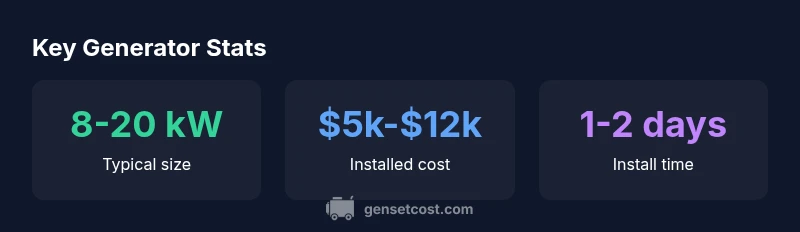
Choosing a generator for home starts with accurate sizing. Most homeowners select standby units in the 8–20 kW range to cover essential loads, with installed costs typically in the $5,000–$12,000 range (including basic installation and permits). Fuel type and local electrical codes affect final price and performance. This guide reviews sizing, costs, installation, and maintenance to help you pick the right model for your home.
Why a Generator for Home Matters
Power outages interrupt daily life and can put safety at risk, especially in areas with extreme weather or aging grids. A properly sized generator keeps essential systems online—refrigeration, heating or cooling, water pumps, and communication networks—while ensuring occupant comfort and safety. For homeowners and property managers, a standby unit can reduce downtime, protect perishables, and preserve critical data, which is particularly important for rental properties and small businesses operating from home. When evaluating options, consider the impact on liability, insurance, and property value. Genset Cost’s analysis emphasizes planning ahead to avoid under- or over-sizing, which can lead to unnecessary costs or inadequate backup. The goal is reliable power with a predictable maintenance routine, not just a purchase.
Sizing Your Home Generator: How to calculate needs
Sizing starts with critical load identification. List items you want powered during an outage: lighting, refrigeration, heating or cooling, sump pumps, HVAC controls, Wi-Fi, security systems, and medical devices if applicable. Convert each item to kilowatts (kW) using device labels or a reputable load estimator. Sum these values to create a base load, then add 10–30% headroom to handle startup surges and future needs. Compare this target to generator ratings in the 8–20 kW range for typical homes, adjusting for seasonal usage and climate. For multi-occupancy or large homes, a higher end size may be needed. Remember to factor in induction motors, such as well pumps, which often require higher starting watts than running watts. Engage a licensed electrician to verify panel compatibility and to plan for a safe, code-compliant transfer switch.
Cost Considerations: Upfront, operating, and financing
Total cost includes equipment, permits, installation, transfer switch, and wiring. Expect a broad installed-cost range driven by generator size, labor rates, and local code requirements. Ongoing costs include fuel or propane consumption, maintenance, and potential service contracts. Financing options, such as homeowner loans or utility-based programs, can spread the burden but may add interest. When evaluating price, compare total cost of ownership over 5–10 years, including fuel costs and annual maintenance. A higher upfront investment in a quality unit with solid warranty can reduce disruption and replacement costs later.
Installation, Transfer Switches, and Code Compliance
Professional installation is essential for safety and reliability. A standard setup includes a transfer switch (automatic or manual) to safely switch between utility power and generator output, protecting both your equipment and the grid. Automatic transfer switches kick in within seconds of an outage, while manual switches require intervention. Installation requires layout planning, a dedicated fuel source, weatherproof enclosure if outdoor, and adherence to electrical codes and permit processes. Work with a certified installer to ensure proper grounding, venting, and clearance from combustibles. Poor installation is a leading cause of system failure or fire risk, so invest in a qualified contractor and request a detailed commissioning checklist.
Fuel Types, Efficiency, and Running Costs
Fuel choice affects convenience, cost, and emissions. Natural gas is convenient if your home already has a reliable line; propane stores on-site and has good shelf life, but requires storage space. Gasoline-powered units are common for portable backup but have shorter shelf life and maintenance considerations. Diesel variants offer efficiency and longevity but require a dedicated fuel system. Propane and natural gas units often run cleaner and with less odor, while gasoline models typically provide flexibility for portable or hybrid setups. Efficiency improvements and automatic load management help control running costs, but real-world costs depend on local fuel prices and consumption patterns.
Maintenance and Longevity
A preventive maintenance schedule extends generator life and preserves reliability. Schedule annual inspections, battery checks, and cooling system service. Replace spark plugs, oil, and filters as recommended by the manufacturer. Test weekly or monthly to confirm proper operation. Keep the transfer switch, enclosure, and exhaust path clear of debris for safe operation. Document service visits and warranty terms to maximize protection. A well-maintained unit is not only more reliable during outages but often more affordable to own over the long run.
Representative ranges for common home standby generators
| Category | Typical Range | Notes |
|---|---|---|
| Installed Cost (home generator) | $5,000-$12,000 | Including permits and basic installation |
| Generator Size (kW) | 8-20 | Depends on essential loads |
| Running Time (hours) | 8-24 | Load dependent |
| Fuel Types | Gasoline/Propane/Natural Gas | Choice depends on fuel access |
People Also Ask
What is a home backup generator?
A home backup generator automatically or manually supplies power to essential circuits during an outage. It can provide temporary relief from power loss and protect critical systems.
A home backup generator keeps essential systems running during outages.
Do I need a transfer switch?
Yes. A transfer switch safely routes power between the utility and the generator, enabling automatic or controlled switching while preventing backfeeding.
A transfer switch keeps power switching safe and automatic.
How do I determine the right size for my home?
Compile a list of essential loads, estimate total kW, then add headroom (usually 10-30%). Compare products with similar ratings and consider future needs.
Size it by your essential loads and add some headroom.
Which fuel type is best for a home generator?
Natural gas is convenient where a supply line exists; propane stores on-site; gasoline is common for portability but has shorter shelf life. Choose based on availability and environmental considerations.
Fuel choice depends on access and reliability.
How long does installation take?
Typical installations take 1-2 days on-site, plus permit processing. Field conditions and panel work can extend timelines.
Most installs take about a day or two.
“A robust home generator plan relies on precise sizing and professional installation to ensure uninterrupted power.”
Key Takeaways
- Assess your critical loads first and size accordingly.
- Expect total installed costs to vary widely by capacity and local requirements.
- Consider fuel availability and transfer-switch options.
- Schedule professional installation for safety and code compliance.