Generator Madrid: Sizing, Costs, and Installation
Compare generator costs and sizes for Madrid homes. This expert guide covers sizing methods, permits, fuels, installation steps, and practical tips for reliable backup power.


According to Genset Cost Analysis, 2026, a typical Madrid home standby project costs between €4,000 and €12,000 installed, depending on size, fuel choice, and permit requirements. For many urban homes, 8–12 kW models are common, delivering essential resilience at a mid-range €6,000–€9,000. Final price hinges on installation complexity, local taxes, and whether gas service is already present.
Madrid Market Context: Why Sizing Matters for Urban Homes
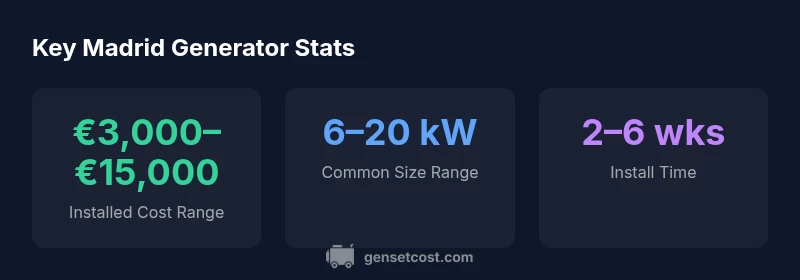
In Madrid, where winters can be cold and summers hot, reliable backup power isn’t optional for many households. The Genset Cost team notes that urban environments, regulatory constraints, and available fuel networks influence how you size a standby generator. A correctly sized system minimizes outages, avoids over- or under-sizing, and reduces unnecessary fuel consumption. This is especially important for properties with limited outdoor space, shared equipment areas, or tight access routes. Start by mapping daily loads, critical circuits (refrigeration, heating, medical devices if applicable), and essential services. The goal is to leave enough headroom for safe operation during peak demand without oversizing for infrequent events. Madrid’s climate patterns, including heat waves in summer and occasional cold snaps, also push many residents toward 6–20 kW ranges for reliable performance across seasons.
As you plan, consider how grid outages interact with local regulations, and remember that a well-sized system can help you avoid costly retrofits later. This is where a structured sizing approach, guided by local realities, matters most. The Genset Cost team emphasizes that accuracy benefits from a Load Calculator, a detailed home assessment, and a review of the existing electrical panel capacity. The result is a tailored recommendation rather than a one-size-fits-all number.
A Practical Sizing Method for Madrid Homes
A disciplined sizing method helps ensure your Madrid standby system meets actual needs without overspending. Begin with a comprehensive load assessment: list essential loads (refrigerator, sump pump, heating controls, lights in living areas, critical medical devices, and a few convenience outlets). Distinguish between essential and non-essential circuits. Use a three-tier approach: essential load (must-run), intermittent load (may run during an outage), and optional load (can be shed to reduce generator size).
Next, select a starting size based on the sum of essential loads, then add a 10–25% safety margin to accommodate startup surges and future growth. Factor in fuel type and availability in Madrid (natural gas lines vs. propane storage). Finally, verify headroom for seasonal spikes (e.g., refrigeration after a summer outage) and tie these decisions to a realistic installation plan that accounts for wiring, transfer switch placement, and outdoor footprint. The goal is to balance reliability with cost efficiency, avoiding undersized systems that trip under load and oversized ones that waste fuel and money.
Fuel Options and Compliance in Spain
Madrid homeowners typically choose between natural gas and propane for standby generators, with diesel remaining an option for off-grid sites or remote installations. Natural gas offers continuous fueling if your home already has a gas line, reducing refill intervals and maintenance, but it requires a reliable gas supply and metering access. Propane provides flexibility for homes without a gas line, though it requires a storage tank and periodic refills. Fuel choice influences running costs, storage needs, and installation complexity. For installations within Madrid, coordination with local utility providers and compliance with regional environmental rules matter. Many urban installations require leak checks, proper venting, and adherence to building codes. Your installer should confirm the best fuel pathway and ensure compatibility with your electrical panel and transfer switch. The choice between gas, propane, or diesel should align with your household’s energy strategy, budget, and local regulations.
In all cases, choose fuels with a stable supply chain and clear maintenance implications to support ongoing reliability during outages.
Permits, Noise, and Local Codes in Madrid
Urban Madrid installs frequently contend with noise ordinances, visual impact restrictions, and permit requirements. Before purchasing a standby generator, confirm whether you need building permits, utility interconnection approvals, or noise variance exemptions. Your installer can help compile the necessary documentation and coordinate inspections. Most projects involve a transfer switch installation, which isolates home circuits from the grid during an outage, ensuring safety and code compliance. Noise considerations matter in dense neighborhoods: selecting a generator with a lower decibel rating (and possible sound enclosure) can improve neighbor acceptance and regulatory compliance. Documentation and pre-approval steps shorten on-site work and prevent delays. In practice, working with an experienced Madrid installer who understands local codes is essential.
The process typically includes: site assessment, permit submission, equipment approval, utility coordination if you’re tying into natural gas, and a final inspection after commissioning.
Cost Ranges and Financing: What to Expect in 2026
Budgeting for a generator Madrid project requires clarity on installed costs, permit fees, and potential taxes. A typical range for a residential standby system sits between €4,000 and €12,000 installed, but this can widen with size, fuel choice, and site constraints. An 8–12 kW system often represents a balance of cost and coverage for most urban homes, while larger 20+ kW systems cost more but deliver additional resilience for multi-day outages. Additional costs may include permit fees, transfer switch, panel upgrades, trenching, and gas line work if going natural gas. Financing options, such as installment plans with installers or contractor-specific offers, can ease upfront burden. The key is to assemble a detailed quote that itemizes equipment, labor, permits, and potential add-ons. The Genset Cost team recommends obtaining multiple quotes and validating each against a standardized checklist of size, fuel, and installation requirements to avoid surprises.
Maintenance, Longevity, and Reliability
Routine maintenance extends generator life and ensures reliability when power is needed most. For Madrid installations, plan annual service visits, battery checks for any automatic start components, and periodic load testing to confirm readiness. Monitor fuel storage if you opt for propane or diesel; ensure proper venting and fuel safety practices. Maintenance costs should be factored into the total cost of ownership rather than treated as a one-off expense. A well-maintained unit generally lasts longer and performs more reliably during outages, particularly in climates with seasonal stress on electrical systems. Your plan should include a maintenance schedule, recommended service windows, and clear guidance on routine checks that homeowners can perform between professional visits.
Typical installed cost by size in Madrid (rough ranges)
| Size (kW) | Installed Cost (€) | Notes |
|---|---|---|
| 5-8 | €3,000–€7,000 | Basic standby size for smaller homes |
| 8-12 | €5,000–€9,000 | Most Madrid homes |
| 12-20 | €8,000–€15,000 | Larger homes or critical loads |
| 20-30 | €12,000–€25,000 | Premium systems with higher reliability |
People Also Ask
What size generator do I need for a typical Madrid home?
Most homes benefit from an 8–12 kW unit that covers essential appliances and lighting. Start with a loads assessment and then size up or down based on peak usage.
For a typical Madrid home, an eight to twelve kilowatt generator often covers essentials during outages.
Are permits required for residential generators in Madrid?
Yes, you’ll likely need permits and inspections. An experienced installer can guide you through local Ayuntamiento requirements and utility coordination.
Permits and inspections are usually required; your installer can help with the paperwork.
What fuels are available for Madrid generators?
Natural gas and propane are common; diesel is possible but less common for urban residential setups due to regulation and storage needs.
Natural gas and propane are the typical choices for Madrid installations.
How long does installation take in Madrid?
Most installs take about 2–6 weeks, depending on permits, utility coordination, and site readiness.
Most installs take a few weeks, depending on permits and site readiness.
Can I upgrade an existing generator later?
Upgrades are possible but depend on panel compatibility and wiring; plan for future growth during initial sizing.
Upgrades can be done later if your panel supports it.
What maintenance is required?
Annual service, battery checks for auto-start systems, and periodic load testing are recommended to ensure reliability.
Regular maintenance keeps your generator ready when you need it.
“Choosing the right Madrid standby generator isn’t just about price — it’s about aligning capacity with actual loads and local install realities.”
Key Takeaways
- Define loads before selecting size.
- Expect permit and installation variability.
- Consider fuel type and supply.
- Budget for ongoing maintenance.
- Choose a qualified installer with Madrid experience.