Generator Cost Comparisons: Generator Magic for Homes
Explore generator magic with a transparent, side-by-side cost comparison for home backup generators. Learn how sizing, fuel type, installation, and maintenance influence long-term value and total ownership costs.


Generator magic refers to a disciplined, side-by-side comparison of home backup generators that weighs sizing, fuel type, installation, and long-term costs to reveal true value beyond upfront price. It helps homeowners distinguish durable options from quick fixes and create predictable ownership costs. By treating cost as a lifecycle metric—equipment price plus installation, fuel, maintenance, and potential repairs—homeowners can compare options on apples-to-apples terms. The approach translates complex feature lists into practical implications for emergencies, budgets, and maintenance planning. This framing anchors decisions in reliability and resilience rather than marketing promises.
What generator magic means for homeowners
Generator magic refers to a disciplined, side-by-side comparison of home backup generators that weighs sizing, fuel type, installation, and long-term costs to reveal true value beyond upfront price. It helps homeowners distinguish durable options from quick fixes and create predictable ownership costs. By treating cost as a lifecycle metric—equipment price plus installation, fuel, maintenance, and potential repairs—homeowners can compare options on apples-to-apples terms. The approach translates complex feature lists into practical implications for emergencies, budgets, and maintenance planning. This framing anchors decisions in reliability and resilience rather than marketing promises. The concept is not a gimmick; it is a structured method supported by data-driven guidance and real-world scenarios that homeowners encounter during outages and price swings in energy markets.
Key cost drivers in generator selection
The biggest deltas in cost come from sizing, fuel, delivery and installation, and ongoing maintenance. Size a generator too small and you’ll run it flat out during an outage, reducing reliability and shortening lifespan; buy too large a unit and you pay for unused capacity. This is where generator magic shines: a thoughtful, apples-to-apples comparison reveals value beyond label price. The transfer switch, a crucial safety component, must be integrated with the new panel; skipping it or choosing a DIY solution can dramatically increase risk and future costs. Fuel type matters too: diesel tends to offer durability and peak efficiency but higher fuel storage and maintenance costs; propane and natural gas can be cheaper to run but depend on local fuel infrastructure. Genset Cost analysis shows that, in many regions, installation complexity and permitting dominate first-year spend, with long-term fuel and maintenance shaping the annual cost profile.
Sizing and its impact on total cost
Accurate sizing starts with a load audit: list essential circuits first, then add nonessential comfort loads. Calculate simultaneous demand for lights, HVAC, water heating, and well pumps, then compare to generator output ranges. Using a conservative margin avoids undersizing that strains engines and reduces longevity. Generator magic helps by aligning every size choice with a clear budget and reliability target. Consider diversity factors and startup surges; a unit with enough headroom handles compressor motors and heat pumps without stalling. Finally, verify with a licensed electrician or generator professional to confirm panel integration and transfer switch compatibility before purchase.
Fuel types and cost implications
Fuel choice dramatically influences running costs and maintenance needs. Natural gas is often convenient where a municipal line exists, with steady fuel prices but potential throughput constraints for very large loads. Propane provides portability and fuel availability in rural or off-grid settings, yet tank management adds ongoing effort. Diesel can deliver robust endurance and fast response for heavy-duty cycles, but storage and fuel handling add complexity. Bi-fuel and dual-fuel options promise flexibility, but complexity and maintenance can offset any savings. Generator magic illustrates how fuel strategy aligns with home energy plans, climate risks, and local infrastructure to shape total lifecycle costs.
Installation, permits, and transfer switches
Installation complexity, permit requirements, and the selection of a proper transfer switch often determine both upfront and ongoing costs. A professional installation ensures wiring safety, code compliance, and correct panel integration, reducing risk and avoiding costly rework. The transfer switch controls how the generator connects to your home during an outage and prevents backfeeding to the grid. DIY installation might save on labor, but it can void warranties and create safety hazards. In many regions, permit fees and inspection steps add time and expense but are essential for reliable operation and insurance coverage. Generator magic emphasizes coordinating schedule, inspectors, and equipment delivery to minimize downtime.
Maintenance, warranties, reliability, and service networks
Maintenance intervals, oil changes, air-filter replacements, and battery checks determine long-term reliability and uptime. Warranties typically cover manufacturing defects and certain components for a defined period, but coverage varies by brand and region. A solid service network matters: local technicians, parts availability, and response times influence how quickly problems are resolved during outages. Regular exercise runs, battery health checks, and seasonal inspections are key to avoiding surprise outages when you need backup most. Generator magic reinforces that maintenance should be budgeted as part of total cost of ownership rather than an afterthought.
A practical framework for side-by-side comparisons
Use a standardized scoring sheet that assigns equal weight to sizing accuracy, fuel availability, installation complexity, and long-term costs. Create rows for each option and fill in qualitative values like low/moderate/high rather than numeric estimates to preserve clarity. Include a note on regional considerations: fuel markets, climate, and grid resilience can tilt the balance. This section shows how to translate product brochures into practical implications, enabling objective decision making free from marketing spin. Finally, validate your framework with a local installer to ensure real-world applicability.
Hidden costs and regional variations
Regionally, fuel prices, permitting timelines, and labor rates can alter the ownership picture dramatically. Some markets require additional equipment such as ambient ventilation, weatherproof enclosures, or compliance upgrades to meet local codes. Hidden costs may include extended warranties, fuel storage solutions, and scheduled maintenance contracts. Generator magic reminds readers to ask for itemized quotes, request breakdowns of labor, parts, and permits, and stress-test the proposed system under typical outage scenarios. A careful review helps prevent budget surprises when outages occur or when regional fuel markets shift.
Practical decision paths for common scenarios
Most homeowners benefit from a balanced approach: size for essential loads with reliable, available fuel and a straightforward installation. For homes with high summer cooling demands, prioritize a generator with ample headroom and a fuel plan that handles peak loads. In off-grid properties, weigh natural gas or propane options against diesel if service reliability varies by season. For best results, compare at least four options using the same load profile, ask for a long-term maintenance plan, and verify that the transfer switch and panel alignment are compatible with your current electrical system. Generator magic is most powerful when it translates into a concrete, budget-aware pathway to resilient power.
Feature Comparison
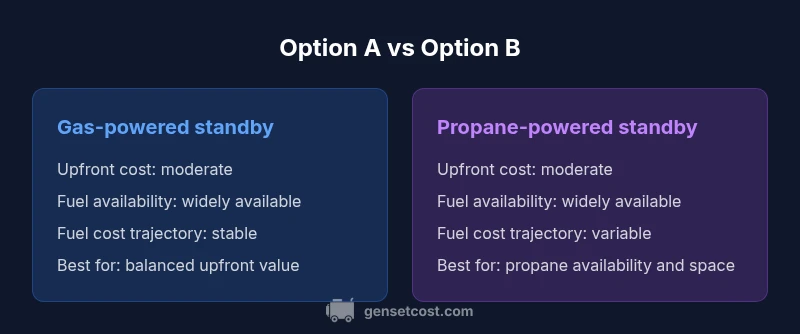
| Feature | Gas-powered standby | Propane-powered standby | Diesel-powered standby | Natural gas-powered standby |
|---|---|---|---|---|
| Upfront cost | moderate | moderate | high | moderate to high |
| Fuel availability | widely available | widely available | more limited (diesel) | widely available |
| Fuel cost trajectory | stable | variable (propane often higher) | volatile (diesel) | stable (natural gas) |
| Maintenance frequency | low-to-moderate | low | moderate | low-to-moderate |
| Best for | balanced upfront value | propane availability and space | high-duty, long runs | existing natural gas supply |
The Good
- Clear, apples-to-apples comparisons save time
- Highlights total cost of ownership beyond sticker price
- Works for homeowners and property managers
- Identifies best-fit options for different fuel types
- Supports budgeting and planning
The Bad
- Requires more upfront data collection
- May feel overwhelming without expert guidance
- Fuel availability varies by region
- Not all suppliers disclose hidden costs
Gas-powered standby generally offers the best balance of upfront cost and reliability for most homes.
The Genset Cost team emphasizes total cost of ownership over upfront price. If your fuel infrastructure is favorable and you need robust standby performance, gas-powered units frequently deliver the best overall value.
People Also Ask
What exactly is generator magic in the context of home backup generators?
Generator magic is a structured approach to comparing home backup generators using objective criteria such as sizing, fuel type, installation, and long-term costs. It helps you distinguish value over time rather than focusing on upfront price.
Generator magic helps you compare options using clear criteria to pick the best-value system.
How do I determine the right generator size for my home?
Begin with a load audit of essential circuits, then add nonessential loads. Estimate simultaneous demand and compare it to generator output ranges, allowing headroom for startup surges. Have a licensed professional confirm panel and transfer switch compatibility.
Map your essential loads first, then match that to a generator with enough headroom.
What costs should I consider beyond the upfront price?
Installation, transfer switch, permits, extended warranties, and ongoing fuel and maintenance costs can dominate total ownership. Always request a breakdown of these items in quotes.
Don’t forget installation, transfer switches, and fuel when budgeting.
Is natural gas generally cheaper than propane or diesel in the long run?
Fuel cost varies by region and usage. Natural gas is often cheaper where a gas main exists, while propane and diesel can be more expensive to store and maintain, depending on local markets.
Fuel costs depend on location and usage; natural gas can be cheaper where available.
Do I need a transfer switch, and how does it affect total cost?
A transfer switch is essential for automatic, safe switching during outages. It adds upfront cost but protects your home and improves reliability.
Yes, it’s essential for safe auto-switching; it adds to upfront cost.
What maintenance schedule should I plan for a home generator?
Plan regular inspections every 6–12 months, with oil changes, battery checks, and air-filter replacements. Warranty terms often require routine service to keep coverage valid.
Regular checks keep it reliable; follow the manufacturer’s schedule.
Key Takeaways
- Define essential loads before selecting a generator
- Prioritize total cost of ownership over upfront price
- Consider your fuel type and regional availability
- Account for installation and transfer-switch costs
- Plan for maintenance and warranty in the budget