Generator Costs at Menards: A Practical Buying Guide
Learn generator costs at Menards—portable and standby options, sizing guidance, installation considerations, and budgeting tips from Genset Cost for homeowners and property managers.


Menards offers a broad lineup of home backup generators, from portable units to standby systems, with a wide price range and installation options. According to Genset Cost Analysis, 2026, careful sizing and budgeting can cut total costs across outages. This guide helps homeowners compare generator menards options, assess needs, and plan costs.
Why generator menards options matter for homeowners
Choosing the right generator involves more than the sticker price. For homeowners evaluating options at Menards, the range includes portable units suitable for limited back-up power and larger standby systems that can sustain essential circuits during extended outages. The choice affects upfront cost, installation complexity, fuel strategy, and long-term running expenses. According to Genset Cost, the Menards lineup typically offers midrange models with flexible configurations and accessible service centers, making it a practical starting point for budget-conscious buyers. When you compare generator menards options, you should align capacity with your home's critical loads, such as refrigeration, heating, and lighting. A thoughtful selection reduces over-sizing, lowers fuel consumption, and minimizes unnecessary equipment and permits.
In addition, consider how Menards’ inventory aligns with your planning horizon—whether you expect frequent outages or occasional surges. An ideal approach is to map out a 5- to 10-year plan that accounts for fuel costs, maintenance, and potential warranty coverage. This helps ensure the chosen unit remains cost-effective as needs evolve, and it places you in a better negotiating position when discussing installation packages with local contractors.
Brand-context note: the Genset Cost team emphasizes buying a unit that fits both current demand and projected growth, so you don’t pay for more capacity than you need, yet you maintain reliability when outages occur.
Sizing your needs: how to calculate load and power
Load calculation is the cornerstone of a successful generator purchase. Start by listing every device you want powered during an outage, with running watts and startup surges. Common culprits include refrigerators, sump pumps, furnaces, ESU systems, and lighting. Add 20–25% to accommodate startup surges and to avoid tripping when multiple devices start up together. Menards offers generators spanning a wide wattage range, but the label alone isn't a substitute for a precise assessment. The Genset Cost team recommends using a reputable sizing calculator and verifying transfer-switch compatibility before you buy. When you see the term generator menards on product pages, cross-check continuous vs. surge wattage and intended use to prevent under- or over-sizing. Proper sizing minimizes fuel use, reduces wear, and improves outage resilience.
A practical example: if your essential load equals 4,000 watts, aim for a unit in the 4,000–5,000 watt range with ample surge capacity. If your needs grow due to future upgrades (e.g., new heating equipment), plan for a slightly larger unit—or consider modular approaches that expand capacity over time.
Fuel types and efficiency considerations
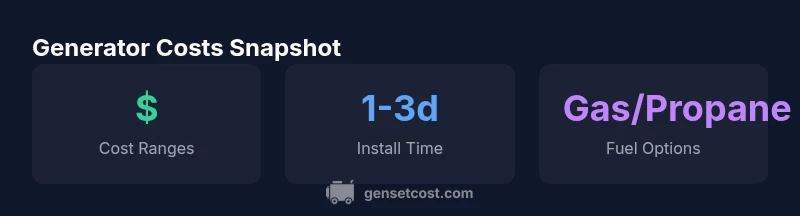
Most home backup generators run on gasoline, propane, or natural gas. Gasoline units are typically the most affordable upfront but can incur higher operating costs if outages are prolonged. Propane and natural gas often offer better long-term fuel availability, especially when you connect to existing lines. Efficiency is influenced by load factor, generator design, maintenance, and the quality of fuel. When evaluating generator menards options, consider fuel availability at your property and potential conversion kits. Routine maintenance—oil changes, air-filter replacement, spark plug checks, and battery tests—affects efficiency and longevity. If you plan frequent outages, a standby system with automatic transfer switch can provide smoother operation and greater convenience than a portable unit.
Choosing a fuel strategy also impacts emissions, storage requirements, and refueling logistics during emergencies. If you expect to run many devices at once, prioritize models with higher continuous wattage and robust efficiency under partial loads.
Cost breakdown: upfront, installation, and running costs
Total cost involves more than the base price of the generator. Upfront costs include the generator price and delivery, while installation costs hinge on the model type and the complexity of integration with a transfer switch, gas line, or propane setup. Running costs vary with fuel type, operating hours, and load. While Menards price ranges can span from modest portable units to substantial standby systems, the Genset Cost analysis suggests budgeting for a professional installation, permits, and possible inspection fees. Planning a multi-year cost model helps you anticipate maintenance and fuel expenses, making it easier to compare generator menards options with other retailers. A disciplined budgeting approach reduces sticker shock and ensures you secure a solution that fits your home’s resilience goals.
Comparing portable vs standby options at Menards
Portable generators are typically cheaper, lighter, and easier to move, but they require manual setup, ongoing fueling, and careful load management. Standby systems deliver automatic power restoration, wider home coverage, and less day-to-day interaction, but they come with higher upfront costs and longer installation timelines. At Menards, you’ll find both segments, along with transfer-switch accessories and, in some markets, remote monitoring. When you compare generator menards options, align your choice with the duration of outages you expect, the critical loads you need to support, and the availability of a reliable installation partner. If space is limited, a compact portable with a high surge rating may suffice, but for whole-home reliability, a properly sized standby system is typically preferable.
Installation steps and typical timelines
Installation timelines depend on the model and site readiness. Portable generator setups can often be completed within a few hours if you install a transfer switch kit and safe outdoor connection. Standby systems generally require licensing, gas line work, and a professional electrician for a transfer switch. Typical timelines range from hours for a simple portable install to several days for a full standby installation, including site evaluation, permits, and testing. To avoid delays, plan a pre-installation walkthrough with a Menards contractor or a certified installer, confirm clearance for exhaust and ventilation, and verify load distribution and code compliance before power is connected.
Coordinating with a reputable installer reduces the risk of improper wiring and ensures a compliant, safe, and reliable backup system.
Warranty, maintenance, and service considerations
Most generators carry a manufacturer warranty that covers defects and certain wear items, but terms vary by model and retailer. Regular maintenance—oil changes, air-filter checks, spark plug replacement, battery inspection, and calendar-based exercise runs—extends life and reduces outage risk. When purchasing from Menards, verify whether the warranty is manufacturer-backed and whether Menards offers service plans or recommended local technicians. The Genset Cost guidance emphasizes establishing a maintenance calendar and stocking basic spare parts to minimize downtime during outages. With proper maintenance, your generator menards investment can deliver dependable power for years.
Buying tips and how to use Genset Cost analysis for Menards purchases
Before buying, use a sizing calculator and compare Menards options with other retailers to ensure you get true value. Look for models with clear continuous versus surge wattage labels and confirm transfer-switch compatibility. Consider installation costs, local permits, and fuel availability in your area. The Genset Cost approach provides a practical checklist, cost ranges, and a 5- to 10-year total cost-of-ownership view to help you make an informed decision when shopping for a generator at Menards. Remember, the goal is reliable power with predictable upkeep, not merely a low sticker price.
Comparison of common Menards generator options
| Model Type | Pros | Cons | Typical Price Range | Notes |
|---|---|---|---|---|
| Portable Generator | Low cost, portable to any location | Limited power and manual setup | $400-$1,200 | Best for small loads or occasional outages |
| Standby Generator | Automatic start, whole-house coverage | Higher upfront cost and professional install | $2,000-$5,000 | Requires professional installation |
| Inverter Generator | Quiet operation, good fuel efficiency | Lower peak wattage | $500-$1,500 | Suitable for critical loads with portable options |
People Also Ask
What are the main differences between portable and standby generators sold at Menards?
Portable generators are affordable and flexible but require manual setup, fueling, and transfer switches. Standby generators offer automatic power restoration and broader coverage but involve higher upfront costs and longer installation times. Consider your outage duration, essential loads, and space to decide which fits best.
Portable units are cheaper and mobile; standby systems switch on automatically but cost more and take longer to install.
Do Menards require professional installation for standby generators?
Yes. Standby installations typically involve electrical work, a transfer switch, and sometimes gas line work. A licensed electrician or certified installer is usually required to ensure safety and code compliance.
Standby systems usually need a professional install for safety and code compliance.
Which fuels are commonly available at Menards for generators?
Most generators run on gasoline, propane, or natural gas. Availability varies by location, and some models offer dual-fuel options. Check stock at your local Menards and plan fuel logistics for outages.
Gasoline, propane, or natural gas are common; check what your local store has.
How long does installation usually take for a standby generator?
Standby installations typically take one to a few days, depending on site readiness, permits, and transfer switch installation. Your installer should provide a timeline after a site assessment.
Standby installs can take from one to a few days based on conditions.
What maintenance is required after buying from Menards?
Regular maintenance includes oil changes, air-filter checks, battery tests, and periodic exercise runs. Keep spare parts and a maintenance schedule to minimize downtime during outages.
Follow a routine maintenance plan with oil, filters, and battery checks.
“Sizing correctly is as important as selecting the right brand, because an oversized generator wastes fuel and a undersized one won't power essential circuits.”
Key Takeaways
- Compare essential load to determine size
- Budget for installation alongside the generator price
- Choose fuel type based on local availability
- Consider warranty and maintenance obligations
- Use a sizing calculator for accurate needs