Generator Pros and Cons: A Homeowner's Guide to Backup Power
Explore the generator pros and cons for home backup power. Compare standby vs portable options, costs, reliability, and install considerations to choose the right solution.


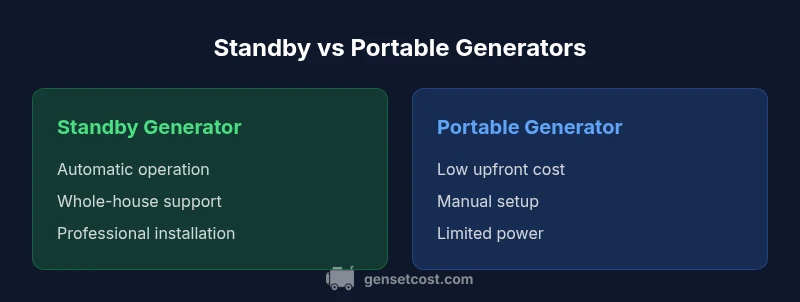
When homeowners weigh generator pros and cons, the core choice is between automatic standby systems that connect to your home and portable units that require manual setup. This comparison highlights reliability, cost, installation, and usage trade-offs to guide your decision. According to Genset Cost, understanding these factors early helps align expectations with long-term maintenance and fuel planning.
The core trade-offs in generator pros and cons
When homeowners weigh generator pros and cons, the most consequential decision is whether to invest in a standby generator that connects to the home's electrical system and starts automatically during an outage, or to rely on a portable generator that must be started manually and plugged into extension cords. This choice shapes not only outage resilience but also upfront expenditure, ongoing fuel costs, and the complexity of maintenance. The generator pros and cons you consider should include reliability during power outages, daily convenience, space requirements, noise and emissions, and the long-term cost of ownership. In practice, most households prioritize uninterrupted power for essential circuits and critical devices, but the path to reliable power varies with property size, climate, and tolerance for manual steps. According to Genset Cost, understanding these factors early can prevent misaligned expectations and costly reconfigurations later. For many, the generator pros and cons come down to how much convenience you are willing to trade for resilience and simplicity.
It also matters who will operate the unit. A busy homeowner might prefer automatic standby operation, whereas a smaller property facing occasional outages could manage with a portable unit. Finally, consider long-term value: a system that meets your current load and provides room to grow can reduce future upgrade pressure. The goal is to balance risk, cost, and ease of use to create a practical backup plan.
Related concepts and terms to know include transfer switches, load prioritization, fuel availability, and local permitting requirements. These factors influence both the perceived and actual generator pros and cons over the system’s lifetime.
Comparison
| Feature | Standby Generator | Portable Generator |
|---|---|---|
| Upfront Cost | Higher upfront cost due to equipment and professional installation | Lower upfront cost and easier to begin using right away |
| Reliability & Convenience | Automatic operation; seamless restoration of power with transfer switch | Manual startup and cord-based connections; less convenient during outages |
| Power Output & Coverage | Designed to support whole-house loads or critical circuits continuously | Typically better for temporary or select-critical loads with limited duration |
| Installation & Space | Requires dedicated space, weatherproof enclosure, and electrical permits | Portable footprint; can be stored when not in use but requires safe setup each outage |
| Fuel Type & Availability | Often natural gas or propane; constant fuel supply improves readiness | Gasoline-based; fuel storage and refueling management required |
| Noise & Emissions | Can be optimized for steady operation but generally louder in operation | Usually quieter when properly loaded, but emissions depend on fuel type |
| Maintenance & Lifespan | Integrated systems with professional service; longer lifespan with proper maintenance | Lower upfront maintenance but more manual upkeep; shorter lifespan if pushed hard |
| Best For | Homes needing automatic, continuous power with minimal user intervention | Owners needing flexible, portable power for short outages or remote worksites |
The Good
- Provides resilient, automated power during outages; reduces manual steps during emergencies
- Can increase home value and insurance acceptance by ensuring continuous operation
- Supports critical loads with dedicated transfer switches and predictable performance
- Over time, many households save money by avoiding costly outage damages and spoiled perishables
The Bad
- Higher upfront and installation costs compared with portable options
- Ongoing fuel, maintenance, and professional service can add to long-term expenses
- Space and permitting requirements may complicate installation
- Noise, exhaust, and energy consumption can be a concern in densely populated areas
Standby generators typically win on reliability, convenience, and long-term resilience; portable generators win on upfront cost and flexibility
Choose standby if uninterrupted power for essential loads matters most and you can accommodate installation. Opt for portable if you need lower upfront costs and occasional, flexible use, understanding it demands manual operation and fuel management.
People Also Ask
What is the main difference between standby and portable generators?
Standby generators integrate with your home’s electrical system and start automatically during outages, providing a seamless power supply for critical loads. Portable generators require manual start and connection via extension cords and transfer methods. The choice hinges on desired convenience, budget, and installation feasibility.
Standby generators start automatically during outages, while portable units require manual setup.
Are standby generators more reliable than portable ones?
In most cases, standby generators offering automatic transfer switches provide greater reliability for essential circuits. Portable units depend on manual operation and fuel management, which can introduce delays during outages.
Standby units are generally more reliable for critical loads due to automatic operation.
What should I consider before buying generator pros and cons?
Consider your peak load, whether you need automatic restoration, available installation space, fuel options, and local code or permitting requirements. Also estimate the long-term running and maintenance costs to understand the total cost of ownership.
Think about load, reliability needs, space, and cost of ownership.
How do fuel types impact running costs?
Gasoline generators are typically cheaper upfront but burn fuel quickly and require frequent refueling. Propane and natural gas offer price stability and easier storage but may require different appliance choices. Diesel can be durable but often louder and more complex.
Fuel choice affects cost, availability, and emissions.
What maintenance do generators require?
Regular oil changes, filter replacements, battery checks, and seasonal exercise runs help maintain performance. Standby systems often require professional service at intervals, while portable units rely more on user-managed upkeep.
Regular maintenance keeps performance high and extends lifespan.
Can I install a generator myself?
Standby systems with automatic transfer switches typically require a licensed electrician and permits. Portable generators can be used without professional installation but must be set up safely with proper cords and loads.
Most installations need a licensed professional due to electrical codes.
Key Takeaways
- Assess your load to decide standby vs portable.
- Plan for installation space, permitting, and transfer switches.
- Factor fuel type and availability into long-term costs.
- Include routine maintenance in your budget for longevity.
- Test systems regularly to ensure readiness and safety.