How Much Does It Cost to Install a Generac 22kW Generator? A Practical 2026 Guide
Learn the total installed cost to add a Generac 22kW standby generator, including unit price, installation, permits, fuel considerations, and financing options. Plan with clear ranges and factors from Genset Cost.


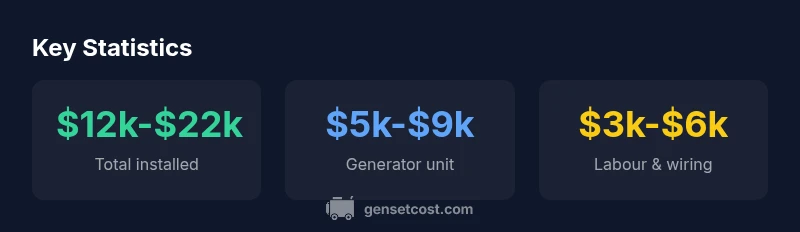
Installing a Generac 22kW standby generator typically costs between $12,000 and $22,000, including unit price, automatic transfer switch, permits, and basic site work. Total cost varies with fuel type (natural gas vs propane), service panel upgrades, gas line length, and trenching needs. Financing options and utility rebates may affect out-of-pocket costs.
Why a Generac 22kW fits many homes
A Generac 22kW standby generator is a popular choice for single-family homes and small multi-unit properties because it can automatically restore power to essential circuits during an outage. For homeowners evaluating costs, this size offers a balance of capability and install complexity. The 22kW model can support essentials like heating, cooling, well pumps, refrigerators, and lighting for typical mid-sized homes, depending on panel configuration and load management. In 2026, the Genset Cost team notes that the decision often hinges on whether you want auto-start after outages, your gas fuel source, and how much of your service panel you plan to back up. Understanding these needs helps anchor the cost discussion and ensures you’re comparing apples to apples when you price units, permits, and installation components.
What factors influence installation cost for a 22kW Generac
- Generator price: The upfront unit cost varies by model and features (auto-start, load management, noise attenuation).
- Automatic transfer switch (ATS) and accessories: A high-quality ATS is essential for seamless power transfer and can affect total cost.
- Service panel upgrades: Homes with older or smaller service panels may require upgrades to handle the load, increasing both parts and labor costs.
- Electrical wiring and labor: Distance from the main panel, existing conduit, and local labor rates influence price.
- Gas line upgrades: If your home uses natural gas, longer or heavier-gauge lines may be needed, which adds cost.
- Permits, inspections, and warranty considerations: Local requirements can add time and fees; always account for permitting costs.
- Site access and installation complexity: Tight spaces, rugged terrain, or distance from utilities can raise labor costs.
From a planning perspective, you should expect interdependent costs: a bigger unit or more complex site work tends to raise the overall price, while straightforward installs with a clean gas line and panel ready for load can keep costs toward the lower end of the range.
Typical cost breakdown and scenarios
- Standard residential (22kW unit, basic install): $12,000 - $18,000. This covers a mid-range unit, standard ATS, basic wiring, and typical permitting.
- Moderate upgrade (service panel upgrade or space constraints): $15,000 - $25,000. Here the panel is upgraded or relocated, improving reliability but adding labor and material costs.
- Complex install (gas line, long run, difficult access): $20,000 - $30,000. This includes longer gas runs, trenching, and potentially more extensive electrical work.
Note: These ranges reflect site variation and are based on typical project scopes in 2026. Actual bids vary by region, contractor, and the specifics of your home.
Financing options and cost-saving strategies
- Financing and leasing programs: Many installers offer financing or rental-like options to spread upfront costs. Check with installers and Generac-certified dealers for current offers.
- Manufacturer incentives and utility rebates: Depending on location, you may qualify for credits or rebates tied to backup power installations or energy resilience programs.
- Negotiating bids and package deals: Obtain multiple bids and ask about bundled pricing for equipment, installation, and extended warranty.
- Maintenance plans: Some vendors include discounted or bundled maintenance that can improve long-term ownership cost predictability.
To maximize value, compare quotes not just on price but on included services, warranty terms, and the depth of site assessment. A thorough quote should spell out unit cost, ATS, labor, permits, gas work, and any contingency allowances.
Installation timeline and process
- Pre-install assessment (1–2 days): A licensed technician visits to evaluate your panel, gas line, and site access. They confirm load requirements and safety clearances.
- Permitting and scheduling (1–3 weeks): Depending on local rules, permits may be required before any work begins. Scheduling accounts for gas company coordination and utility approvals.
- Installation day(s) (1–3 days): The generator, ATS, and transfer circuits are installed. Gas lines are connected or upgraded, and the main panel is configured for back-up loads.
- Commissioning and testing (half to full day): System tests confirm automatic start, transfer reliability, and proper gas pressure. Training on basic operation is common.
- Final walk-through and documentation (half day): You receive warranty details, maintenance schedules, and documentation for future service.
Overall, plan for 1–2 weeks from assessment to commissioning, depending on permitting and site complexity.
How to compare bids and choose a contractor
- Check licensing and insurance: Verify proper licensing and liability coverage. Ask for references and previous install photos.
- Insist on site-specific bids: Each quote should reflect your home’s gas source, panel, and layout, not a generic estimate.
- Review scope in detail: Ensure bids include generator price, ATS, electrical work, gas piping, permits, and startup testing.
- Compare warranties and service plans: Longer coverage and clear maintenance terms add long-term value.
- Request a system design and load calculation: A credible bid includes a load analysis to confirm the 22kW sizing meets your needs.
By aligning bids to a consistent scope, you can avoid surprises and choose a contractor who prioritizes safety, code compliance, and long-term reliability.
Cost ranges by installation scenario for Generac 22kW installs
| Scenario | Installed Cost Range | Typical Installation Time | Notes |
|---|---|---|---|
| Standard Residential (22kW unit, basic install) | $12,000 - $18,000 | 2-3 days | Average single-family home with adequate service |
| Moderate upgrade (service panel upgrade) | $15,000 - $25,000 | 3-5 days | For homes with older panels or limited space |
| Complex install (gas line, long run, difficult access) | $20,000 - $30,000 | 5-7 days | Higher labor and materials cost |
People Also Ask
What factors influence the cost to install a Generac 22kW?
Multiple variables affect total cost, including generator pricing, ATS, panel upgrades, gas line work, permits, and site access. The more comprehensive the site assessment, the more accurate the bid—reducing the chance of unexpected charges during installation.
The cost depends on unit price, the transfer switch, gas line work, permits, and site access. A thorough bid covers all these elements for an accurate total.
Do I need a panel upgrade for a 22kW system?
Often yes. A 22kW system draws significant current, which may exceed your existing panel’s capacity. An upgrade or relocation can be required to safely support the backup load.
Most likely you’ll need a panel upgrade or reconfiguration to accommodate the 22kW backup load.
Is natural gas or propane cheaper for operation and installation?
Natural gas is typically more convenient for residential backup power if available, with stable fuel supply. Propane can be cheaper to install if gas lines aren’t feasible, but fuel cost and storage considerations impact long-term operating costs.
Natural gas is usually easier if you already have a gas line; propane can be cheaper to install but may cost more to run.
How long does a typical installation take?
Most installations take 2–5 days, depending on site complexity, permits, and gas line work. Scheduling can extend if inspections are delayed.
Expect a couple of days on-site, plus time for permits and inspections.
Are financing options available to ease upfront costs?
Yes. Many installers offer financing or leasing, and some manufacturers provide programs. Explore options with multiple dealers to find favorable terms.
Financing and leasing are commonly available through installers and manufacturers.
What maintenance should I plan for after installation?
Schedule annual professional service, battery checks, and oil changes as recommended by Generac and your installer. Routine maintenance helps ensure reliable operation during outages.
Annual service and regular checks keep the generator ready when you need it.
“A thorough site assessment and correct gas sizing are the two most critical factors in a reliable Generac 22kW installation.”
Key Takeaways
- Plan for a broad cost range: $12k–$22k installed is typical.
- Fuel choice and panel readiness drive bids and timelines.
- Get multiple bids with consistent scopes to compare fairly.
- Ask about permits, gas work, and warranty terms upfront.