How Much Generator Costs in 2026: A Homeowner Guide
Learn realistic price ranges for home backup generators, installation, and long-term operating costs. This guide helps homeowners estimate total costs, compare fuel types, and plan for permits and upgrades.


The typical total price for a home standby generator (installed) ranges from about $4,000 to $12,000 for smaller to mid-size units, with larger systems and complex installs pushing costs toward $15,000 or more. Portable options are often cheaper upfront but require separate transfer switches and installation expenses. Total cost depends on size, fuel type, location, and labor.
Why the question of cost is more nuanced than the sticker price
When homeowners ask, "how much generator does this cost?" they’re really asking about total ownership. The answer depends on four major factors: generator size (measured in kW), fuel type, installation complexity, and ongoing running costs. A 3-5 kW unit can power essential circuits but may require upgrades or a transfer switch to run whole-house loads, while larger 14-20 kW systems can cover high-demand homes but come with bigger price tags. Beyond the generator itself, permits, trenching, fuel lines, and electrical labor add to the bottom line. The Genset Cost team emphasizes calculating total cost over five to ten years to capture operating costs and maintenance, which can represent a meaningful portion of lifetime expenses.
The keyword here is scale: the phrase how much generator should be interpreted in context of your home’s load profile and backup priorities. A smaller unit with propane might cost less upfront, but if loads are underestimated, you’ll face additional upgrades later. Conversely, a larger natural gas system can offer comfort and reliability but demands a higher initial investment. A careful balance between upfront price and long-term value is essential.
Cost by size and fuel type: a practical map
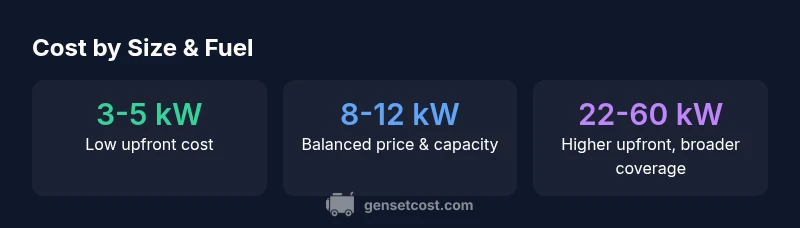
Generator pricing skews toward size and fuel options. In practice, you’ll encounter three broad bands: small/essential-load units (roughly 3-5 kW), mid-range whole-house capable units (8-12 kW), and larger whole-house systems (14-20+ kW). Fuel choice also shifts price dynamics: natural gas and propane systems tend to offer lower fuel costs and easier fuel availability in many regions, while diesel systems can be pricier and heavier but deliver certain durability advantages. It’s common for natural gas or propane installations to sit in the mid-range cost band, whereas diesel or dual-fuel systems can push costs higher due to fuel storage and durability features. For homeowners near a city or with a cramped outdoor footprint, installation complexity (including permits and trenching) can become the deciding cost factor. In short: expect a price ladder where larger kW and premium fuels raise the total, while compact, fuel-flexible kits help keep the upfront price closer to the lower end.
If you’re shopping, use a sizing calculator to map loads to proposed generator sizes and compare apples to apples across brands and installers.
Installation and upgrade costs: why permits, switches, and labor matter
The generator price you see in ads rarely includes the full picture. Installation costs cover transfer switches, automatic start logic, wiring, and possibly a new panel or a sub-panel upgrade. Permits and inspections mandated by local authorities add to the cost and can require coordinating with utility providers if you’ll back-feed into the grid. Additionally, some homes need concrete pads, fuel storage solutions, or weatherproof enclosures, all of which drive the total upward. Labor rates vary by region and contractor experience, so two quotes for the same unit can differ significantly. When budgeting, prepare for 10–25% more than the quoted equipment price to cover installation, permits, and potential contingencies. For homeowners who plan ahead, these costs can be forecasted with a professional estimate and a detailed scope of work.
Estimating needs with a sizing calculator: turning how much generator into exact figures
A sizing calculator is a practical tool for translating your living space and essential circuits into a target kW range. Start by listing critical loads (refrigeration, heating, sump pumps, lights, and communication systems). Estimate running watts for each device and then apply diversity factors to avoid over-sizing. Input your climate considerations and standby needs (e.g., 2- or 3-stage cooling). The calculator will output a recommended generator size and a rough installed cost range. Use this as a baseline for bidding and ensure quotes include transfer switches, permit fees, and a basic warranty. Remember to verify that the chosen unit can automatically start during a power outage and that the fuel supply meets expected demand during longer outages.
Financing, incentives, and maintenance: long-term value matters
Beyond upfront price, consider financing options, tax incentives, and maintenance plans. Some regions offer tax credits or utility rebates for standby systems, which can offset initial costs. Maintenance plans ensure the generator stays ready and can extend service life, reducing the risk of unexpected failures during outages. When evaluating options, compare the total cost of ownership over a 10-year horizon rather than focusing only on the first-year price. A more expensive unit with lower running costs and longer service intervals can yield a better overall value. The Genset Cost team recommends asking installers for a maintenance schedule, recommended fuel type, and a realistic estimate of expected outages in your area to further refine total cost predictions.
Real-world scenarios: translating numbers into decisions
Consider a small home in a moderate climate with a few key appliances. A 5 kW natural gas unit installed with a basic transfer switch might fall in the lower-cost range, with a total price near the mid-range. A large family home in a region with frequent outages and a high load (air conditioning, well pump, electric water heater) could require a 14–20 kW system, pushing total costs into the upper range. In urban settings, limited outdoor space may push installers to use compact enclosures or indoor-rated configurations, which can affect both price and installation complexity. By comparing quotes, evaluating fuel options, and planning for maintenance, homeowners can identify the most cost-effective path that still delivers reliable backup power.
Final planning checklist: steps before you buy
- Define essential versus optional loads to set a target size.
- Get at least three detailed quotes that include installation, permits, and a transfer switch.
- Confirm fuel availability and storage requirements for your chosen option.
- Verify warranties, service coverage, and maintenance costs.
- Use financing options and incentives to lower the effective price.
- Plan for installation logistics and possible permitting timelines to avoid delays.
Sample installed-cost ranges by size and fuel type
| Size (kW) | Estimated Installed Cost Range | Fuel Type | Typical Annual Running Cost Range |
|---|---|---|---|
| 3-5 | $3,000–$7,500 | Natural gas/Propane | $100–$200 |
| 8-12 | $5,000–$9,000 | Natural gas/Propane | $150–$250 |
| 14-20 | $7,000–$12,000 | Natural gas/Propane | $180–$350 |
| 22-60 | $12,000–$25,000 | Natural gas | $250–$500 |
People Also Ask
What factors most influence generator cost?
Size, fuel type, installation complexity, labor, and permitting are the primary drivers. High-demand homes or premium fuels raise upfront and ongoing costs, while compact setups with standard labor keep costs lower.
The main costs are size, fuel type, and installation complexity.
Is it cheaper to buy a standby generator or a portable one?
Portable generators are cheaper upfront but require separate transfer switches and manual operation. Standby generators are more expensive initially but offer automatic start and seamless power during outages. Consider your load and climate when choosing.
Standby units cost more upfront but are automatic; portable units cost less but need manual setup.
Do permits affect total cost?
Yes. Permits, inspections, and potential zoning restrictions add to the total. Local codes may require professional electrical work and safe exhaust routing, increasing the price and project duration.
Permits can add to both cost and timeline.
What is a realistic payback period for a home generator?
Payback varies by outages frequency, energy costs, and fuel type. In many cases, homeowners see a payback ranging from several years to over a decade, depending on usage and incentives.
Payback depends on outages and fuel costs; it varies by scenario.
What maintenance costs should I budget for?
Annual maintenance typically covers regular tests, oil changes, and parts inspection. Budget for fuel quality, battery checks, and occasional professional servicing to keep the generator reliable.
Expect regular maintenance and occasional service visits.
“Choosing the right generator isn't just about upfront cost; it's about matching backup power needs to risk, reliability, and long-term operating costs.”
Key Takeaways
- Budget for installation and permits, not just the unit
- Size to load, not just home square footage
- Fuel choice impacts running costs and availability
- Obtain multiple, detailed bids for accurate comparisons
- Plan for total cost of ownership over 10 years