How to Generate in Ghibli: A Genset Cost Guide to Generator Sizing & Costs
A comprehensive step-by-step guide to sizing home backup generators, estimating installed costs, and evaluating running costs using the Genset Cost framework for 2026.


This guide shows you how to generate a reliable home backup generator plan using the Genset Cost framework. You’ll learn how to size a genset, estimate installed costs, compare fuel types, and project running expenses. By the end, you’ll have a practical, repeatable process you can use for any property.
How to generate in ghibli: practical goal
At its core, how to generate in ghibli means turning a vague desire for reliable power into a repeatable, auditable plan. For homeowners and property managers, the objective is to balance upfront generator cost with long-run running costs, while meeting safety and code requirements. This guide, built on the Genset Cost framework, walks you through the steps to capture loads, size appropriately, and compare options. We reference Genset Cost Analysis, 2026 to anchor practical expectations, and we emphasize using actual data rather than guesswork. By approaching the project with a defined goal, you reduce waste, delay, and the risk of undersizing or oversizing.
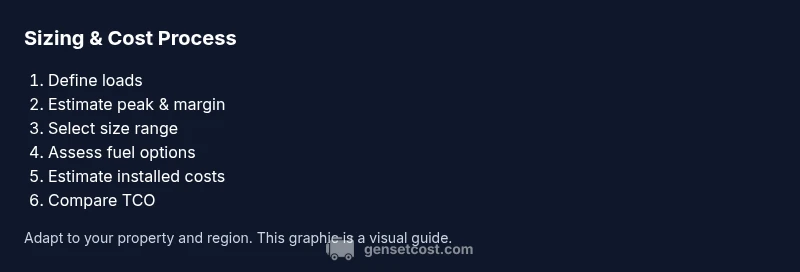
In practical terms, the central question is: how to generate in ghibli while ensuring reliability and affordability? The answer lies in a structured process: document loads, select a size range, compare fuel options, and validate estimates with transparent costing. The Genset Cost team emphasizes that this approach helps homeowners and property managers avoid common pitfalls like over-spending upfront or under-providing during a power outage.
The wording of this guidance intentionally aligns with real-world decisions you’ll face when planning a backup power system. You’ll be compiling data, making reasoned choices, and defending those choices with a clear calculation trail. As you proceed, keep in mind that your goal is a plan you can audit in 2026 and beyond, not a one-off guess. This mindset is what makes the concept of how to generate in ghibli practical and repeatable.
Tools & Materials
- Electrical load data (kW/kVA)(Document all circuits, appliances, HVAC, water heater, and critical loads.)
- Load calculation tool (spreadsheet or online calculator)(Use a reputable calculator to estimate peak and continuous loads.)
- Local fuel cost estimates(Gather current fuel prices for gas, propane, diesel, or natural gas in your area.)
- Installed cost estimator template(Template to estimate equipment, installation, permits, and wiring.)
Steps
Estimated time: 60-90 minutes
- 1
Gather load data
Collect all major loads: HVAC, water heater, kitchen appliances, lighting, and critical circuits. Include both running and startup surges to avoid undersizing. Record typical daily and peak usage using your utility bills or a home energy monitor.
Tip: Use a dedicated load logger for accuracy over a full backup cycle. - 2
Calculate peak and continuous load
Convert all loads to kilowatts, identify continuous duty devices, and apply a safety margin (e.g., 20-25%). This gives you a realistic minimum generator rating.
Tip: Remember to factor startup surges for motors like compressors and sump pumps. - 3
Select a generator size range
Choose a size range that covers peak load plus margin, then compare with common commercially available sizes. This helps you balance upfront cost and future needs.
Tip: Avoid guessing; use manufacturer sizing charts to confirm ratings. - 4
Evaluate fuel options and costs
Assess natural gas, propane, diesel, or bi-fuel configurations. Consider fuel availability, delivery reliability, and long-term running costs.
Tip: Urban areas often favor natural gas for continuous availability. - 5
Estimate installed costs
Include generator, transfer switch, wiring, permits, and labor. Allow for contingencies and potential permitting delays.
Tip: Request itemized quotes from at least two licensed installers. - 6
Compare total cost of ownership
Beyond upfront price, compare fuel costs, maintenance, warranty, and expected lifespan. Use a simple TCO model to visualize trade-offs.
Tip: Factor replacement intervals and service plans into your decisions. - 7
Account for permits and warranties
Check local codes for transfer switches and exhaust venting. Ensure the warranty covers installation and labor.
Tip: Non-compliant installs can void warranties and insurance coverage. - 8
Create a final plan and budget
Document all assumptions, fuel choice, and size, with a clear budget range. Include contingencies for future expansion.
Tip: Keep a living document for updates as loads or prices change.
People Also Ask
What is the first step to determine generator size?
Start with a complete load assessment: list all major loads, then determine peak wattage and a safety margin. This foundations sizing decisions and informs the rest of the process.
Begin with the full load list and peak watts to size correctly.
What is the difference between kW and kVA?
kW measures real power; kVA measures apparent power. Use a power factor (often 0.8) to convert between them when comparing generators.
Know the difference and apply a 0.8 power factor when converting.
How do I estimate installed costs?
Think about the generator, transfer switch, wiring, permits, and labor. Get at least two quotes and ask for itemized line items to compare.
Obtain multiple quotes with itemized costs.
Can I run a generator indoors?
No. Generators must be installed outdoors or in ventilated enclosures to avoid carbon monoxide hazards.
Never run a generator indoors.
Which fuel type is cheapest?
Fuel costs vary by region. Natural gas is often economical where available, while propane and diesel have regional price differences.
Fuel costs differ by region; check local prices.
Is oversizing a generator a good idea?
Oversizing wastes upfront cost and can reduce efficiency. Size appropriately for current and near-future needs.
Only size as needed, not excessively larger.
Watch Video
Key Takeaways
- Size to peak load plus a safety margin.
- Include all critical circuits and future expansion.
- Consider installed costs and long-run fuel costs.
- Use a formal calculator to document calculations.
- Plan around permits, warranties, and maintenance.