How to Make Money with a Generator: A Practical Guide
Learn practical, compliant ways to monetize a generator for homeowners and managers—rental, standby contracts, and service income—with budgeting tips and risk.


According to Genset Cost, you can monetize a generator through practical, compliant strategies that suit homeowners and property managers. This guide outlines rental options, standby contracts, and service income, plus budgeting, risk considerations, and a clear, step-by-step path to profitability. You’ll learn how to assess demand, pricing ranges, and necessary permits to start quickly and scale safely.
Why monetizing a generator makes sense for homeowners and property managers
If you're wondering how to make money with a generator, the answer is often more practical than dramatic: turn a fixed asset into recurring value. According to Genset Cost, a well-positioned generator can support profitable side income or offset ownership costs without requiring constant demand spikes or complex marketing. In 2026, many households and rental properties face outages, demand for temporary power at construction sites, and emergencies that make standby power a trusted service. By pairing reliable equipment with transparent pricing and solid service terms, you create predictable revenue streams while providing essential resilience to your customers. Start with a clear mission: do you want seasonal income, year-round standby support, or a hybrid model that combines both? The key is to align your offerings with local codes, safety standards, and insurance requirements so you can scale with confidence. This section lays the groundwork by outlining the core value proposition and the boundaries of legitimate monetization.
Market opportunities and demand drivers
Opportunity for generator monetization varies by season, geography, and customer type. The most consistent demand comes from homeowners who want backup power during outages, property managers who require reliable standby capacity for multifamily buildings, and small business owners who need temporary power for events or construction. Genset Cost analysis shows that when outages or storms are common, demand spikes even if you price responsibly. In addition to outages, consider service-based revenue like scheduled maintenance, remote monitoring, and annual or semi-annual inspections that keep the generator in top shape. Regional programs, insurance incentives, and local rental markets can influence pricing and contract terms, so your plan should reflect your locality. Forecasting demand involves surveying neighbors, reading outage histories, and researching local event calendars. The goal is to create a flexible model that scales from a single unit to a small fleet over time.
Monetization options: rental, standby contracts, and maintenance income
There are three core pathways to monetizing a generator. Rental offers flexible terms for homes, construction sites, or events and can be short-term or long-term. Standby contracts provide guaranteed uptime with service-level agreements that reassure customers and stabilise revenue. Maintenance income comes from bundled services like regular inspections, oil and filter changes, and battery checks. Each option benefits from clear terms, prompt communication, and reliable equipment to minimize downtime and maximize customer trust. A hybrid approach—combining rental with maintenance plans—often yields the most durable income stream while spreading risk across different customer segments.
Compliance, permits, and financing considerations
Operating for profit with a generator requires attention to safety, permit compliance, and insurance. Start by checking local building codes, NFPA 110/37 standards, and any utility interconnection rules in your area. Maintain up-to-date insurance that covers property, liability, and tenant-related incidents; this protects you and your customers. Financing options include using your own capital, leasing equipment, or partnering with suppliers for consignment units. Keeping detailed records of inspections, fuel storage compliance, and maintenance history helps you stay audit-ready and trustworthy in the eyes of clients and regulators.
Pricing models and contract basics
Pricing models typically combine base rental rates with service add-ons such as delivery, setup, remote monitoring, and maintenance. Consider tiered offerings (basic standby vs. full-service maintenance) and time-based pricing (daily, weekly, monthly) to accommodate different customer needs. Contracts should spell out uptime guarantees, response times for service calls, fuel responsibilities, and cancellation policies. Transparent terms reduce disputes and improve repeat business. Always document terms in writing and provide a clear point of contact for customers.
Step-by-step path to profitability
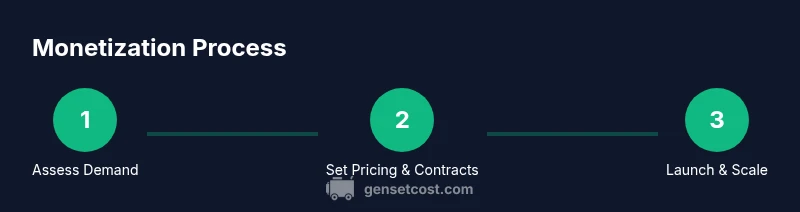
This roadmap helps you move from concept to recurring income. First, define your monetization goals and target customers. Next, validate demand and confirm local permit requirements. Then, source units or partner with suppliers, and design service packages with scalable pricing. Launch with a limited set of offerings, gather customer feedback, and refine your contracts. Finally, scale gradually by adding maintenance services and expanding to neighboring properties or additional fleets. This progression supports sustainable growth and reduces upfront risk.
Tools & Materials
- Generator owner’s manual(Keep for maintenance schedules and safety protocols)
- Basic repair and maintenance toolkit(Screwdrivers, wrenches, pliers, multimeter)
- Rental agreement templates(Draft and customize per client; include liability terms)
- Insurance documentation(Proof of liability and equipment coverage)
- Safety gear(Gloves, safety glasses, fire extinguisher)
- Fuel storage plan(Approved containers, spill containment, ventilation)
Steps
Estimated time: 4-6 weeks
- 1
Define monetization goals
Identify which revenue paths you’ll pursue (rental, standby contracts, or maintenance). Clarify target clients (homeowners, property managers, or construction teams) and expected monthly income. Document a simple business plan to guide decisions.
Tip: Write a one-page goals sheet and revisit it monthly to stay aligned with market changes. - 2
Validate demand and compliance
Survey neighbors and potential clients to gauge interest. Check permits, insurance requirements, and any local licensing needed to operate a generator-for-hire. Confirm that your plan fits safety standards.
Tip: Create a short survey and carry proof of insurance when meeting prospective clients. - 3
Source equipment and partners
Decide whether to own units or lease from suppliers. If partnering, set clear terms on delivery, setup, and maintenance responsibilities. Ensure units are sized for common loads in your target market.
Tip: Favor a reserve unit for emergencies to avoid service gaps during peak demand. - 4
Design service packages and pricing
Create tiered offerings (basic standby, enhanced maintenance, full-service bundles). Include delivery, setup, monitoring, and maintenance add-ons. Benchmark against local market to set competitive rates.
Tip: Offer introductory discounts for first-time clients to build trust and collect testimonials. - 5
Launch marketing and contracts
Publish clear service terms and pricing on a simple website or flyer. Use a straightforward rental agreement and SLA. Prepare a response plan for outages to demonstrate reliability.
Tip: Use community bulletin boards and local business networks for initial outreach. - 6
Monitor, adjust, and scale
Track utilization, maintenance costs, and customer feedback. Add more units or services as demand grows and seasonality shifts. Revisit pricing quarterly to reflect costs and demand.
Tip: Keep maintenance logs and customer testimonials to support growth.
People Also Ask
Is it legal to rent out my generator?
Legal rental depends on local regulations, permits, and insurance. Check with your city or county and ensure your contracts and equipment meet safety standards.
Yes, but you must comply with local rules and have appropriate insurance and safety measures.
What permits do I need to monetize a generator?
Permits vary by location; contact the city or county authority to confirm requirements. Often you’ll need basic business licensing and safety compliance documentation.
Permits vary by area; confirm local licensing and safety compliance before starting.
How should I price generator rentals?
Base pricing on duration, delivery and setup costs, insurance, and demand. Start with a market check and adjust after the first few contracts.
Price based on time, delivery, and service, then adjust as you learn demand.
What maintenance is required to earn income?
Schedule regular inspections, oil changes, filter replacements, battery checks, and fuel system checks. Document all maintenance for client confidence and liability protection.
Regular maintenance is essential to reliability and client trust.
What risks should I consider?
Liability, safety, fuel storage, and regulatory changes. Mitigate with proper insurance, clear contracts, and documented safety protocols.
Be aware of safety and legal risks; have solid insurance and contracts.
How long does it take to start generating income?
Time to income depends on demand, setup speed, and marketing. A phased approach usually yields results within a few weeks to months.
It depends on demand and setup; expect a ramp that grows with effort.
Watch Video
Key Takeaways
- Define clear monetization goals before launching.
- Validate demand and comply with local codes.
- Offer transparent, tiered pricing and contracts.
- Maintain equipment to ensure reliability and trust.
- Scale gradually with feedback and data.