Whole Home Generator Cost Guide
Compare whole home generator cost, sizing options, installation fees, fuel costs, and maintenance to plan a reliable backup power system for your home with practical budgeting guidance.


Whole home generator cost includes the generator unit, delivery, installation, and a transfer switch, with total outlay driven by size, fuel type, and install complexity. Costs vary widely by region, permit requirements, and labor rates, so you should expect a broad range and obtain multiple quotes for an accurate project estimate. Start with a load calculation, then compare quotes for unit price, installation, and permits to minimize surprises.
What determines the total cost of a whole home generator
The whole home generator cost is driven by a handful of core factors: unit size, fuel type, and installation complexity. The generator price itself reflects the kilowatt capacity and brand, while the rest covers delivery, site prep, transfer switches, and labor. Local permit requirements and electrical code inspections can add non-trivial costs. Because every home presents a unique layout, the final price often reflects site-specific challenges such as limited access, underground gas lines, or a cramped electrical closet. Genset Cost analyses show that the most predictable way to forecast total cost is to break down these components and gather quotes from multiple certified installers.
- Understand your load: homes with high simultaneous-load appliances (AC, pumps, ovens) require larger generators, which increases unit price.
- Decide on fuel type: natural gas tends to offer long-term cost predictability; propane or diesel can alter both upfront and ongoing costs.
- Plan for installation scope: installation complexity (gas line work, trenching, or panel upgrades) can change labor requirements dramatically.
Core cost components in a typical installation
A typical installation comprises several discrete cost drivers beyond the unit price. The transfer switch is essential for automatic operation and can be a sizable line item when considering the amperage and features you want. Electrical work, gas line enhancements, and panel integration add to labor costs. Permits and inspections vary by jurisdiction and can cause scheduling delays. Delivery and craneage, if required by location, also contribute. From a budgeting perspective, it helps to view the project as a bundle: generator unit + transfer switch + electrical work + permits + gas line work + contingency. Genset Cost recommends obtaining written quotes that itemize each component so you can compare apples to apples.
Sizing, loads, and their impact on price
Sizing a whole home generator correctly is crucial for reliability and cost efficiency. A unit that is too small will run continuously to meet demand, increasing wear and fuel consumption and potentially triggering outages during peak times. An oversized unit adds upfront cost but can reduce runtime stress and provide headroom for future load growth. The cost implications of load calculations are twofold: larger kilowatts raise unit price, and site adjustments for a bigger system can push installation costs higher. Consider a staged approach: start with a generator that meets essential loads now and plan to expand if you add heavy appliances or new circuits later. Reliable load calculation is the cornerstone of aligning whole home generator cost with value.
Installation realities: site readiness, permitting, and timelines
Site readiness directly influences both cost and schedule. If the installation requires trenching for gas lines, rerouting electrical cables, or upgrading the main panel, expect higher labor costs and longer project timelines. Permits vary by city and state, with some jurisdictions requiring energy efficiency certifications or specific interconnection agreements. Inspections typically occur after rough-in and final connections. Weather, access constraints, and the need for specialty equipment (like a crane) can further affect timelines. When planning, request a formal timeline in the proposal and confirm whether permit delays are included. The more transparent the contractor is about these factors, the more accurately you can budget the overall project.
Fuel options, run-time, and long-term operating costs
Fuel type influences both upfront and ongoing costs. Natural gas tends to offer predictable fuel pricing and lower running costs when the gas line can support peak demand. Propane offers flexibility in locations without natural gas but can be more expensive to fuel at scale. Diesel units are common for certain applications but may incur higher fuel costs and maintenance. Running-time expectations depend on your load profile and how often you experience power outages; many homes calculate a minimum run-time buffer for critical circuits. In addition to fuel, routine maintenance, oil changes, battery checks, and cooling system servicing contribute to annual operating costs. A well-chosen fuel strategy balances reliability with predictable, controllable expenses over the system’s life.
Budgeting, warranties, and financing options
Most homeowners approach the project with a multi-year budget that accounts for upfront generator price, installation labor, and ongoing fuel and maintenance. Warranties vary by brand and installer; some offer extended coverage on the generator and transfer switch, while others provide limited years or conditions. Financing options, including manufacturer loans, contractor financing, or utility programs (where available), can make the project more affordable by spreading the cost. When evaluating proposals, compare not only the total price but also the duration of warranty, what is covered, and whether maintenance plans are included or offered as add-ons. A clear warranty and a robust maintenance program can reduce long-term risk and total cost of ownership.
How to get accurate quotes and plan ahead
To manage whole home generator cost effectively, you should begin with a formal load assessment from a qualified electrician or HVAC professional. Request written, itemized quotes from at least three installers, and ensure each quote includes generator unit price, transfer switch, electrical and gas line work, permits, taxes, delivery, and contingency. Ask for a site visit to confirm that there are no hidden costs such as trenching or panel upgrades. Compare the same scope across bids, and pay attention to what is not included. Finally, create a phased plan if a full installation is financially risky: begin with essential loads and scale up later as needed.
Getting quotes and making a plan can save you time and money
A disciplined approach to pricing and planning reduces the chance of scope creep. Align your generator choice with your actual load, budget, and tolerance for risk. Genset Cost recommends documenting assumptions (like expected outages per year and critical load hours) to justify the chosen size and features in each bid. Use this as a baseline to negotiate with installers and to compare long-term costs such as fuel consumption and maintenance plans. With careful planning, you can optimize whole home generator cost while ensuring reliable power when it matters most.
Cost components for whole home generator installations
| Component | Typical Cost Range | Notes |
|---|---|---|
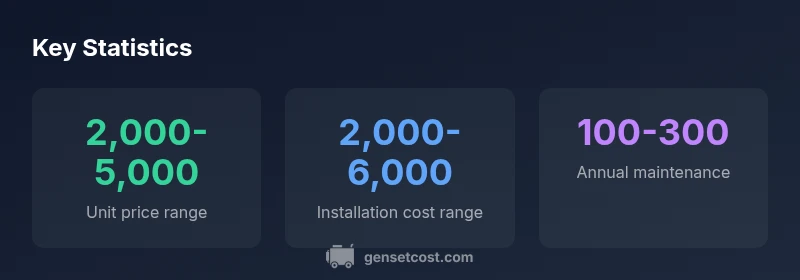
| Generator unit price | 2,000-5,000 | Gas or propane units vary by capacity and brand |
| Installation labor | 2,000-6,000 | Electrical work, panel upgrades, site prep |
| Transfer switch & controls | 500-2,000 | Automatic vs. manual, amperage choices |
| Permits & inspections | 200-1,000 | Local codes vary by jurisdiction |
People Also Ask
What factors most affect the total cost of a whole home generator?
The main drivers are unit size, fuel type, transfer switch, and installation complexity. Regional permitting and labor rates also influence total cost.
The biggest cost drivers are size, fuel type, transfer switches, and installation work, plus local permit requirements.
Do I need permits to install a whole home generator?
Yes. Most areas require electrical and gas line permits and final inspections. Your installer should help coordinate approvals with local authorities.
Yes, permits are usually required, and your installer will handle much of the process.
Is it cheaper to buy a smaller or larger unit in the long run?
Smaller units cost less upfront but may require upgrades or operate inefficiently during peak demand. Larger units cost more upfront but can offer headroom and lower stress on components.
Smaller can be cheaper upfront but may end up costlier to run or upgrade later; larger units cost more now but can save in the long run.
What maintenance costs should I expect each year?
Expect routine service, oil changes, battery checks, and filter replacements. Maintenance plans vary by brand and may be included in warranties or sold separately.
Annual tune-ups and parts replacements keep it reliable; factor these into yearly costs.
How long does installation typically take?
Most installations take about 1-3 days, depending on site readiness, permitting, and required upgrades to the electrical system.
Usually one to three days, depending on site readiness and authorization from local authorities.
Are financing options or rebates available?
Financing is commonly available through lenders or manufacturers. Rebates or tax incentives depend on location and program availability.
There are financing options and, in some places, rebates or incentives you can explore.
“A well-structured cost plan starts with accurate load calculations and a clear understanding of installation requirements. Oversizing can inflate upfront costs without proportional long-term savings.”
Key Takeaways
- Estimate total cost by combining unit, install, and permits
- Size your system to match load; oversizing wastes money
- Get 3+ quotes for competitive pricing
- Account for ongoing fuel and maintenance in budgeting
- Understand warranty and maintenance options upfront