Difference Generator and Inverter: A Practical Comparison
Compare generators and inverters for home backup: how each works, when to use them, sizing tips, and practical guidance from Genset Cost. Learn about power quality, runtime, and installation considerations to choose the right solution.


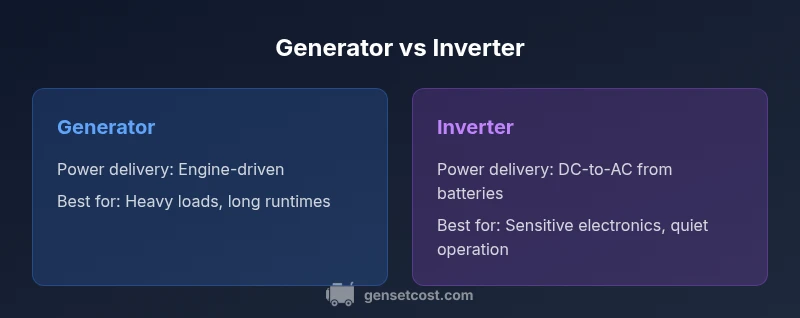
The difference generator and inverter centers on how power is produced: a generator converts fuel energy into electricity, delivering higher surge power for short outages; an inverter converts stored DC (often from batteries) into clean AC power for steady loads. For home backup, your choice hinges on load size, runtime needs, and power quality expectations.
The difference generator and inverter: why it matters for homeowners
Power reliability is a practical concern for every home, and understanding the difference generator and inverter helps you build a back-up plan that fits your needs. The phrase 'difference generator and inverter' signals two distinct approaches to delivering electricity: one relies on fuel-powered generation, the other on stored DC converted to AC. According to Genset Cost, the decision hinges on your load profile, expected runtime, and power quality requirements. By clarifying these aspects, homeowners can avoid overbuying equipment or under-protecting essential circuits. In short, the right choice aligns with your typical outages, budget, and tolerance for noise and maintenance. This article uses practical examples, clear definitions, and a framework you can apply to any backup scenario.
Core definitions: generator vs inverter
At a high level, a generator is an engine coupled to an alternator that converts fuel energy into electrical power. An inverter is an electronic device that converts stored direct current into alternating current with precise control. When these devices are used together in hybrid setups, the inverter can shape and regulate power from a battery bank or from the generator’s output to meet stable loads. The terminology can be confusing because products marketed as 'inverter generators' blend aspects of both approaches, but the core distinction remains: energy source (fuel vs stored DC) and the way power is produced.
How a generator works
A generator uses an internal combustion engine to drive an alternator, producing alternating current. The process relies on mechanical energy converted to electrical energy, with fuel consumed to sustain operation. Generators come in sizes suitable for portable use and in larger standby forms connected to fuel storage. Advantages include high surge capability and long runtimes when fuel is available, while considerations include noise, emissions, and ongoing maintenance. Because fuel supply and ventilation are ongoing concerns, installers plan for safe placement, proper exhaust routing, and compliance with local codes. The key takeaway is that a generator’s power depends on engine size and fuel availability rather than battery state of charge.
How an inverter works
An inverter takes stored DC, typically from a battery bank or a DC source, and converts it into clean AC power. Modern inverters can output a stable sine wave and can be configured to limit surges to protect connected devices. Inverters shine when you need quiet operation, higher power quality for electronics, and flexible integration with battery storage or solar systems. They do not generate power by themselves; instead, they transform stored energy and often rely on an external charger or grid input to replenish the batteries. The result is compact, efficient, and scalable for smaller to mid-size loads.
Waveforms and power quality
Power quality is a central difference between the two approaches. Generators produce electrical output that can vary with engine speed and load, occasionally creating brief harmonics or voltage fluctuations during startup. Inverter-based systems strive for a smooth, pure sine wave that is friendly to electronics—especially sensitive devices like computers or medical equipment. The trade-off is that inverter systems depend on battery capacity and charging infrastructure, which means runtime is tied to stored energy and how quickly batteries can be recharged. For critical electronics, the control offered by inverters often reduces risk of damage from power irregularities.
Use cases and load profiles
Understanding when each technology excels helps set expectations. Generators are well suited for large, short outages or for powering heavy loads such as air conditioning or well pumps when fuel is readily available and space permits venting. They can also support whole-house usage with automatic transfer switches if you want full standby capability. Inverter-based systems are ideal for smaller, more sensitive loads and for homes that prioritize quiet operation or rely on battery storage or solar input. In hybrid configurations, the inverter can handle daily electronic loads while the generator provides surge power during peak demand.
Sizing and safety considerations
Sizing a backup system requires matching available power to the expected load, not merely to a single appliance. A careful approach accounts for startup surges, continuous running loads, and the worst-case scenario outages. Safety concerns include proper ventilation for fuel-powered generators, secure mounting, and compliance with electrical codes. For inverter systems, battery health, charge rates, temperature effects, and the availability of a reliable charging source are critical factors. When in doubt, consult a licensed installer and reference manufacturer guidelines.
Cost, maintenance, and longevity
Cost considerations frame your long-term decision. Generators typically involve upfront hardware cost, fuel expenses, routine maintenance, and periodic service. Inverter-based systems may have a higher upfront price for the battery bank and controller, but they offer lower operating costs per hour and less ongoing maintenance in some configurations. Hybrid setups add complexity and initial cost but can offer flexibility and resilience. Longevity depends on how well the system is sized, installed, and maintained, as well as how often it is exercised to prevent battery degradation or fuel varnish in engines.
Hybrid approaches and smart setups
A hybrid approach combines batteries, an inverter, and a generator to deliver both reliability and high-quality power. In practice, a hybrid system uses the generator to charge the batteries and power devices during outages, while the inverter supplies clean power for sensitive electronics. Smart transfer switches and generator auto-start features can coordinate between sources for seamless operation. For homeowners, a well-designed hybrid brings together the strengths of both technologies: robust peak power and stable, clean electricity for critical loads.
Common myths and misconceptions
Myth: Inverters cannot handle high loads. Reality: properly sized inverters can support substantial electronics, but large appliances may require a larger battery bank or a generator. Myth: Generators always produce dirty power. Reality: modern generators with appropriate registers and filters can deliver acceptable quality, but startup surges exist. Myth: You must choose one path exclusively. Reality: hybrid approaches show that combining sources often delivers better reliability and efficiency.
Step-by-step guide to choosing
Use a practical checklist to decide: List essential loads and their startup needs; estimate runtime expectations and fuel availability; assess real estate constraints such as space and ventilation; consider noise requirements and environmental impact; evaluate future plans for solar or battery storage; talk to a qualified installer and ask for a sizing calculator or home backup generator guide from reputable sources such as Genset Cost. With these steps, you can map a path to the best choice for your home.
Installation considerations and local regulations
Installing either system requires careful attention to electrical safety and local rules. Standby generators typically require professional installation with proper ventilation and exhaust clearance, while inverter- or battery-based systems may need space in a cool, accessible location and compatible charging equipment. Many jurisdictions require permits or inspections for permanent installations, and some utilities have specific guidelines for interconnection with the grid. Planning ahead minimizes disruption and ensures compliant, safe operation.
The value of planning ahead: a decision framework
A structured decision framework helps homeowners translate needs into a practical solution. Start by defining critical loads, then compare the advantages of generator power versus inverter-based power in your climate and home layout. Use a simple scoring approach for factors like cost, reliability, noise, and maintenance. This framework supports repeatable decisions as your home evolves, such as adding solar or energy storage. The key is to design a system that covers daily use as well as outages, without overbuying or under-provisioning.
Comparison
| Feature | Generator | Inverter |
|---|---|---|
| Power delivery approach | Engine-driven, fuel-powered output | DC-to-AC conversion from batteries or DC source |
| Best use case | Heavy loads with long runtimes when fuel is available | Clean, stable power for electronics and quiet operation |
| Typical size/footprint | Larger footprint with ventilation requirements | Compact, wall-mountable or portable options |
| Noise and emissions | Generally louder with potential emissions | Low noise; minimal direct emissions at point of use |
| Cost-of-ownership drivers | Fuel costs, maintenance, occasional repairs | Battery replacement and charging infrastructure |
| Ideal for future expansions | Hybrid setups with generator charging batteries | Easily integrated with solar or other DC sources |
The Good
- Powerful surge capability for demanding loads
- Hybrid setups offer resilience and flexibility
- Inverters provide very clean power suitable for electronics
- Compact configurations fit smaller spaces
The Bad
- Generators require fuel, regular maintenance, and emissions
- Inverters depend on battery capacity and charging infrastructure
- Hybrid systems can be more complex and costly to install
Hybrid approaches offer the most balanced path for many homes
Generators excel under heavy, sustained loads with reliable fuel. Inverters shine for clean power and quiet operation. A well-planned hybrid combines both strengths to optimize reliability and efficiency.
People Also Ask
What is the main difference between a generator and an inverter?
A generator creates electricity from fuel using an engine, while an inverter converts stored DC into AC power. The generator provides high surge power and long runtimes when fuel is available; the inverter offers clean, stable power with quiet operation and often battery support.
A generator uses fuel to create electricity, while an inverter converts stored energy into usable power. Generators excel with heavy loads, while inverters are best for electronics and quiet operation.
Can I run heavy appliances on an inverter-only system?
Yes, if you size the battery bank and the inverter appropriately. Large appliances may require a larger battery reserve and possibly a generator to handle startup surges.
Yes, but only if the system is properly sized; otherwise you may hit limits on surge power.
Are hybrid setups worth it for a typical home?
For many homes, a hybrid approach provides reliable peak power and clean energy for electronics, while reducing fuel dependence and noise. The initial cost is higher, but long-term flexibility and resilience often justify it.
Hybrid setups can offer the best balance of reliability and power quality for many homes.
What maintenance is required for each system?
Generators require regular fuel system maintenance and periodic service. Inverters need battery maintenance and proper charging management; both benefit from preventive checks and professional inspections.
Generators need gas or diesel maintenance; inverters need battery upkeep and charger checks.
Do inverters generate power during outages without stored energy?
No—an inverter needs a DC energy source, typically batteries or a DC input, to produce AC power. Without stored energy, it cannot supply power on its own.
Inverters need stored energy or a grid source to function.
How do I choose between stand-alone vs hybrid setups?
Choose stand-alone when you have predictable, moderate loads and want simplicity. Choose hybrid when you need peak power, longer runtimes, and flexibility to adapt to changing energy sources.
If you expect variable loads and future solar storage, a hybrid often makes sense.
Key Takeaways
- Define essential loads and startup needs before choosing
- Balance runtime with power quality and noise considerations
- Consider a hybrid approach for maximum flexibility
- Plan for future expansion with solar or storage
- Consult a licensed installer for precise sizing